24/7 Emergency Fire Damage Response Near Me
Starting price: Call for pricing
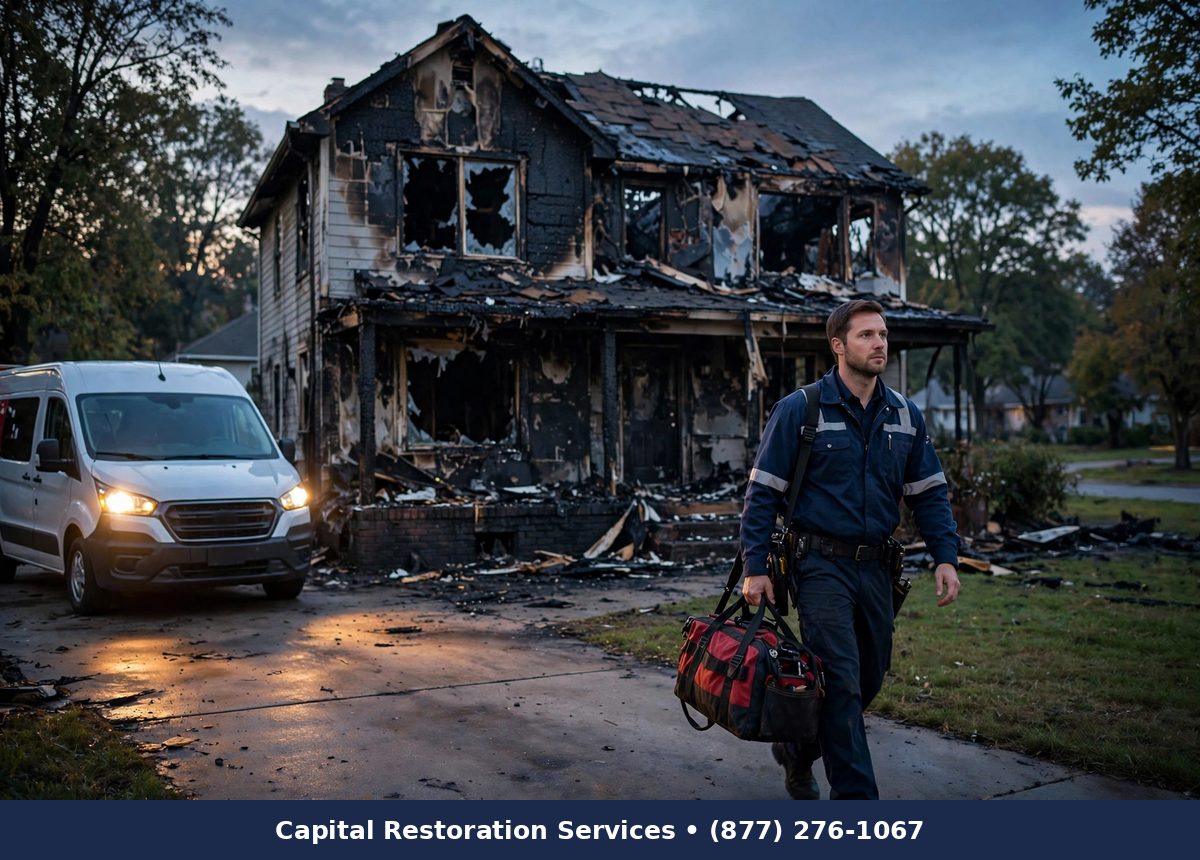
When the fire trucks leave, the clock is already running. Capital Restoration Services answers around the clock so board-up, soot stabilization, and water extraction can begin while the damage is still fresh. Our emergency crews secure the structure first, then stabilize everything the fire left behind.
What this service covers (and what it does not)
Emergency fire damage response is the phase between the fire department leaving and the restoration beginning. It covers securing the property, stopping active threats like rain intrusion and standing water, and stabilizing soot before it etches deeper into surfaces. It does not include full smoke cleaning, odor removal, or rebuilding, which come later once the property is safe and the claim is underway.
Think of it as triage for a building. The fire itself may be out, but a broken window lets in rain, soot keeps eating into chrome and stone, and hundreds of gallons of hose water sit in the floors below. Our job in those first hours is to freeze the damage where it stands so it cannot grow.
Why the first hours after a fire matter
Soot is acidic, and on many surfaces it begins bonding within hours. Metals tarnish, stone and marble etch, and porous materials drink in smoke odor the longer they sit unprotected. Every hour that passes without stabilization adds work to the cleaning phase.
Fire-suppression water is the second ticking clock. What the hoses put out soaks into drywall, insulation, subfloor, and framing. Left standing, that moisture begins the same 24 to 48 hour countdown to mold growth that any water loss triggers. A fire job is always a water job underneath.
Open structures also invite weather and people you do not want inside. A wind-driven rain overnight can double the size of a loss. Boarding up every compromised opening is one of the highest-value moves in the whole restoration.
What happens when you call
Your call reaches a live dispatcher, not a voicemail box. We take your address, confirm the fire department has released the scene, and note anything you know: which rooms burned, whether windows are broken, whether the roof is open. That short conversation shapes what the crew loads on the truck.
The crew rolls with board-up lumber and fasteners, tarps, pumps and extractors for standing water, and containment materials. If the property is in a location we cannot reach quickly, we tell you plainly and help you find the nearest qualified team rather than leaving you waiting.
We also coordinate with your insurance carrier from the first call. Emergency mitigation is expected by nearly every policy after a fire, and the documentation we create on arrival gives your adjuster a clean record of the property's condition.
What we do on the first visit
First, safety. The crew walks the property checking structural soundness, electrical hazards, and gas lines before anyone settles in to work. Nothing else happens until the building is safe to enter.
Then we seal the envelope. Broken windows, damaged doors, and holes in walls get boarded with exterior-grade materials. Roof openings get tarped and fastened to survive the next storm. Every opening we close is photographed and logged.
Next, water and soot. Standing water from firefighting comes out with pumps and extractors, and wet materials get an initial pass of air movement to buy time before full drying equipment arrives. Soot-covered surfaces get a stabilization pass: dry sponging and HEPA vacuuming to lift loose acidic residue before it bonds permanently.
How this response fits into the full restoration
Once the property is secure and stable, the emergency phase hands off to full restoration: detailed assessment, soot and smoke cleaning per the IICRC S700 standard, odor neutralization, content cleaning, and finally repairs and rebuild. The emergency visit creates the conditions that make all of that possible.
Homeowners sometimes ask whether they can skip straight to cleaning. The answer is almost always no. You cannot properly clean a building that is still taking on rain, and you cannot deodorize rooms that are still shedding soot from unsecured openings. Stabilize first, restore second.
Our crews serve homes, apartments, and commercial buildings across the coverage area. When the trucks leave and the real work begins, call (877) 276-1067 and we will secure the property while the damage is still fresh.
Features
- 24/7 live dispatch with crews ready to roll day or night
- Emergency board-up of windows, doors, and breached walls
- Roof tarping to keep rain out of fire-opened structures
- Soot and smoke stabilization to slow acidic corrosion
- Emergency extraction of fire-suppression water
- Structural and utility safety walkthrough before work begins
- Securing of unprotected entry points against theft and weather
Benefits
- Stops weather, trespassers, and further break-ins from adding to the loss
- Slows soot corrosion that begins etching surfaces within hours
- Removes fire-suppression water before it spawns mold and rot
- Hands your insurance adjuster a documented, secure starting point
- Lets you return to a safer property without risking collapse or theft
- Shrinks the total timeline and scope of the full restoration
Frequently asked questions
When should I call for emergency fire response?
Call as soon as the fire department gives the all-clear and releases the scene. The earlier we board up openings and stabilize soot, the less secondary damage you face.
How fast can you get to my property?
Our crews are staged for rapid dispatch, and we aim to reach most properties within the hour. Arrival time depends on distance and road conditions, and we will give you an honest window when you call.
Can I go back inside to get my belongings?
Enter only after the fire department says it is safe, and let our crew walk through first. Floors, stairs, and ceilings can be weaker than they look, and we can escort you to retrieve essentials.
Does emergency response include the full cleanup?
Emergency response focuses on securing and stabilizing the property: board-up, tarping, water extraction, and soot control. Full cleaning, odor removal, and repairs follow as a separate restoration phase.
What does emergency fire damage response cost?
It depends on the size of the property, the extent of the damage, how much board-up material is needed, and whether water extraction is involved. We explain every line of the work before anything begins, so there are no surprises.