Antimicrobial Mold Prevention Treatment Near Me
Starting price: Call for pricing
Removing mold is only half the battle; keeping it from coming back is the other half. Capital Restoration Services applies EPA-registered antimicrobial treatments to dried, cleaned surfaces so residual spores and bacteria cannot gain a foothold. It is the preventive finish that protects your remediation investment for the long term.
What this service is, plainly stated
Antimicrobial mold prevention treatment is the application of EPA-registered products to clean, dry building materials so microbes cannot colonize them later. It happens after water damage restoration or mold remediation, when surfaces are verified dry and contamination has been physically removed. The treatment goes on as a spray or a fog, dries into the material, and inhibits future microbial growth.
This is prevention, not remediation. Spraying a product over active mold and calling it done is one of the most common mistakes in this industry. We treat only surfaces that have been dried to their target moisture content and cleaned of visible contamination, because an antimicrobial applied over moisture or debris is an antimicrobial wasted.
Why pros do it as a separate step
Mold remediation removes what grew. Drying removes what fed it. Antimicrobial treatment protects what remains. Each step has its own job, and bundling them into one spray-and-pray visit is how callbacks happen.
Framing is a good example. During a water loss, studs and joists soak up moisture and then get dried back down with equipment. Once readings confirm they are dry, we apply antimicrobial to the wood before insulation or drywall goes back up. That sealed cavity may not be opened again for decades; the treatment is the last line of defense inside it.
Crawlspaces and attics earn this treatment most often. Both spaces collect condensation, both are hard to monitor, and both stay dark and still. A preventive application after remediation changes those spaces from vulnerable to protected.
How the treatment is applied
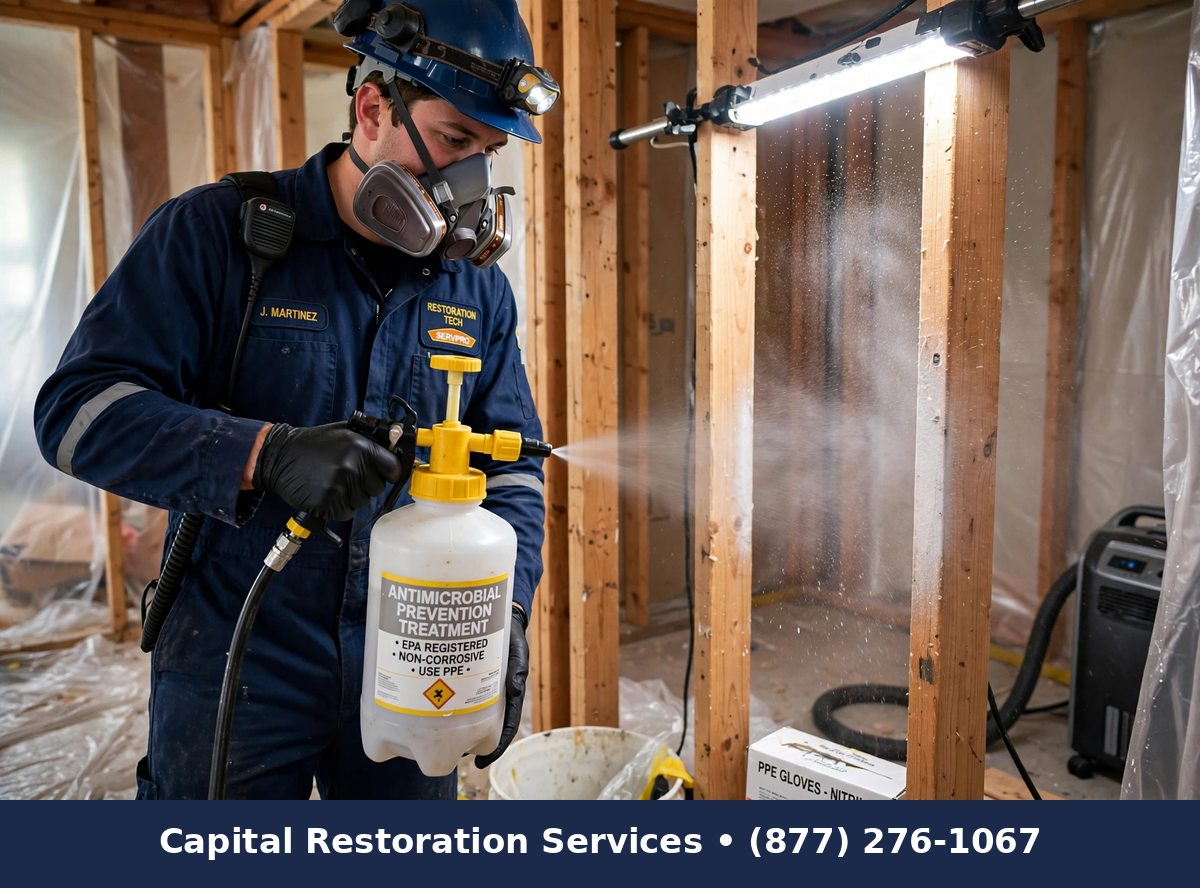
Surface application is the workhorse method. Technicians spray or wipe the product onto framing, sheathing, subfloor, concrete, and masonry, working it into the material per the product label. Every EPA-registered product has a label, and the label is the law: dwell times, dilutions, and application methods come from the manufacturer, not from improvisation.
Fogging covers what spray cannot reach. A fogger disperses a fine antimicrobial mist through attics, crawlspaces, and open wall cavities, coating rafters, duct exteriors, and the backs of surfaces that no hand can reach. Fogging is especially useful after flooding, when contamination has touched everything in a large space at once.
HVAC-adjacent surfaces sometimes get targeted treatment too. Supply and return chases, plenum exteriors, and duct-adjacent framing can harbor growth after a moisture event, and treating them during the open-cavity phase costs far less than opening walls again later.
What it does not do
It does not waterproof anything. An antimicrobial does not stop water, and a treated surface that stays wet will eventually grow mold regardless of the chemistry applied. If the moisture source is not fixed, this treatment is a coat of paint on a sinking ship.
It does not make materials maintenance-free. High humidity, plumbing leaks, and roof failures will overwhelm any preventive product. The treatment buys margin; it does not buy immunity.
And it is never a substitute for removal. Some companies spray first and ask questions later, which leaves dead mold, dust, and debris exactly where they were. Our process is removal, then drying, then treatment, in that order, every time.
When this service makes sense
After any professional water damage restoration, treatment of exposed structural materials is standard good practice. After mold remediation, it is the logical finish. Property managers and landlords use it between tenants in chronically damp buildings. Homebuyers ask for it after an inspection turns up old moisture staining with no active growth.
If your property has a history of repeat moisture events, a sump pit, a vented crawlspace, or an attic with a ventilation problem, preventive treatment is cheap insurance compared to a second full remediation.
How we serve your area
Capital Restoration Services provides antimicrobial prevention treatments for homes, rental properties, and commercial buildings throughout the coverage area. We arrive with the right products for wood, concrete, and masonry, apply them only to verified-dry surfaces, and document everything for your records. Call (877) 276-1067 to add lasting protection to your drying or remediation project.
Features
- EPA-registered antimicrobial products applied per label directions
- Surface treatment of framing, sheathing, and subfloor after drying
- Fogging application for attics, crawlspaces, and wall cavities
- Targeted spray treatment for concrete, masonry, and wood surfaces
- Application after verified drying, never over active moisture
- Treatment of exposed cavities before insulation or drywall goes back
- Post-treatment documentation for your records
Benefits
- Breaks the cycle of recurring mold after water damage or remediation
- Protects framing, sheathing, and subfloor while they are fully exposed
- Reaches cavities and chases that surface cleaning cannot touch
- Makes crawlspaces and attics hostile environments for future growth
- Reduces musty odors tied to microbial activity in hidden spaces
- Gives buyers, tenants, and inspectors confidence the job was thorough
Frequently asked questions
Can antimicrobial treatment replace mold removal?
Not at all. Antimicrobials are a supplement to physical removal and cleaning, never a replacement. The EPA's own guidance is clear: dead mold still triggers the same concerns as live mold, so contamination must be removed first.
Is it safe for my family and pets?
Yes, most products allow re-entry shortly after application once surfaces have dried. We will tell you the exact re-entry time for the product used on your job.
Which areas of my home can be treated?
We treat attics, crawlspaces, wall cavities, subfloors, framing, and HVAC-accessible surfaces. Anywhere moisture lingers and air barely moves is a candidate.
How much does antimicrobial treatment cost?
It depends on the square footage, the number of areas treated, whether fogging or surface application is needed, and how much preparation is involved. We scope it during the inspection and give you a clear plan before work begins.
Will treated surfaces grow mold again if they get wet?
Nothing. The chemistry is straightforward: no moisture, no growth. The treatment adds a layer of protection, but drying the space and fixing the leak are what truly keep mold away.