Appliance Smoke Damage Cleaning Near Me
Starting price: Call for pricing
After a fire, your appliances absorb more smoke than almost anything else in the house. Grease, plastics, and vented housings trap soot and odor deep inside. Capital Restoration Services cleans smoke-damaged appliances from the inside out, saving units that look lost and restoring the ones worth keeping.
Why appliances suffer more than they look like they do
An appliance is a box full of vents, fans, filters, and cavities, which makes it a perfect smoke trap. During a fire, convection currents push soot-laden air through every gap: under the range hood, into the microwave's vent slots, behind the refrigerator's rear panel, through the dryer's lint housing. Surfaces you never see collect the heaviest residue.
Grease makes kitchen appliances worse. A range hood that has done its job for years carries a layer of cooking grease, and fire soot bonds to grease aggressively. The result is a sticky, acidic film that resists casual wiping and keeps releasing odor every time the unit warms up.
Electronics face a different threat. Soot is mildly conductive and acidic, which means it corrodes contacts and circuit boards while attracting moisture. An appliance that runs fine the day after the fire can fail weeks later as corrosion progresses. Cleaning is not cosmetic here; it is preventive maintenance for the appliance's remaining life.
What cleaning actually involves
We start with an honest triage. Each appliance gets inspected for heat damage, melted components, and compromised wiring. Units with structural or electrical damage are flagged for replacement, not cleaning. Everything else gets a cleaning plan matched to its materials.
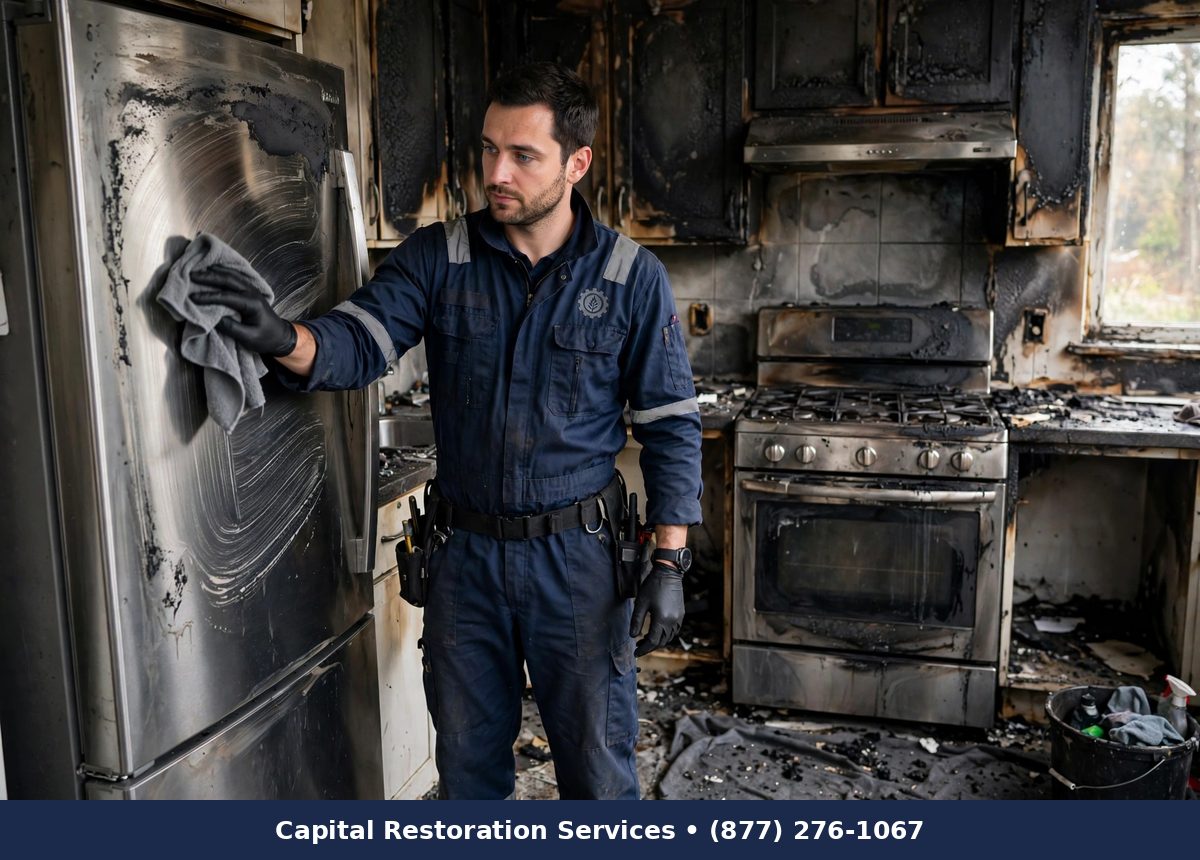
Dry removal comes first, always. HEPA vacuums pull loose soot from vents, coils, and housings. Chemical sponges lift soot from exterior surfaces without smearing it. The rule across all fire restoration is dry before wet: introducing liquid to soot before the dry residue is lifted just bakes it into the surface.
Then the detailed work begins. Range hood filters get degreased. Oven and microwave interiors get cleaned with products matched to the soot type. Gaskets and door seals, which trap odor in their pores, get special attention. Refrigerator interiors get a full washdown and sanitizing pass, because food spoilage compounds the smoke problem with bacterial odor.
The odor problem inside appliances
Smoke odor hides in insulation, behind panels, and inside ducted paths. A refrigerator that looks clean can still smell like a campfire every time you open the door, because the odor lives in the foam insulation around the cabinet. Surface cleaning cannot reach it.
That is where deodorization technology earns its keep. Thermal fogging sends neutralizing agents into the same cavities smoke traveled through. Hydroxyl generators break down odor molecules over time and can run while the home is occupied. Ozone treatment, used in unoccupied spaces, oxidizes stubborn odor at the molecular level. We match the method to the appliance and the severity, because each smoke type responds to different chemistry.
When cleaning beats replacing
Quality appliances with light to moderate soot almost always justify cleaning. A two-year-old stainless refrigerator or a high-end range represents thousands in replacement cost, and professional cleaning returns them to service at a fraction of that. Even heavily sooted exteriors often clean up to near-new.
The line is drawn at heat damage and electronics. Melted knobs are cosmetic; melted wire insulation is not. If a control board took direct heat or the compressor housing warped, we recommend replacement and say so plainly. Our job is to save what is saveable and be straight about what is not.
Cost factors to expect
The scope follows the appliance count and the severity. One lightly sooted microwave is a quick job. A full kitchen of grease-bonded appliances plus a laundry pair is a multi-day project. Disassembly, deodorization treatment, and any parts that need replacing all factor in.
Age and value matter too. Cleaning a premium appliance is almost always worth it; cleaning a decade-old budget unit sometimes is not. We give you the math honestly so you can decide with your adjuster.
How we serve your area
Capital Restoration Services cleans smoke-damaged appliances in homes, apartments, and commercial kitchens across the coverage area, coordinating with your contents inventory and insurance claim. If the fire is recent and the soot is still fresh, call (877) 276-1067 now, because fresh soot cleans off far easier than soot that has had weeks to bond.
Features
- Detailed assessment of soot severity on each appliance
- Dry soot removal with HEPA vacuums and chemical sponges
- Deep cleaning of vents, filters, seals, and gaskets
- Interior cleaning of ovens, microwaves, and range hoods
- Refrigerator and freezer deodorization and sanitizing
- Washer and dryer drum, seal, and lint-system cleaning
- Deodorization treatment matched to the smoke type
Benefits
- Removes acidic soot that corrodes metal, chrome, and electronic contacts
- Eliminates the smoke odor trapped inside appliance housings and vents
- Saves appliances that look ruined but clean up well inside
- Prevents cross-contamination when dirty appliances run and recirculate odor
- Restores kitchen and laundry function without full appliance replacement
- Documents condition and cleaning for insurance contents claims
Frequently asked questions
Which appliances are most affected by smoke?
Kitchen appliances take the worst of it: ranges, microwaves, range hoods, and refrigerators. Washers and dryers in nearby laundry areas also absorb heavy smoke. Small appliances like toasters and coffee makers usually are not worth professional cleaning.
Can smoke-damaged appliances be saved?
Sometimes, and that is an assessment we make honestly. Light to moderate soot on quality appliances usually cleans up well. Heavy heat damage, melted components, or compromised electronics mean replacement is the safer call. We tell you which is which.
Is it safe to turn on appliances after a fire?
No. Smoke residue is acidic and mildly conductive, and powering up a soot-filled appliance can short electronics or bake odors permanently into components. Leave everything unplugged until it is inspected.
How do you handle a smoke-damaged refrigerator?
Refrigerators and freezers need the most care: spoiled food waste must be bagged and sealed first, then the interior gets a full deodorization treatment. Ozone or hydroxyl treatment follows cleaning to neutralize odors absorbed into the insulation.
What does appliance smoke cleaning cost?
It depends on how many appliances need cleaning, the severity of the soot, whether interiors must be disassembled, and whether deodorization treatment is required. We assess each unit and explain the plan before we start.