Attic Mold Remediation Near Me
Starting price: Call for pricing
Attic mold grows where nobody looks, feeding on roof sheathing and framing for years before anyone notices. Capital Restoration Services remediates attic mold at the source: we find the moisture driving it, clean the structural wood, and fix the ventilation or leak that started the whole problem.
Attics grow mold for one reason: trapped moisture
An attic is a wooden box with a roof on top and your heated, humid home underneath. When ventilation fails, when a bathroom fan blows into the attic instead of outside, or when a roof leak drips onto sheathing, moisture collects on the coldest surfaces and never leaves. Mold follows the moisture, and the underside of the roof deck is a perfect food source.
The frustrating part is how long this goes unnoticed. Nobody visits the attic. The mold can colonize rafters and sheathing for years, slowly weakening the wood and shedding spores that drift down through recessed lights, attic hatches, and gaps in the ceiling plane. By the time a home inspector or a roofer spots it, the colony is well established.
Cold climates add a twist: condensation without any leak. Warm indoor air leaking past an unsealed attic hatch or recessed lights hits the cold roof deck and condenses. In winter you may see frost on the underside of the sheathing, which melts on warmer days and keeps the wood perpetually damp. No roof repair will fix that; only air sealing and ventilation will.
Inspection first, always
We do not quote attic mold remediation from the driveway. A technician enters the attic with lighting, a moisture meter, and a camera, and documents the extent of growth, the condition of the wood, and most importantly the moisture source. The mold is the symptom. The inspection finds the disease.
Common findings read like a greatest-hits list of building mistakes: insulation shoved into the soffits, choking off intake airflow. A bathroom exhaust duct terminating six inches from the ridge, pumping shower steam into the space every morning. Step flashing failed at a chimney, dripping onto the deck. Each cause has its own fix, and the remediation plan is built around whichever ones we find.
How the remediation itself works
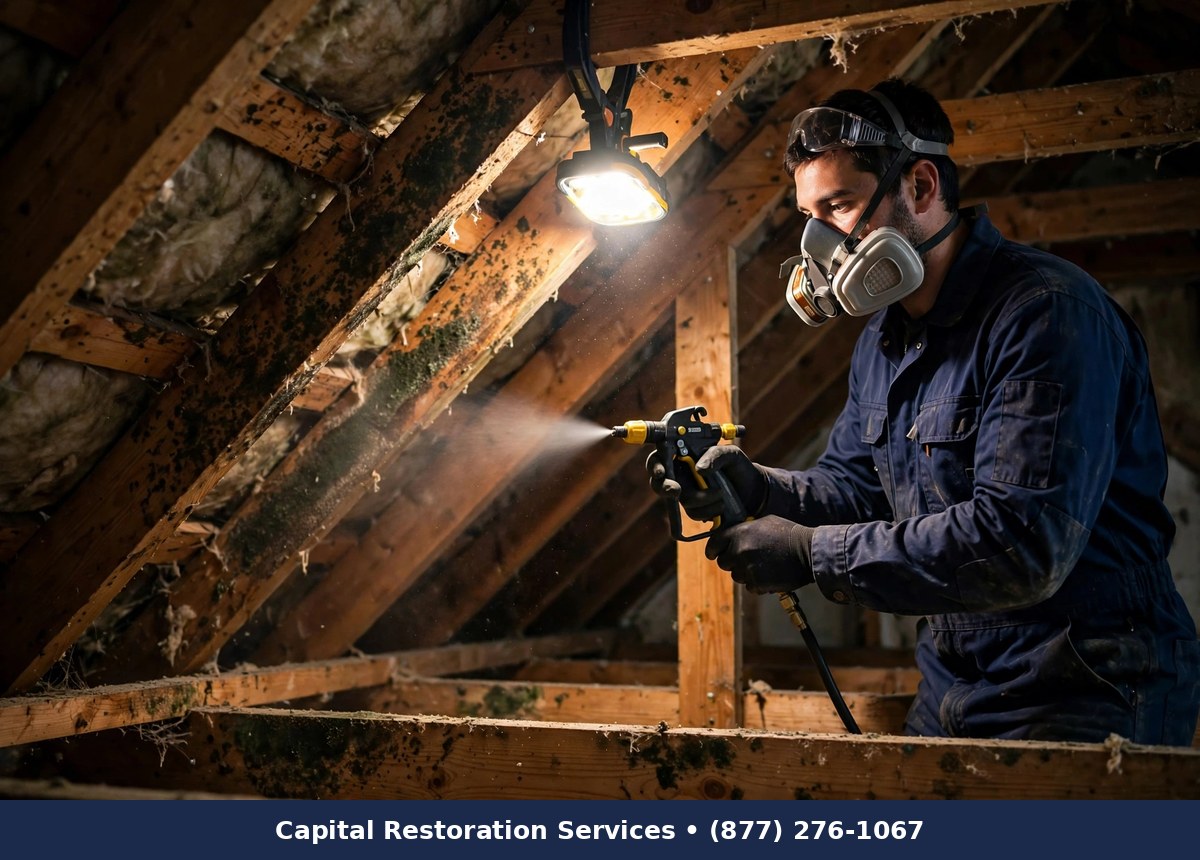
Containment comes first. The attic hatch and any openings to the living space get sealed with polyethylene, and a HEPA-filtered negative-air unit keeps the work zone under negative pressure. This keeps spores from migrating into the house while we disturb them, which is exactly when they are most mobile.
Then the cleaning. Affected sheathing and framing get HEPA vacuuming to capture loose growth, followed by wire brushing or abrasive cleaning for growth rooted in the wood grain. On heavily affected sheathing, soda blasting or dry-ice blasting may be used to clean the wood without damaging it. The goal is physical removal of the colony, because dead mold left in place still causes the same concerns as live mold.
Contaminated insulation is handled case by case. Blown insulation that is moldy or blocking access comes out in sealed bags. Batt insulation that stayed dry and clean can sometimes remain. We never bury a problem under new insulation, and we never leave contaminated material in place.
Fixing the cause, not just the symptom
Remediation without source correction is a warranty claim waiting to happen. If the bathroom fan vents into the attic, we route it through the roof or gable to the exterior with an insulated duct. If soffit vents are blocked, we clear them and install baffles so insulation cannot collapse back into the airflow path.
Ventilation gets assessed against the whole system: intake at the soffits, exhaust at the ridge or gables, and a clear air path between them. An attic with great ridge vents and zero soffit intake is not ventilated; it is just decorated. We make sure the system actually moves air.
Roof leaks get flagged for a roofer. We handle the mold and the interior, but failed flashing and damaged shingles are roofing work, and we say so plainly rather than pretending the mold job covers it.
What affects the cost
Square footage of affected wood is the biggest driver, followed by attic accessibility. A walk-up attic with a full-size hatch is straightforward; a scuttle hole over a garage with two feet of clearance is slow, hot work. Insulation removal, the number of moisture sources to correct, and the cleaning method required for the wood all shape the scope.
Serving homes across the coverage area
Capital Restoration Services remediates attic mold in single-family homes, townhouses, and multi-unit buildings throughout the coverage area, and we document every job with before-and-after photos for your records or your buyer's inspector. If you have spotted staining on the roof deck or a home inspection flagged attic growth, call (877) 276-1067 for an inspection that finds the cause, not just the colony.
Features
- Full attic inspection with moisture source identification
- Containment and negative-air setup to protect living spaces
- HEPA vacuuming of all affected sheathing and framing
- Wire brushing and abrasive cleaning of structural wood
- Removal of contaminated insulation where necessary
- Ventilation assessment: soffit, ridge, and exhaust terminations
- Antimicrobial treatment of cleaned wood surfaces
Benefits
- Eliminates the hidden colony before spores migrate into living spaces
- Protects roof sheathing and framing from progressive wood decay
- Finds and fixes the moisture source so the mold cannot return
- Improves indoor air quality throughout the home
- Prevents failed home inspections and stalled real estate sales
- Documents remediation for buyers, insurers, and property managers
Frequently asked questions
What causes mold in attics?
The three usual suspects: poor ventilation trapping humid air, bathroom or dryer exhaust fans venting into the attic instead of outdoors, and roof leaks from failed flashing or shingles. In cold climates, condensation alone can saturate sheathing with no leak at all.
Can I just clean attic mold myself?
Almost always, no. The EPA suggests DIY only for areas under 10 square feet, and attic growth nearly always exceeds that. Attic remediation needs containment, negative air, and HEPA equipment most homeowners do not have, plus working in a confined, hot space.
Do you remove the insulation too?
We clean structural wood with HEPA vacuuming, wire brushing, and abrasive methods where needed. Insulation that is contaminated or blocking access gets removed; clean insulation can sometimes stay. Every job gets containment so spores do not drift into the house below.
How would I even know I have attic mold?
A musty smell upstairs, dark staining on the underside of the roof deck, or frost and dampness visible in the attic in winter. Many homeowners discover it during a roof replacement or a home inspection.
How much does attic mold remediation cost?
It depends on the affected square footage, attic accessibility, whether insulation must be removed, and what caused the moisture. We inspect first, identify the source, and scope the work before anything begins.