Attic Water Damage Restoration Near Me
Starting price: Call for pricing
A roof leak does not stop at the shingles. Water crosses the attic, soaks insulation, and reaches your ceiling, and the wet area is almost always larger than the stain suggests. Capital Restoration Services restores water-damaged attics by extracting the water, drying the structure, and removing what cannot be saved.
The path water takes through an attic
A roof leak starts at the top: a lifted shingle, failed flashing around a chimney or vent, an ice dam backing water under the courses. From there it hits the roof decking, runs along rafters, drips onto insulation, and eventually finds the ceiling drywall. By the time you see a stain downstairs, water has already crossed the entire attic assembly.
That is why the wet area is almost always bigger than the stain. Water travels horizontally along framing before it drops, so the entry point on the roof can be feet away from the ceiling mark. Our moisture mapping traces the full path instead of treating the stain as the whole story.
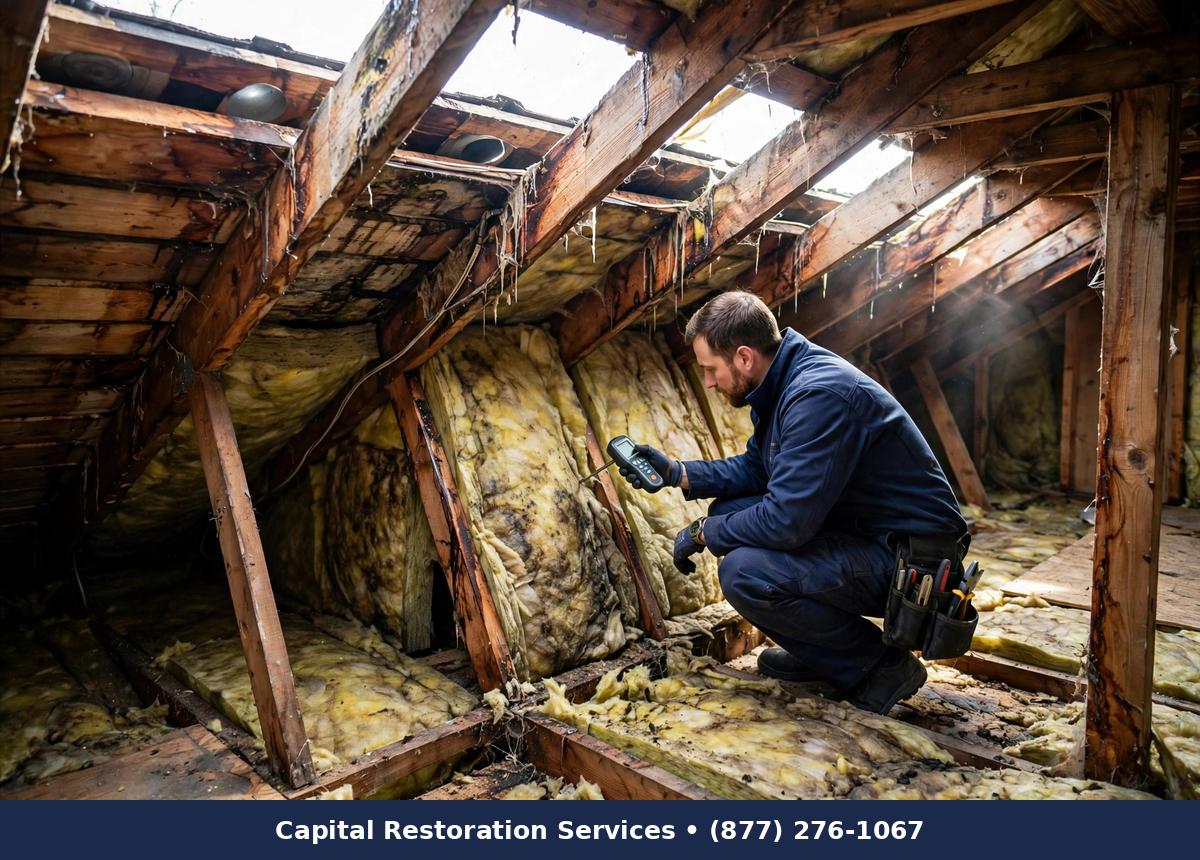
Saturated insulation is the silent multiplier. Fiberglass and cellulose batts soak up water and hold it against the wood for weeks, keeping the decking damp long after the leak stops. Wet insulation also loses most of its R-value, so your energy bills climb while the attic quietly grows mold.
What we do first
If the roof is still open to the weather, tarping comes first. A secured tarp over the damaged section stops the next rain from compounding the loss, which is the highest-value emergency move on any roof-leak job. We photograph everything before and after for your claim file.
Then we deal with the water already inside. Standing water on attic floors gets extracted. Sagging ceilings below get relieved with a small controlled opening so trapped water drains into a bucket instead of bringing the drywall down on its own schedule. It is a small, careful step that prevents a much bigger mess.
Moisture meters and infrared cameras map the decking, rafters, joists, and insulation. Anything reading wet gets marked. This map becomes the drying plan and the documentation your adjuster will want to see.
Drying and removal
Wet insulation comes out. There is no reliable way to dry saturated batts or blown insulation in place, and leaving it means weeks of trapped moisture against the wood. It gets bagged, removed, and disposed of, and the bare decking underneath is finally exposed for proper drying.
Structural drying follows the IICRC S500 approach: air movers directed across the wet decking and framing, dehumidifiers pulling moisture from the attic air, and daily moisture readings until the wood returns to its dry standard. Attics are awkward spaces to dry, with low clearances and hot air pooling at the peak, so equipment placement and monitoring matter more here than in a ground-floor room.
Decking or rafters that have rotted do not get dried and declared fine. Soft, punky wood gets marked for the roofer or carpenter. Our job is to return the structure dry and stable; structural repair is a separate trade we coordinate with, not a corner we cut.
The mold question
Any attic that stayed wet for more than a day or two needs a mold assessment. Growth can begin within 48 hours on damp wood, and it hides on the back of sheathing where nobody looks. If we find active growth during the dry-out, we contain the area and remediate it before the attic gets closed back up with new insulation.
Once the wood is dry and verified, we apply an antimicrobial treatment to the cleaned surfaces. It is the preventive finish that protects the framing through the next storm season, especially in attics with marginal ventilation.
Cost factors
The extent of the wet area drives the scope, along with how much insulation must be removed and whether the decking or framing needs repair. A single failed pipe boot caught the same week is a contained job. A chimney flashing leak that ran for a season, soaking half the deck and growing mold throughout, is a larger project. Emergency tarping, mold remediation if needed, and access difficulty all factor into the final plan.
How we serve your area
Capital Restoration Services handles attic water damage for homes and multi-unit buildings across the coverage area, from emergency tarping the night of the storm to the final verified dry-out. If your ceiling is staining or your attic smells damp after rain, call (877) 276-1067 before the next storm makes it worse.
Features
- Emergency roof tarping to stop active intrusion
- Water extraction from attic floors and insulation
- Moisture mapping of decking, rafters, and joists
- Removal of saturated, unsalvageable insulation
- Structural drying of roof decking and framing
- Sagging ceiling relief and controlled drainage
- Mold prevention treatment on dried wood surfaces
Benefits
- Stops a roof leak from becoming a ceiling collapse
- Dries roof decking and framing before rot sets in
- Removes saturated insulation that holds moisture for weeks
- Prevents the mold bloom that follows wet attics within days
- Documents the loss clearly for roof and homeowner's insurance claims
- Gets the attic stable so roofers can work on a dry structure
Frequently asked questions
How do I know my attic has water damage?
Brown rings or sagging on the ceiling, damp or compressed insulation in the attic, water-stained rafters, or a musty smell upstairs after rain. The stain you see is usually the last place the water arrived, not the first.
Can you stop the leak if the roofer cannot come yet?
Yes, temporarily. We tarp the roof opening and relieve any sagging ceiling so trapped water can drain safely. That buys time, but the roof repair itself is roofer's work we coordinate around.
Can wet attic insulation be dried in place?
Sometimes, if caught early and the decking is solid. Saturated insulation almost always has to go, because it holds water against the wood for weeks and loses its insulating value when wet. We assess each section.
What should I do about a bulging ceiling?
A sagging, bulging ceiling is holding water and can come down. Relieve it with a small controlled hole and a bucket if you can do it safely, or stay clear and wait for the crew. Do not poke at it blindly.
What does attic water damage restoration cost?
It depends on the size of the affected area, how much insulation must be removed, the condition of the decking and framing, and whether mold remediation is needed too. We scope it on site and walk you through every line.