Carpet Water Damage Restoration Near Me
Starting price: Call for pricing
Wet carpet is not automatically ruined carpet. When clean water is extracted fast and the pad and subfloor are dried properly, most carpet survives beautifully. Capital Restoration Services restores water-damaged carpet with weighted extraction, in-place drying, pad replacement where needed, and professional reinstallation.
The decision: restore or replace
Every wet-carpet job starts with the same three questions. What kind of water is it? How long has the carpet been wet? And what is underneath? The answers decide whether the carpet gets restored or replaced, and an honest assessment here saves either a carpet or a wasted cleaning bill.
Clean water caught within the first day or two is the best case. The carpet gets extracted, dried in place, cleaned, and reinstalled, and most homeowners cannot tell it ever got wet. Gray water from a dishwasher or washing machine discharge is restorable too, but the pad must be replaced and the cleaning is more aggressive.
Black water ends the discussion. Sewage and flood water carry contamination that porous carpet cannot be sanitized out of, no matter how thoroughly it is cleaned. In those cases we remove the carpet and pad entirely and focus the restoration on the subfloor. It is the only safe call.
Time is the other decider. Mold can begin colonizing wet pad within 48 hours, and once growth is established in the backing, restoration becomes replacement. Fast extraction is what keeps a carpet on the restorable side of that line.
How in-place drying works
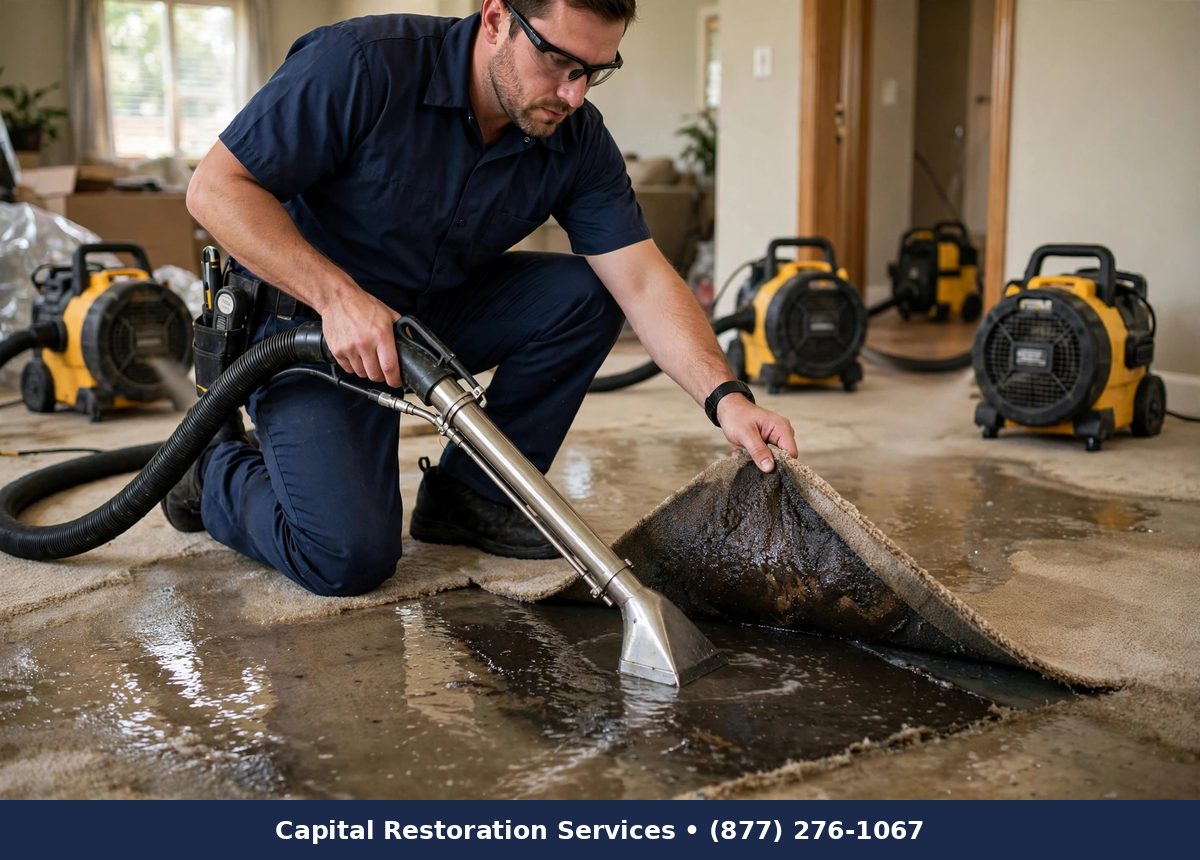
Pulling wall-to-wall carpet out of a house to dry it elsewhere is slow, risks delamination of the backing, and is rarely necessary. Instead, we dry it in place. The carpet gets detached from the tack strip along the walls and floated, lifted so air movers can blow underneath it, directly across the wet pad and subfloor.
Weighted extraction comes first. A weighted tool rides over the carpet, squeezing water out of the fibers and pad the way a rolling pin squeezes dough. This single step removes more water than hours of air movement, and it is the reason professional extraction beats every DIY approach.
Then the drying setup: air movers directed under the floated carpet and across the surface, dehumidifiers pulling moisture from the room air, and daily moisture readings on the carpet, pad, and subfloor. Drying is done when readings hold at dry standards, not when the surface feels dry.
Pad, cleaning, and reinstallation
The pad decision is made early. In clean-water losses caught fast, pad can sometimes be dried in place along with the carpet. More often it gets replaced: it is the cheapest component of the flooring system and the hardest to verify as clean. New pad goes down once the subfloor reads dry.
After drying, the carpet gets a professional hot water extraction cleaning. This is not optional or cosmetic. Even clean water leaves dissolved contaminants and residues in the fibers, and the cleaning resets the carpet to a sanitary, fresh condition.
Reinstallation finishes the job. Wet carpet stretches and wrinkles, so we re-stretch it with a power stretcher, reseat it on the tack strip, and trim and tuck the edges. A properly reinstalled carpet lies flat and tight, with no ripples to betray the flood that came through.
The subfloor underneath
What lies beneath the carpet shapes the whole job. Concrete slabs dry well and take treatment easily. Plywood subfloors dry in place when caught early. OSB subfloors swell at the edges when saturated and may need section replacement. We inspect the subfloor once the carpet is up and address it before anything goes back down.
Antimicrobial treatment of the subfloor and the carpet backing is standard after drying. It is the preventive step that keeps a musty smell from developing weeks later, especially in basements and ground-floor rooms.
Cost factors
Room count and carpet area lead, followed by the water category and the pad verdict. Clean-water in-place drying with pad replacement is the most economical path. Contaminated water requiring full removal runs larger. Drying duration and the subfloor condition round out the scope.
Serving homes across the coverage area
Capital Restoration Services restores water-damaged carpet in homes, rentals, and offices throughout the coverage area, from emergency extraction the night of the leak to the final power stretch. If your carpet is wet now, call (877) 276-1067. The next 24 hours decide whether it gets saved or replaced.
Features
- Emergency water extraction with weighted extraction tools
- In-place drying that lifts carpet for airflow underneath
- Moisture mapping of pad, backing, and subfloor
- Pad removal and replacement with new carpet cushion
- Hot water extraction cleaning after verified drying
- Power re-stretching and reinstallation of saved carpet
- Antimicrobial treatment to prevent post-drying mold
Benefits
- Saves carpet that a rushed job would condemn to the dumpster
- Dries the pad and subfloor, not just the visible fibers
- Prevents the mold growth that starts in wet pad within 48 hours
- Re-stretches and reinstalls carpet to a smooth, like-new finish
- Eliminates the musty smell of a carpet that never fully dried
- Documents drying with moisture readings for your insurance claim
Frequently asked questions
When can wet carpet be saved?
Clean water from a supply line or tub overflow, extracted within 24 to 48 hours, gives carpet its best odds. Gray water requires pad replacement and aggressive cleaning. Black water, sewage or flooding, means the carpet has to go.
Does the pad always need replacing?
Almost always. Pad is inexpensive compared to carpet, and it holds water and contamination far longer than the fibers. Replacing the pad while saving the carpet is standard practice.
How long does carpet take to dry?
Usually 2 to 4 days of drying with professional equipment, depending on the carpet type, the pad, the subfloor, and the humidity. We verify with moisture meters rather than guessing.
Why does my wet carpet look wrinkled?
It stretches, wrinkles, and loses its shape when wet, which is why reinstallation includes power stretching. A carpet that looks wavy after a flood is not ruined; it just needs to be re-stretched by a professional.
How much does carpet water damage restoration cost?
It depends on the number of rooms, the water category, whether pad replacement is needed, and the drying time. We assess the water category on arrival and scope the work before anything begins.