Electrical Fire Damage Repair Near Me
Starting price: Call for pricing
After a fire, the electrical system is the most dangerous thing you cannot see. Soot coats wiring and panel internals with conductive residue, heat warps breaker contacts, and water from suppression corrodes connections. Capital Restoration Services provides electrical fire damage repair: full safety inspection before any power is restored, replacement of compromised wiring and components, and code-compliant rebuild. Never flip the breaker yourself after a fire.
The walls look the same. The panel looks intact. The outlets look fine. And that is exactly what makes post-fire electrical damage so dangerous: almost all of it is invisible. Soot has coated the inside of your panel with conductive residue. Heat has warped breaker contacts so they may arc internally. Suppression water has started corroding connections you will never see. Flipping the main breaker to check is how second fires start. Call (877) 276-1067 first, and Capital Restoration Services will inspect the system properly before a single switch is touched.
What electrical fire damage repair covers
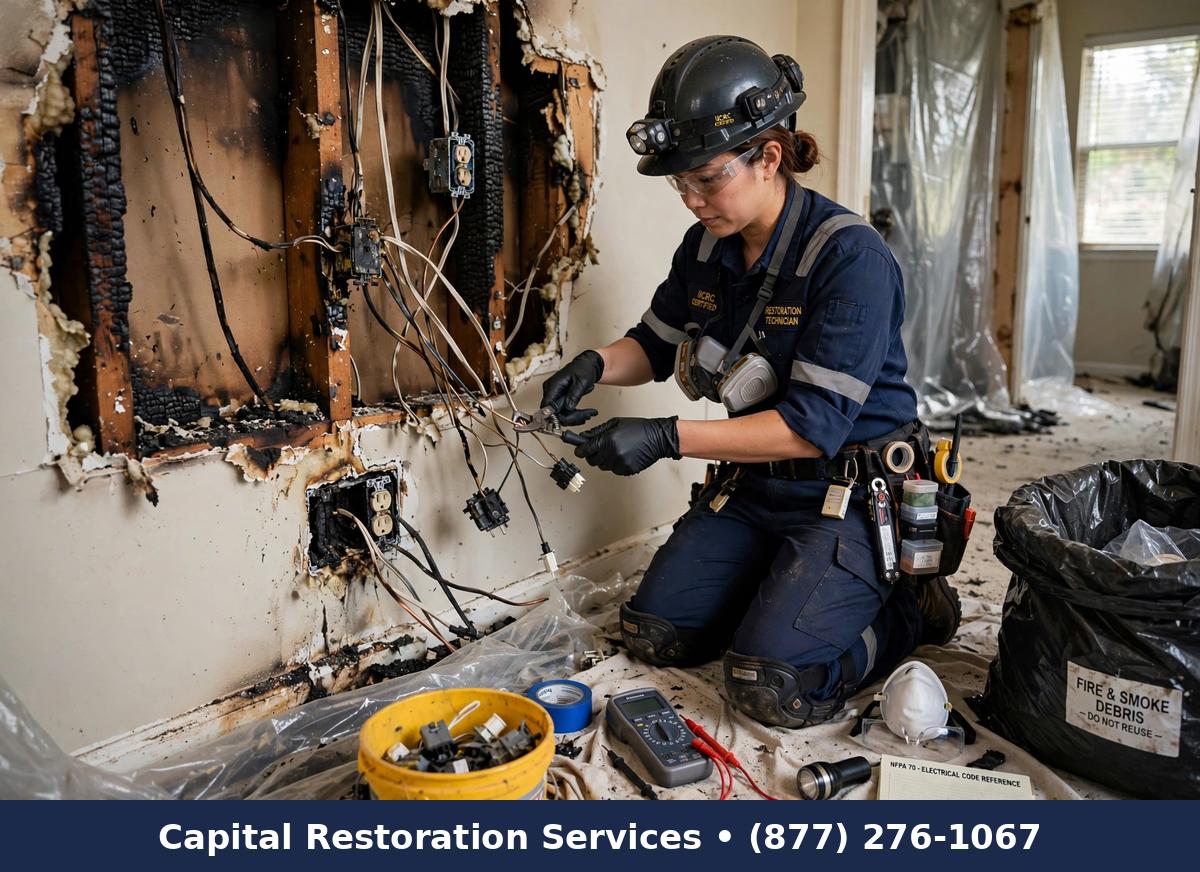
This service covers the complete electrical recovery after a fire: a component-level safety inspection of wiring, panels, breakers, outlets, and devices; temporary power so the property has lights, heat, and refrigeration during repairs; replacement of fire-damaged wiring back to undamaged junction points; panel and breaker replacement where smoke or water compromised them; replacement of outlets, switches, and boxes in affected areas; and final verification of every circuit before the system is re-energized.
What it does not cover is the utility side: downed service drops and meter damage belong to the power company. We also do not perform the general fire restoration itself; we are the electrical specialists within the larger recovery, coordinating with the restoration crew.
The three ways fire attacks wiring
Fire damages electrical systems through three mechanisms, and a proper inspection looks for all three. Heat degrades insulation and warps the precision contacts inside breakers, creating intermittent connections that arc. Soot and smoke deposit conductive residue across wiring, panel bus bars, and device internals, building current paths where none should exist. Water from sprinklers and hose lines corrodes copper connections and shorts junction boxes, leaving hidden shock hazards that persist long after everything dries.
There is a fourth factor professionals watch for: code. When fire damage forces wiring replacement, everything touched must meet current code. A circuit that was never installed correctly cannot simply be repaired back to its old state. This is also why you should check your policy for a code-updates provision before work begins.
How the repair process works
- Safety isolation comes first. A licensed electrician disconnects affected circuits and equipment. Where hazards cannot be isolated, power stays off the property entirely until repairs are complete.
- The inspection is component-level, not a glance. Wiring insulation is checked for carbon deposits and flexibility at every device and outlet box. Panels are opened and bus bars examined. Breakers are assessed for smoke or water exposure.
- Temporary power is established. Through the existing panel or a generator, the property gets lights, heat, and refrigeration while full repairs are planned.
- Damaged wiring is replaced, not patched. Fire-damaged conductors are removed back to a junction point free of damage. Splices are taken apart, cleaned, and rejoined properly.
- Compromised components are swapped out. Smoke-damaged or wetted breakers are replaced and destroyed, since they cannot be serviced. Outlets, switches, wire nuts, and boxes exposed to fire, smoke, or water are replaced with new components meeting current code.
- Panels are rebuilt or replaced. Enclosures may be reused where internal bussing cleans up and tests fault-free; anything less gets a new panel.
- Final verification signs off the job. Every circuit, every connection, every outlet is tested before re-energizing. That sign-off is what makes the house genuinely safe, not just visually repaired.
What affects the cost
The extent of wiring damage is the biggest variable: a few circuits versus a whole-house rewire are different projects. Panel condition matters, since a full panel replacement is a major line. The device count adds up across outlets, switches, and fixtures. Code updates triggered by the work can exceed the fire repair itself, which is why the estimate separates fire-related from code-related items. And temporary power needs during a long repair add their own cost. For an exact figure, call (877) 276-1067. An on-site inspection is the only honest basis for a scope.
How we serve your area
Capital Restoration Services performs electrical fire damage repair for homes and businesses across our service area, working within the larger fire restoration project. We document everything with photographs for your insurance claim and coordinate directly with your adjuster and restoration provider. When our final inspection signs off and the power comes back on, it stays on safely. That is the whole point.
Features
- Full electrical safety inspection before any power restoration
- Temporary power setup for lights, heat, and refrigeration
- Wiring replacement back to undamaged junction points
- Panel and breaker replacement for smoke or water exposure
- Outlet, switch, and device replacement in affected areas
- Final verification of every circuit before re-energizing
Benefits
- No second fire from compromised wiring or breakers
- Power restored safely with professional sign-off
- Insurance claim protected with proper inspection documentation
- System brought to current code where repairs are made
- Temporary power keeps essentials running during repairs
- Every circuit verified before your family moves back in
Frequently asked questions
Can I turn the power back on myself after a fire?
Do not. Restoring power without a professional inspection risks electrocution and a second fire, and it can void your insurance coverage. Most policies require professional assessment before power is restored after a fire.
How does fire actually damage an electrical system?
Soot is conductive, so it creates paths for current where none should exist. Heat warps breaker contacts so they connect intermittently. Water corrodes copper and shorts junction boxes. All three keep working against you long after the fire is out.
What gets replaced versus repaired?
Wiring directly damaged by fire is removed back to an undamaged junction point, never patched. Smoke-damaged or wetted breakers are replaced, since molded-case breakers have no serviceable parts. Outlets, switches, and boxes exposed to fire, smoke, or water are replaced.
What affects the cost of electrical fire repair?
The extent of wiring damage, panel condition, number of circuits and devices affected, whether code updates are triggered, and temporary power needs. Call (877) 276-1067 for an inspection and a detailed scope. Check whether your policy covers code updates.
Does insurance cover electrical repair after a fire?
Fire-related electrical repair is commonly covered, but code upgrades triggered by the work may fall under a separate code-updates provision. Our documentation separates fire-related from code-related work for your adjuster. Confirm with your agent.