Electronics Smoke Damage Restoration Near Me
Starting price: Call for pricing
Smoke leaves soot on circuit boards that is acidic, conductive, and keeps corroding metal long after the fire is out. Capital Restoration Services restores smoke-damaged electronics with lab-grade cleaning, ultrasonic baths, and controlled drying so your devices have the best chance of working again. If your gear smells like smoke or sat in a smoky room, call (877) 276-1067 before you plug anything in.
Soot Is Chemistry, Not Just Dirt
Soot is not just black dust you can wipe off. When household materials burn, the smoke carries fine particles, oily compounds, and chemical gases that settle on every exposed surface. Mixed with moisture in the air, chlorides and sulfates in that residue can form acids that pit and corrode metal. Carbon-rich particles are also slightly conductive, so a sooty film across a circuit board can create paths where electricity was never meant to flow.
Capital Restoration Services treats smoke-damaged electronics as a chemistry problem, not a housekeeping one. We restore computers and laptops, flat-screen TVs, audio and video equipment, gaming consoles, printers, and small appliances that were exposed to smoke. The goal is straightforward: remove the corrosive residue, dry the device fully, and test whether it can return to reliable use.
This service is built for devices that saw smoke but were not burned. If a housing is melted, warped by heat, or charred, cleaning cannot undo that damage, and we will tell you so up front.
Signs Your Electronics Need Professional Smoke Cleaning
- A smoky or acrid smell that stays on the device even in a clean room.
- Visible soot around vents, seams, fans, or ports.
- Gear that sat in a fire room or a smoke-filled hallway, even if it looks clean outside. Soot drifts through vents and tiny openings.
- Glitches, random reboots, or failure to power on after smoke exposure.
- A sticky or oily film on the case or controls that wipes away but returns.
Do not plug in or power on smoke-exposed equipment to "check if it still works." Sending current through a sooty board can turn a cleanable device into a dead one.
How We Clean Smoke-Damaged Electronics, Step by Step
Every job begins with an itemized intake: we log, photograph, and label each device, then evaluate it without powering it on. Batteries are removed or isolated first, since a heat-stressed battery is a safety risk on its own.
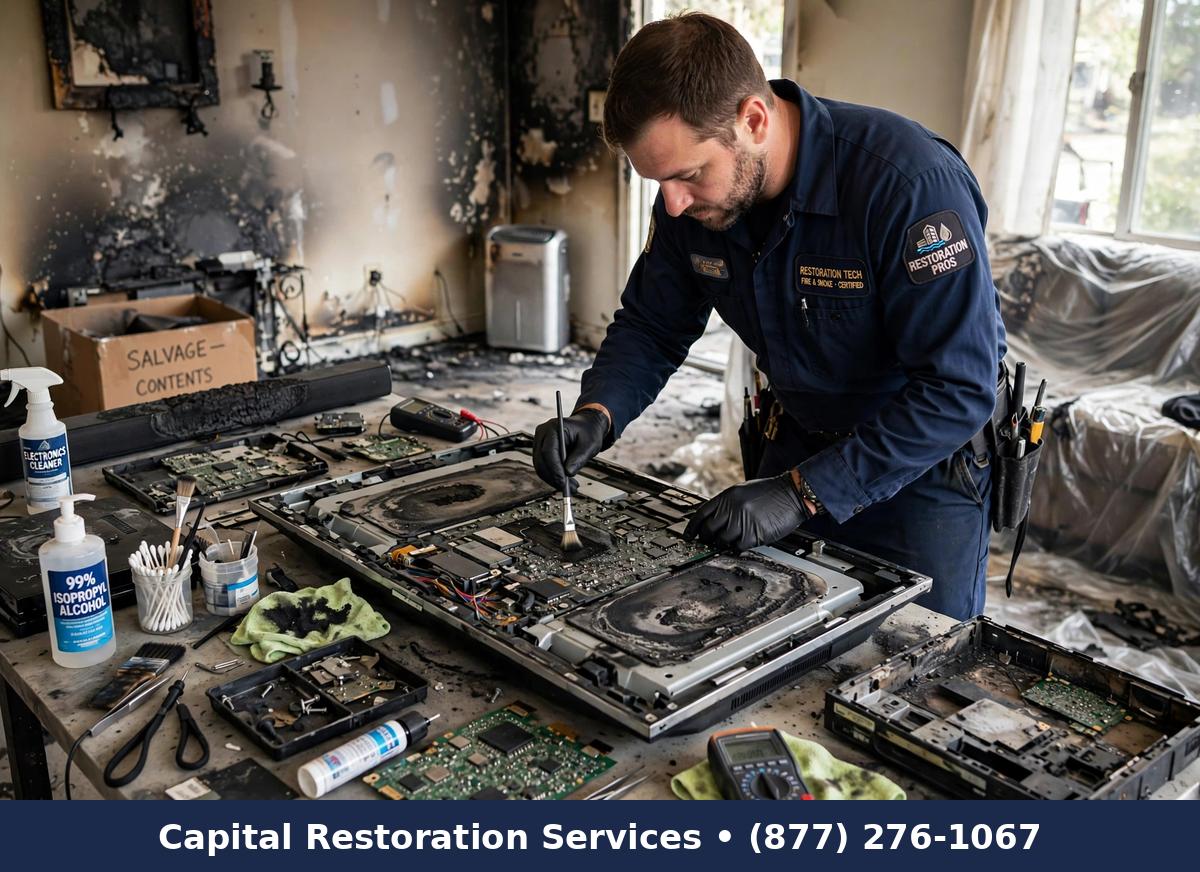
Loose soot comes off first with HEPA-filtered vacuums and soft brushes, worked carefully so static does not build. Next we disassemble the device to reach the boards, fans, and connectors where soot hides. Circuit boards and metal parts go through an ultrasonic bath in a cleaning solution made for electronics, which lifts residue from under chips and around fine solder joints that no brush can reach.
After the bath, boards get a rinse and a corrosion-inhibitor treatment that protects cleaned contacts from re-oxidizing. Devices then finish in a controlled drying chamber so no moisture lingers inside to restart corrosion later. We reassemble, test function in a static-controlled workspace, and treat any remaining odor with hydroxyl-based deodorization. Anything that fails testing is documented plainly for your records.
What Shapes the Cost of Smoke-Damage Electronics Work
The number and size of devices matters most: one laptop is a different job than a home theater rack or an office full of workstations. The amount of smoke exposure counts too, since heavy soot from an active fire room needs more cleaning passes than light residue from a distant room.
Device complexity plays a role as well. Dense equipment like AV receivers and servers takes longer to disassemble and clean than a simple monitor. The condition of the components matters: boards with corrosion already eating through traces may need extra attention or may not be candidates at all. Rush or after-hours intake and the odor-treatment step each add to the scope. We scope every job after inspection, so you know what is planned before work begins.
What Smoke Restoration Cannot Do
Honest limits matter as much as capabilities. We cannot rebuild a board whose traces have corroded through, fix melted plastic, or revive a battery that heat damaged. Cleaning also fixes contamination, not age: a device that was already failing before the smoke will still be failing after. And we never promise a specific outcome. Each item is judged on its own after cleaning and testing, with results reported as they are.
Homes and Businesses Capital Restoration Services Helps After Smoke Exposure
Smoke does not respect property lines, and neither do we. Capital Restoration Services helps homeowners with living-room gear, home offices, and kitchen appliances after cooking fires or nearby structure fires. We also work with offices, retail shops, studios, and houses of worship whose equipment picked up smoke from a fire elsewhere in the building.
Whether it is one laptop or a whole rack of equipment, the process is the same careful one: contain the contamination, clean it properly, dry it fully, and test it honestly. Call (877) 276-1067 to talk through what happened, and we will tell you straight whether professional cleaning is the right next step.
Features
- Ultrasonic bath cleaning for circuit boards and internal components
- HEPA-filtered dry soot removal before any wet cleaning
- Corrosion-inhibitor treatment to protect cleaned metal contacts
- Controlled drying chambers that pull moisture from devices
- Smoke odor neutralization for electronics and housings
- Function testing in a static-controlled workspace after cleaning
Benefits
- Give expensive TVs, computers, and audio gear a real chance at recovery
- Stop acidic soot from corroding boards further while you wait
- Avoid the risk of shorts caused by conductive residue
- Keep an itemized record that supports your insurance claim
- Reduce lingering smoke odor without harsh masking sprays
- Get an honest answer on what is salvageable before you replace anything
Frequently asked questions
Should I try cleaning soot off my electronics myself?
Household wiping can push soot deeper into vents and smear oily residue across boards. Powering the device on to test it is worse: current through soot can short the board permanently. The safest move is to leave it off, keep it dry, and call a professional.
How quickly should smoke-damaged electronics be cleaned?
Sooner is better. Soot grows more corrosive as it absorbs moisture from the air, and conductive films can form within days. Devices cleaned quickly have a noticeably better chance of full recovery than ones left sitting for weeks.
Can you remove the smoke smell from electronics?
In most cases, yes. After cleaning, we deodorize devices with hydroxyl-based treatment that breaks down odor compounds instead of covering them with fragrance. Housings and fans, which trap the most odor, get special attention.
Will my devices work again after cleaning?
Many do, but no honest company can promise it for every device. Light to moderate smoke damage usually cleans well, while heavy soot, heat damage, or existing corrosion make recovery less likely. We test after cleaning and report the results for each item.
How much does electronics smoke damage restoration cost?
Cost depends on the number of devices, their size and complexity, the level of soot exposure, and how much disassembly and odor treatment is needed. We inspect first and lay out the scope in plain terms before any work starts, so there are no surprises.