Emergency Fire Damage Restoration Near Me
Starting price: Call for pricing
A fire leaves more than charred walls: soot spreads through every room, suppression water soaks everything, and smoke odor settles deep. Capital Restoration Services responds around the clock to secure your property, clean soot and smoke, dry the water damage, and guide the rebuild. Call (877) 276-1067 now. The first hours matter most.
What Emergency Fire Damage Restoration Includes
Most people picture the burned room. The real job is bigger. A house fire produces three kinds of damage at once: burned and charred material at the source, soot and smoke residue that traveled through the whole building, and water damage from the hoses and sprinklers that put the fire out. Emergency fire damage restoration handles all three, in the right order.
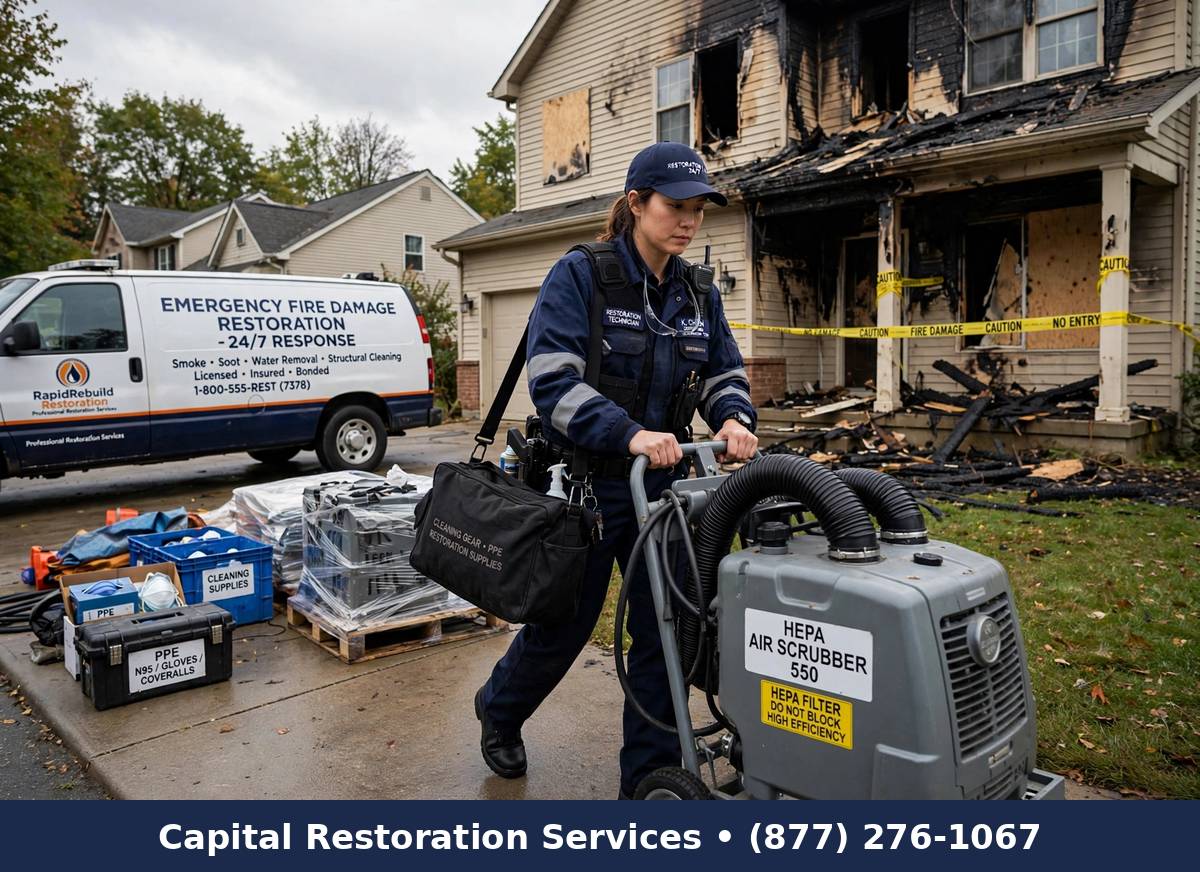
Capital Restoration Services secures the property first, then extracts water and dries the structure, then cleans soot and smoke residue from surfaces and belongings. We remove smoke odor at its source and finish with the documentation your insurer needs. The result is a property that is clean, dry, and ready for repair instead of a burned shell that keeps getting worse.
When to Call for Emergency Fire Restoration
- Any fire the fire department responded to, even a small one. Smoke travels far beyond the flames.
- Heavy soot on walls, ceilings, or belongings, especially oily black residue.
- Broken windows, damaged roofing, or open walls after the fire. The building needs to be secured.
- Standing water or soaked materials from suppression efforts.
- Smoke odor through the HVAC system, which spreads contamination to clean rooms.
- A kitchen or appliance fire that you think stayed small. Residue still settles everywhere.
If the fire department has cleared the property and you are allowed near it, that is the time to call. Waiting gives soot time to stain and water time to grow mold.
What To Do in the First 24 Hours After a Fire
First, follow the fire department's instructions and do not re-enter until they say it is safe. Call your insurance carrier to open a claim, then call a restoration company. Take photos of visible damage without touching soot or moving contaminated items; your documentation supports the claim later.
Do not turn on affected utilities, appliances, or electronics, and do not try to clean soot yourself. Household wiping smears residue, sets stains, and spreads contamination into clean areas. Arrange a safe place to stay, including for pets, and let the professionals handle the property. Acting quickly limits the secondary damage that makes fire losses so expensive.
How Our Emergency Response Works, Step by Step
Your call reaches a live response team, not a voicemail. We gather the essentials: what happened, whether the fire department has cleared the property, and what is exposed right now. Crews roll with board-up materials, extraction equipment, and drying gear.
Secure comes first. We board up broken openings and tarp damaged roofing so weather, animals, and intruders cannot add to the loss. Assess and document comes next: a room-by-room walkthrough with photos, moisture readings, and notes on what can be cleaned versus what must go.
Extract and dry follows. We pull standing water, set dehumidifiers and air movers, and map moisture until the structure reads dry. Clean is the soot and smoke residue phase: walls, ceilings, and salvageable contents are cleaned with methods matched to each surface. Deodorize finishes the job with thermal fogging or hydroxyl treatment that neutralizes odor compounds instead of masking them.
What Shapes the Cost of Emergency Fire Restoration
The size of the fire and how far soot traveled set the scale. A contained kitchen fire and a whole-house fire are entirely different jobs. The amount of water used in suppression matters too, since soaked framing, insulation, and flooring all need drying or removal.
Which materials can be cleaned versus replaced is a major factor. Non-porous surfaces usually clean well; porous materials like insulation and carpet padding often must be removed. The volume of belongings needing pack-out, the extent of odor treatment, and the amount of rebuilding all shape the final scope. We document everything and walk you through it step by step before work begins.
Homes and Businesses Capital Restoration Services Serves
Capital Restoration Services serves single-family homes, apartments, and condos after kitchen fires, electrical fires, and full structure fires. We also help offices, retail spaces, restaurants, and rental properties where a fire in one unit spread smoke and water damage through the rest.
From the first board-up to the last odor treatment, you deal with one team that knows your property and your claim. Call (877) 276-1067 any time, day or night. We will secure the property, explain what comes next, and get your recovery moving.
Features
- Emergency board-up and roof tarping to secure the property
- Water extraction and structural drying after fire suppression
- Soot and smoke residue cleaning for walls, ceilings, and contents
- Smoke odor removal with thermal fogging and hydroxyl treatment
- Pack-out, cleaning, and storage of salvageable belongings
- Moisture mapping and mold-prevention treatment after drying
Benefits
- Stop weather, theft, and further damage with fast board-up
- Keep soot from staining surfaces permanently by cleaning it quickly
- Prevent mold from taking hold in water-soaked materials
- Get photo documentation that supports your insurance claim
- Reclaim belongings you thought were lost
- Move through recovery with one team from cleanup to rebuild
Frequently asked questions
How fast should I call after a fire?
As soon as the fire department says the property is safe to approach. Soot starts staining within hours, and suppression water can start mold growth within a day or two. We take emergency calls around the clock.
Can I clean soot myself before the crew arrives?
It is better not to. Household wiping can smear soot deeper, set permanent stains, and spread residue into clean rooms. Stay out of heavily affected areas and let the crew handle the cleaning with the right methods.
Will the smoke smell ever go away?
Yes, with the right process. Odor comes from residue, so we clean first and then use thermal fogging or hydroxyl treatment to neutralize what remains. Covering the smell without cleaning is what fails.
Do you handle the water from the fire hoses too?
Absolutely. Nearly every fire job includes water damage from suppression. We extract the water, dry the structure with dehumidifiers and air movers, and treat to prevent mold before repairs begin.
How much does emergency fire damage restoration cost?
It depends on the size of the fire, how far soot traveled, how much water was used, which materials can be cleaned versus replaced, and how much rebuilding is needed. You will see the full plan, from board-up through odor treatment, before we begin any work.