Emergency Water Removal Near Me
Starting price: Call for pricing
Standing water keeps damaging your home every minute it sits, warping floors, soaking walls, and feeding mold growth. Capital Restoration Services removes water fast with pumps and professional extractors, then tracks hidden moisture with meters and infrared cameras. Call (877) 276-1067 for emergency response around the clock.
What emergency water removal covers
This service gets standing water out of your building, fast. Burst pipes, failed appliance hoses, sump pump failures, storm flooding, and the water firefighters leave behind all qualify. If water is standing, seeping, or soaking in, this is the call to make.
We handle clean water, gray water, and contaminated black water, and each gets different handling. Contaminated water calls for protective gear and disinfecting steps guided by the IICRC S500 standard, because it can carry bacteria you should not touch or breathe around.
What this visit does not do: it does not rebuild walls or replace flooring. It extracts the water, maps the moisture you cannot see, and sets drying equipment. That is the critical first phase everything else depends on.
Signs you need water removal now
- Water pooling on floors after a pipe burst or appliance failure.
- A sump pump that failed during heavy rain.
- Sewage backing up into tubs, toilets, or floor drains.
- Firefighting water standing in rooms after a fire.
- Water seeping under doors or up through a slab during flooding.
- Carpets that squelch underfoot or baseboards swelling with moisture.
Mold can begin growing in wet materials within 24 to 48 hours, according to EPA guidance. Every hour of delay lets water migrate deeper into walls and subfloors, and widens the eventual repair.
How our water removal process works
When you call (877) 276-1067, we ask where the water is coming from, how deep it is, and whether the power is safe, then we roll. On arrival we check for hazards first. Live electricity in standing water and the contamination level decide how we suit up and which equipment comes through the door.
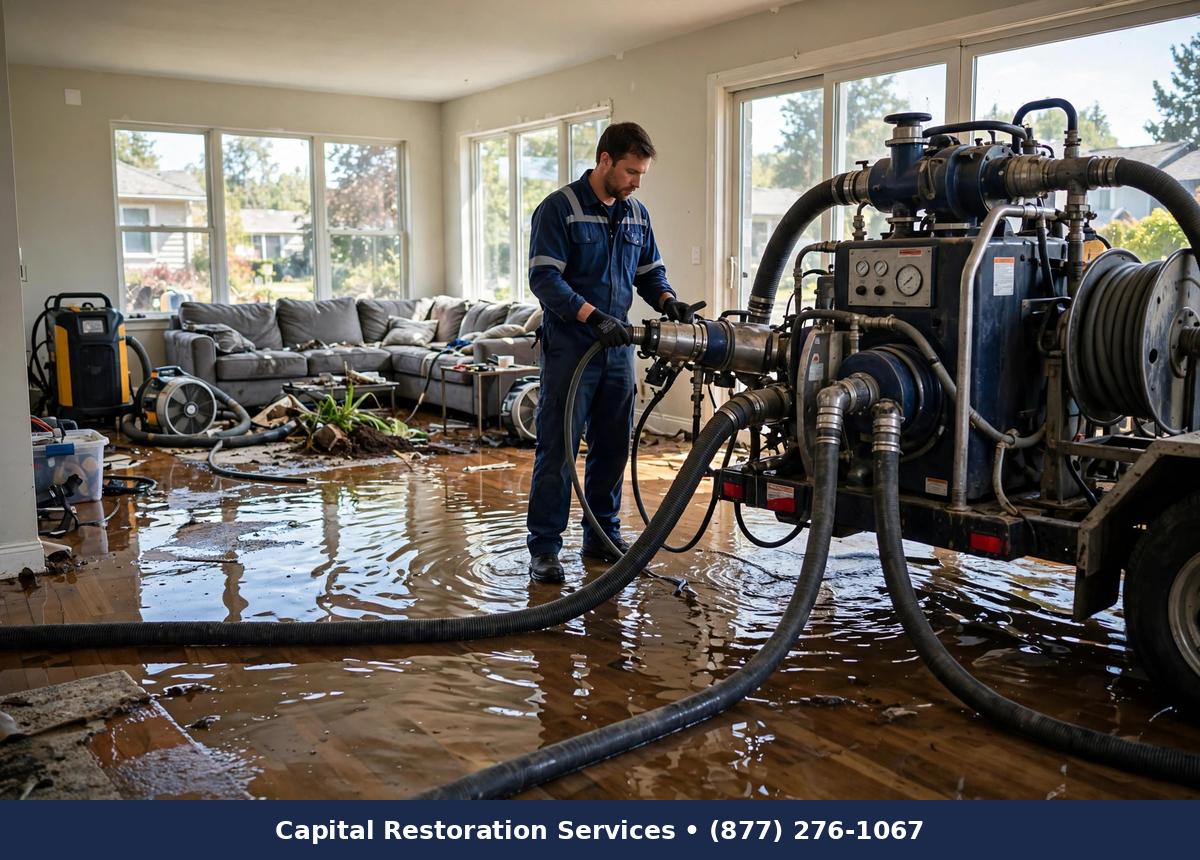
Deep water goes first. Submersible pumps drop in and push water outside through discharge hoses, clearing the inches that extractors cannot reach. Then truck-mount or portable extractors take over on carpets and hard floors. Professional machines pull far more water per pass than any shop vacuum, using wide hoses and strong sustained suction.
Soaked carpet pad usually cannot be saved, so we lift the carpet, pull the ruined pad, and extract from both sides. Then we map moisture with meters and infrared cameras, finding water hiding inside walls and under flooring that eyes alone would miss.
Finally we set air movers and LGR dehumidifiers and take baseline readings. We return to check those readings until moisture levels are back to normal. That is how we know the job is truly done, not just dry on the surface.
What affects the cost of water removal
Volume leads. A flooded basement costs more to clear than a single wet room, simply because there is more water and more equipment time. Contaminated water adds steps: protective gear, disinfecting, and sometimes removing materials that cannot be safely cleaned.
Flooring type matters too. Hardwood and tile need different handling than carpet, and stairs, tight crawlspaces, and limited access slow the work down. After-hours emergency calls cost more than daytime visits. For an exact number, call (877) 276-1067. We will quote your actual situation, not a guess.
What to do before we arrive
Shut off the water at the main valve if you can reach it safely. Kill power to wet rooms if outlets or cords are underwater. Move valuables, papers, and electronics to dry ground, and lift curtains and furniture skirts off wet carpet.
Do not wade into water that may be contaminated or electrified. Do not run your own vacuum on it either. Wait for the crew and the right equipment.
Who we help around here
We work in single-family homes, apartments, and condos, where one burst pipe upstairs can soak the unit below. Speed protects neighbors too, not just you. We also serve offices, retail shops, restaurants, and houses of worship.
Capital Restoration Services is local, which means we know the area's older plumbing, storm patterns, and basement quirks. When the water is out and the drying gear is humming, we hand you documented moisture readings your insurer can rely on. Call (877) 276-1067 and we will get moving.
Features
- Submersible pumps that clear deep standing water fast
- Professional-grade extraction for carpets and hard surfaces
- Carpet lifting with pad removal when padding is ruined
- Moisture meters plus infrared cameras to find hidden water
- LGR dehumidifiers and air movers placed the same visit
- HEPA-filtered equipment exhaust on contaminated jobs
- Water category handling per IICRC S500 standards
Benefits
- Stops damage from spreading with every passing minute
- Pulls water from carpet, pad, and hard surfaces in one visit
- Finds hidden moisture inside walls before mold takes hold
- Documented readings that back up your insurance claim
- Safe handling of contaminated water protects your family
- Drying equipment is already at work before we leave
Frequently asked questions
How quickly does water need to come out?
As fast as possible. Mold can begin within 24 to 48 hours in wet materials, and water keeps migrating into walls and subfloors the whole time it sits.
Can my carpet be saved?
Often yes, if the water is clean and we reach it quickly. We extract, lift, and dry it in place. Soaked pad is another story and usually has to go.
What if it is sewage?
That is contaminated water, and it gets full precautions: protective gear, contained extraction, and disinfecting steps. Do not touch it or try to clean it yourself.
How much does emergency water removal cost?
It depends on how much water there is, whether it is contaminated, how many rooms are affected, your flooring type, and timing. Call (877) 276-1067 and we will give you a straight quote.
Will you have to tear out my walls?
Not always. Moisture mapping tells us exactly where water hides, so we only open what must be opened, sometimes just baseboards or small inspection holes to dry wall cavities.