Fire Damage Assessment and Inspection Near Me
Starting price: Call for pricing
After a fire, the damage you cannot see matters as much as what you can. Smoke travels, soot bonds to surfaces, and heat weakens structure. Capital Restoration Services performs a detailed fire damage assessment and inspection, documenting every affected area and writing a clear restoration plan. Call (877) 276-1067 to schedule your inspection.
What a fire damage assessment gives you
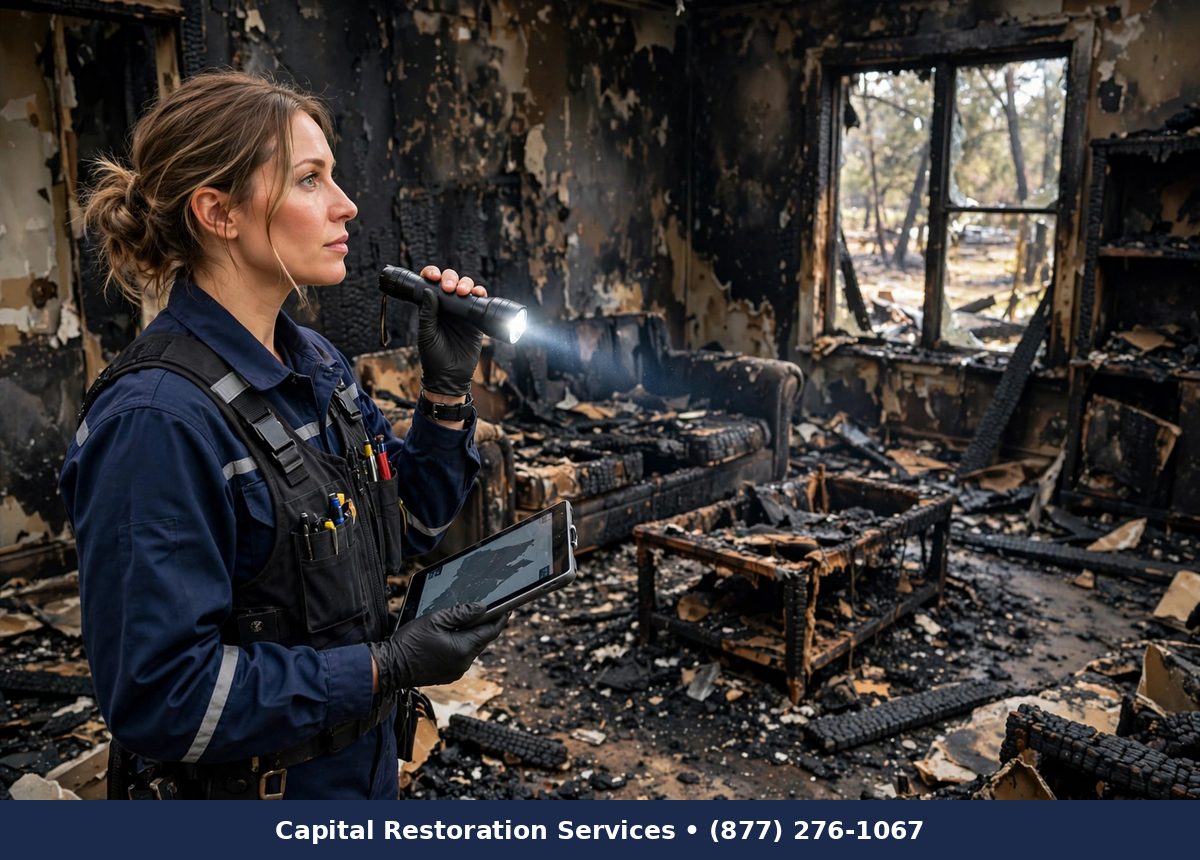
An assessment is a diagnosis, not a cleanup. We walk your property room by room and tell you exactly what the fire, smoke, heat, and firefighting water did. Then we hand you a written plan for fixing it, in an order that makes sense.
That plan covers soot type and spread, structural effects on framing and decking, moisture from suppression water, HVAC contamination, and which contents can be cleaned versus replaced. Photos and instrument readings back every line, so nothing rests on opinion alone.
What it does not do: we do not clean or rebuild during an assessment, and we are not insurance adjusters. We do not negotiate your claim. We give you, and your adjuster, documentation that makes the next steps clear.
Warning signs that call for a professional inspection
- A kitchen fire was put out, but smoke odor fills the whole house.
- Soot shows up on walls far from where the fire burned.
- A furnace puff-back left black streaks around vents.
- You see char on studs, joists, or roof decking.
- Items melted or warped in rooms the flames never reached.
- Water from firefighting is pooled inside the building.
- A stale smoke smell lingers weeks after the fire.
Smoke does not stay where the fire was. Heat drives it upward and pressure pushes it into wall cavities, closets, and ducts, so the visible damage is rarely the whole story.
How our inspection unfolds, step by step
We begin with safety, checking structural stability and electrical hazards before anyone goes deep into the building. Then we ask what burned, how long it burned, and what has happened since. That history tells us where to look.
Next comes soot testing in each room. Different fuels leave different residues: dry powdery soot from wood and paper fires, sticky wet smoke from slow smoldering fires, smeary residue from burned plastics, and the nearly invisible greasy film that kitchen protein fires leave behind. Each type needs its own cleaning approach, so identifying them now prevents the wrong method later.
We map how far smoke traveled: behind switch plates, inside closets, up into the attic. Heat and pressure force residue into places eyes skip. Infrared cameras and moisture meters reveal suppression water hiding in walls and subfloors, and we inspect the HVAC system, since ducts can carry soot and odor to every room in the building.
Everything lands in your written restoration work plan: findings, photos, moisture readings, and the recommended order of work. You will know what must happen first and what can wait, with reasons you can understand.
What shapes the cost of an assessment
Size and smoke spread drive it. A one-room kitchen fire is quicker to assess than a whole house filled with odor. Attics, crawlspaces, and basements add time when they need entry, and older buildings may raise questions about hazardous materials that call for specialist testing.
Emergency scheduling costs more than a planned visit, since it pulls a crew off other work. Call (877) 276-1067 for a quote matched to your property and your timeline.
What to do, and not do, before the inspection
Leave soot where it is. Wiping walls or washing surfaces can grind residue deeper into paint and finishes, making proper cleaning harder and sometimes impossible. If the furnace or AC is running, shut it down so it stops spreading soot through the ducts.
Keep the property secured until we arrive, and gather anything you know about the fire: what burned, where it began, and what the fire department did. That context sharpens the inspection.
The properties and people we serve
We assess single-family homes after kitchen, garage, and electrical fires, plus rental units where landlords need a clear scope before repairs begin. Small businesses, restaurants, offices, and houses of worship use us too, anywhere smoke traveled further than expected.
Capital Restoration Services works across the area with a local crew that knows its housing stock, from older homes with plaster walls to new builds with open floor plans that let smoke roam. You get straight answers in plain language, not jargon. Call (877) 276-1067 to book your assessment.
Features
- Room-by-room soot and smoke spread mapping
- Residue testing that identifies dry, wet, synthetic, and protein soot
- Structural heat checks on framing, joists, and decking
- Moisture mapping from firefighting water with meters and infrared cameras
- HVAC and ductwork contamination inspection
- Contents check: what can be cleaned versus replaced
- Written restoration work plan with photos and readings
Benefits
- Know the full extent of damage before spending on repairs
- Catch hidden smoke and water damage while it is still fixable
- A documented plan your insurance adjuster can work from
- Avoid paying for the wrong cleaning method on the wrong soot
- Clear priorities: what must happen first, what can wait
- Straight answers instead of guesswork and worry
Frequently asked questions
Is an assessment the same as an estimate?
No. An assessment diagnoses the damage; an estimate prices the fix. Our written scope gives any contractor, including us, something solid to price from.
How long does an inspection take?
It depends on the size of the property and how far smoke traveled. A typical home walkthrough with testing and documentation takes one focused visit, not days.
Do you test for hazardous materials?
We note suspect materials, such as old insulation or coatings in older buildings, and flag them for specialist testing. That call-out is part of a proper assessment.
Will my insurance company accept your report?
Adjusters work from documented findings: photos, readings, and a written scope, which is exactly what we deliver. We do not negotiate claims, but we give you the paperwork claims need.
How much does a fire damage assessment cost?
It depends on property size, how far smoke spread, and whether attics or crawlspaces need entry. Call (877) 276-1067 for a quote for your situation.