Fire Sprinkler Water Damage Cleanup Near Me
Starting price: Call for pricing
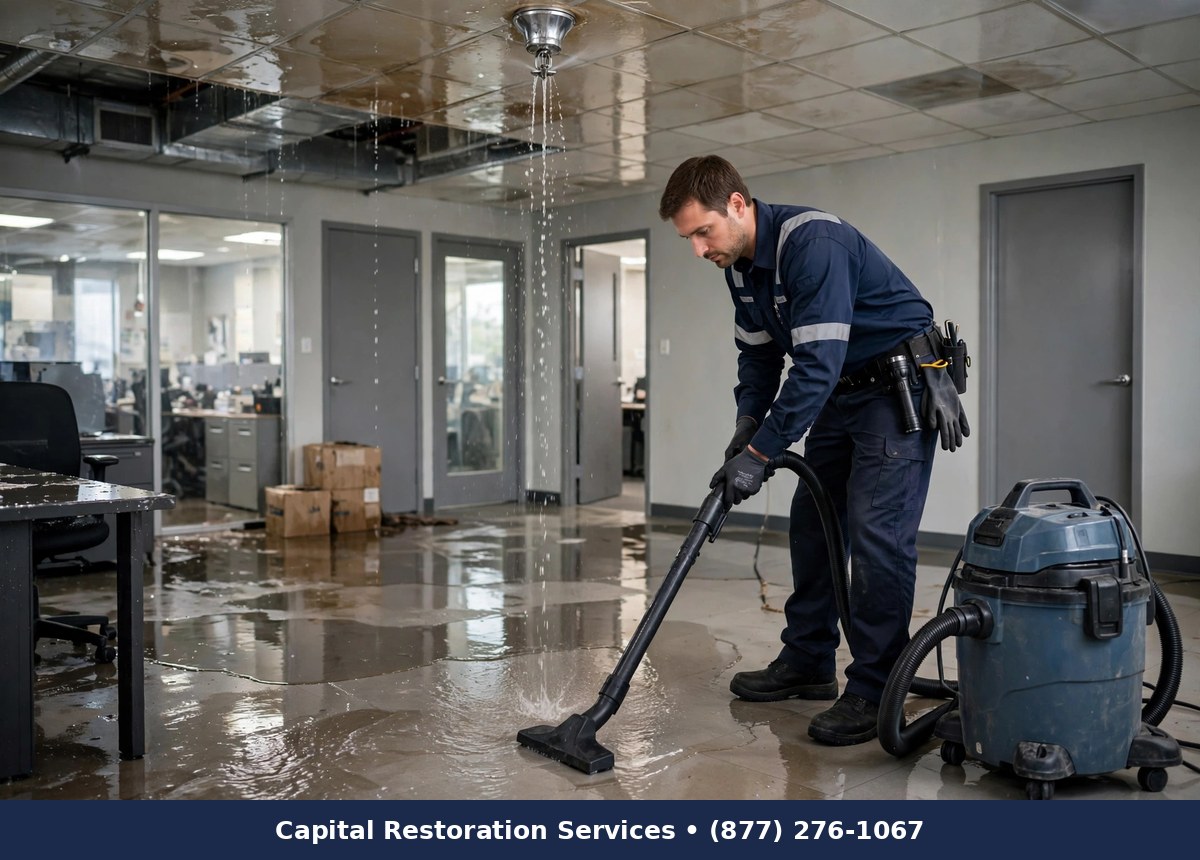
A fire sprinkler does its job and soaks everything around it. Whether one head opened by accident or the system ran during a real fire, Capital Restoration Services handles the water damage a sprinkler discharge leaves behind: fast extraction, thorough drying, and moisture checks that make sure nothing is left wet inside your walls. We clean up the water so the system that saved the building does not cost you the building.
What Sprinkler Water Damage Cleanup Covers
When a sprinkler head opens, it can release a large volume of water in minutes, and that water keeps traveling long after the flow stops. Our cleanup covers the full water side of the event: extracting standing water, mapping where it went, drying the structure completely, and treating affected surfaces. We handle both accidental discharges, a bumped head, a frozen pipe, a mechanical failure, and the water left behind when sprinklers put out a real fire.
What we do not do is repair the sprinkler system itself. Head replacement, pipe repair, and putting the system back in service belong to a licensed fire-protection contractor, and we coordinate with yours so drying and system work happen in the right order. Our lane is the water damage; theirs is the fire protection.
When to Call After a Sprinkler Discharge
- A head opened by accident and soaked a room, hallway, or office
- Sprinklers activated during a fire and the area needs water cleanup too
- Water is dripping through ceilings or running down walls on lower floors
- Carpet, padding, or wood flooring took on water from above
- You can smell dampness or see staining a day or two after the event
- Your property manager or insurer wants professional drying documented
Sprinkler water is usually clean water at first, but it picks up contaminants as it travels through the building. The sooner extraction begins, the simpler the job stays.
How the Cleanup Process Works
The first move is to confirm the water is off and the system is safe. If the fire department has already shut the system down, we verify with your building contact; if water is still flowing, stopping it comes before everything else. Then we document the affected areas with photos and initial moisture readings.
Extraction comes next. Truck-mounted extractors and portable units pull standing water from floors, and weighted extraction tools press water out of carpet and pad. For water that ran into wall cavities or under flooring, we use moisture meters and thermal imaging to map exactly how far it traveled, so nothing stays wet and hidden.
Drying is the long game. Low-grain refrigerant dehumidifiers pull moisture from the air while high-velocity air movers push dry air across wet surfaces, and we take readings every day until wood, drywall, and concrete reach their dry goals. Wet materials that cannot be dried in place, saturated pad, swollen trim, compromised drywall, are removed so they do not become a mold problem. Affected surfaces get antimicrobial treatment, and your file gets every reading for the insurance record.
What Affects the Cost of Sprinkler Water Cleanup
Volume and spread set the scale. One head over a small office is a different job than a discharge that ran down three floors of a commercial building. The longer water sat before extraction began, the deeper it drives into materials and the longer drying takes.
Building materials matter. Carpet and pad can often be extracted and dried; hardwood may need specialty drying mats or replacement; drywall that wicked water upward may need sections removed. Access counts too. Drying a clean, open office is straightforward, while working around inventory, equipment, or tenants adds labor.
The category of water can change things. Sprinkler discharge begins as clean water but degrades the longer it sits and the more surfaces it crosses, which can call for additional cleaning steps. Emergency response timing also factors in. Middle-of-the-night extraction is priced for urgency. For an exact scope on your property, call (877) 276-1067.
Serving Your Area After the System Does Its Job
Capital Restoration Services responds to sprinkler discharges in office buildings, retail spaces, restaurants, warehouses, and apartment complexes, as well as single-family homes with residential sprinkler systems. Commercial clients get drying planned around business hours; residential clients get a clear path back to normal.
Unheated areas like parking garages and attics often use dry-pipe sprinkler systems, where water is held back from the pipes until a head opens, and we are familiar with the discharge patterns both wet-pipe and dry-pipe systems leave behind. Wherever the water landed, our process is the same: extract it, map it, dry it, and prove it with readings. Call (877) 276-1067 and we will get the drying underway.
Features
- Rapid water extraction with truck-mounted and portable extractors
- Moisture mapping with meters and thermal imaging to find hidden water
- Low-grain refrigerant dehumidifiers and high-velocity air movers for deep drying
- Coordination with your fire-protection contractor on head replacement and system reset
- Antimicrobial treatment of wet surfaces to hold off mold growth
- Daily moisture readings until every material reaches its dry goal
Benefits
- Gets standing water out fast, limiting how far it spreads
- Dries inside walls and under floors where a mop never reaches
- Helps prevent the mold growth that follows a slow or partial dry-out
- Documents every reading for your insurance claim
- Gets the system reset process moving while drying continues
- Returns rooms to service sooner with a verified, complete dry-out
Frequently asked questions
Is sprinkler water clean or dirty?
It begins as clean water but picks up dust, debris, and building materials as it travels. That is why fast extraction matters. The longer it sits, the more cleaning the job needs. We assess the water category on arrival and adjust the process.
Can you replace the sprinkler head that went off?
Sprinkler system repair must be done by a licensed fire-protection contractor. We coordinate with yours so the head gets replaced and the system reset while our drying equipment keeps working. You get one smooth handoff instead of two separate projects.
How long does drying take after a sprinkler discharge?
Most jobs dry in three to five days of active equipment time, depending on how much water spread and what materials it reached. We take moisture readings daily and remove equipment only when everything hits its dry goal, not before.
How much does sprinkler water cleanup cost?
It depends on how many areas got wet, how long the water sat, and which materials need drying or replacement. A contained single-room job is modest; a multi-floor commercial discharge is a major project. Call (877) 276-1067 for an exact scope on your loss.
Will my insurance cover this?
Most property policies cover sudden sprinkler discharges, accidental or fire-related. We document everything, photos, moisture readings, equipment logs, in the format adjusters expect, which makes the claim process smoother.