Flood Damage Restoration Near Me
Starting price: Call for pricing
Floodwater is not just water. It carries silt, sewage, and chemicals into your home or business, and everything it touches needs proper handling. Capital Restoration Services provides full flood damage restoration: fast water removal, deep structural drying, and careful cleanup guided by IICRC S500 standards. Call (877) 276-1067 and we will take it from there.
What Flood Damage Restoration Really Is
Flood damage restoration is the cleanup and dry-out that follows when outside water gets inside, from storms, overflowing waterways, or backed-up sewers. Unlike a broken supply line, floodwater is treated as Category 3 black water under the IICRC S500 standard, which means it is considered contaminated no matter how clear it looks.
Our service covers water extraction, moisture mapping, controlled removal of soaked materials, structural drying, antimicrobial treatment, and odor control. It does not include rebuilding walls or replacing flooring. That is reconstruction work that comes after the space is dry and verified clean. We also do not fix the source of the water, such as a failed sump pump or a clogged drain, since that is a plumber's job.
Signs You Need Flood Restoration Now
- Standing water from storms, flash floods, or storm surge
- Sewage backup or water rising through floor drains
- Water that has reached drywall, insulation, or flooring
- A damp, musty smell that lingers after the water is gone
- Water hiding under floors, behind baseboards, or inside wall cavities
- Visible mold beginning on wet surfaces
How a Flood Job Runs, Step by Step
Every job begins with an inspection. We find where the water traveled, determine its category, and measure moisture in walls, floors, and framing with meters and infrared cameras. Then powerful extraction equipment pulls out the standing water, using truck-mounted units for large volumes and portable extractors where access is tight.
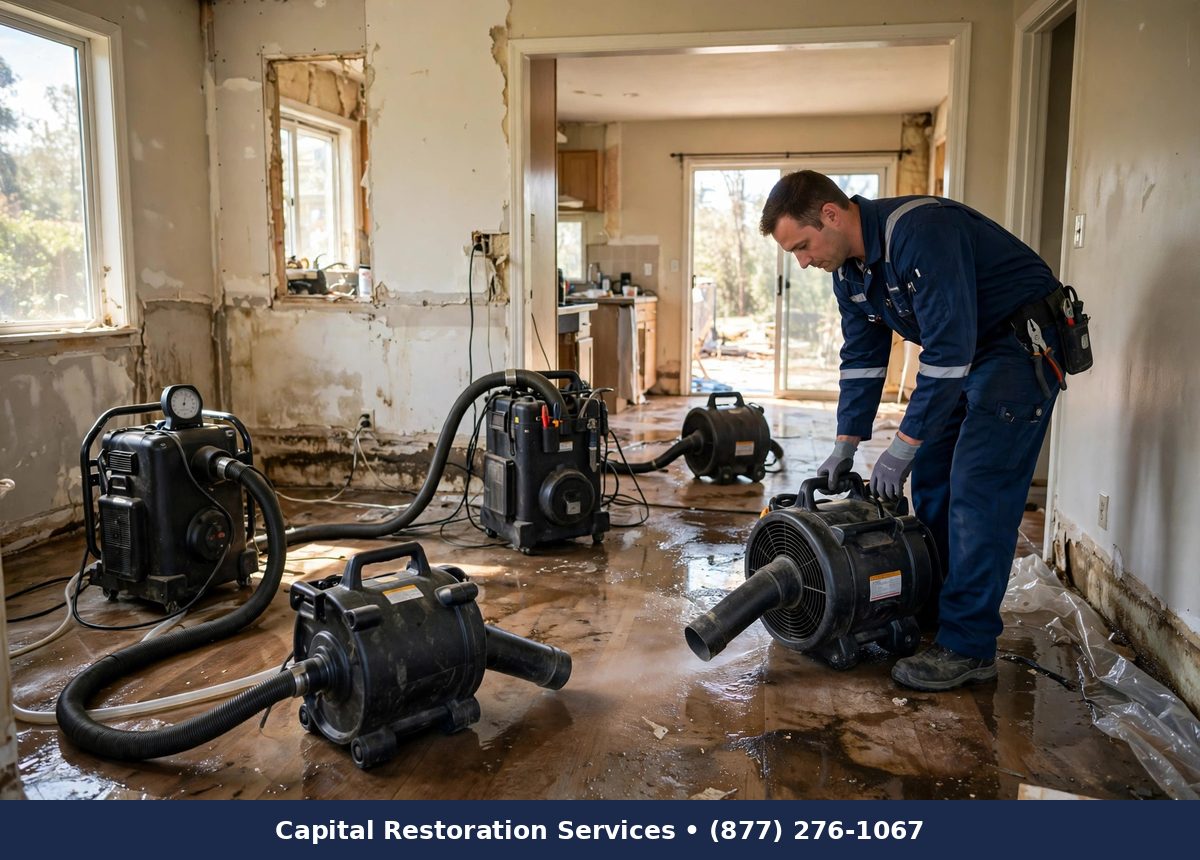
Next, materials that cannot be saved come out. Soaked carpet pad, waterlogged drywall, and swollen particleboard are removed in a controlled way so contamination does not spread through the building. Then we place commercial air movers and LGR dehumidifiers to dry the structure itself, and we return daily to take moisture readings until everything meets its dry standard.
Before we finish, affected surfaces receive an antimicrobial treatment applied according to its EPA label, and HEPA-filtered air equipment captures airborne particles kicked up during the work. Final readings and photos document that the space is truly dry.
What Affects the Cost of Flood Work
Cost follows the scope of the damage, not a flat rate. The size of the flooded area and how deep the water stood are the biggest factors. Which materials got wet matters too, since tile over concrete dries very differently from carpet over a wood subfloor.
Time is another factor. Water removed within hours leaves far less damage than water that sat for days. The contamination level shapes the work as well, because Category 3 black water calls for protective equipment, controlled demolition, and disposal steps that cleaner water does not. Emergency timing, access for equipment, and how much finished material must be removed all play a role too.
Who We Help in Your Area
Capital Restoration Services serves homeowners, landlords, and small businesses dealing with flood damage. Basements and ground floors take the brunt of most floods, and they are where we do most of our work. We also help property managers turn over flooded rental units and keep small shops and offices running through the dry-out.
Crawl spaces get attention too. Floodwater hides there and keeps humidity high long after the surface looks dry. Wherever the water went, our job is to find it, get it out, and leave the building dry and clean.
Features
- Truck-mounted and portable extraction for standing floodwater
- Moisture mapping with pin meters, pinless meters, and infrared cameras
- Controlled removal of soaked carpet pad, drywall, and other unsalvageable materials
- LGR dehumidifiers and high-velocity air movers for deep structural drying
- Daily moisture readings until the structure reaches its dry standard
- Antimicrobial treatment applied according to its EPA-registered label
- HEPA air filtration that captures airborne particles during cleanup
Benefits
- Faster extraction means less swelling, warping, and staining of materials
- Deep drying reaches wall cavities, subfloors, and framing that fans alone cannot
- Category 3 floodwater is handled with proper protection and safe disposal
- Daily drying logs and photos support your insurance claim
- Work follows recognized IICRC S500 restoration practices
- A verified-dry structure is far less likely to grow mold later
- You get a clear plan and timeline instead of guessing what comes next
Frequently asked questions
Is floodwater really different from a burst pipe?
Yes. A burst supply line is Category 1 clean water. Floodwater that has touched the ground is Category 3 black water under the IICRC S500 standard, because it picks up sewage, silt, chemicals, and debris along the way. That is why flood cleanup calls for protective equipment and different handling.
Can my carpet and drywall be saved?
Sometimes. Carpet can often be cleaned and kept, but saturated carpet pad almost always has to go. Drywall that wicked up floodwater usually needs to be cut out at least a foot above the water line, while solid materials like concrete and framing can typically be dried and kept.
How long does flood drying take?
It depends on how much water got in, which materials were affected, and how quickly work began. A small area of hard-surface flooring may dry in a few days, while a fully flooded finished basement takes longer. Daily moisture readings tell us when the structure has reached its dry standard, and we do not stop before that.
How much will flood restoration cost?
Cost follows the scope of the job: flooded square footage, water depth, affected materials, contamination level, and how long the water sat. There is no flat rate that fits every flood. Call (877) 276-1067 and we will inspect the damage and explain exactly what drives the price for your situation.
Will my insurance cover flood damage?
It depends on your policy. Standard homeowner policies often exclude outside flooding, while flood insurance or sewer backup endorsements may cover it. We document everything with photos and moisture readings, which makes filing a claim much easier. Check your policy or call your agent to confirm what you have.