Kitchen Fire Damage Restoration Near Me
Starting price: Call for pricing
Kitchen fires are the most common kind of house fire — and the mess they leave is uniquely stubborn: invisible protein soot, greasy residue, and odor that returns every time the room warms up. Capital Restoration Services cleans, repairs, and rebuilds fire-damaged kitchens, deciding honestly what can be saved and what must go. Call (877) 276-1067 today.
Why kitchen fires leave the trickiest mess
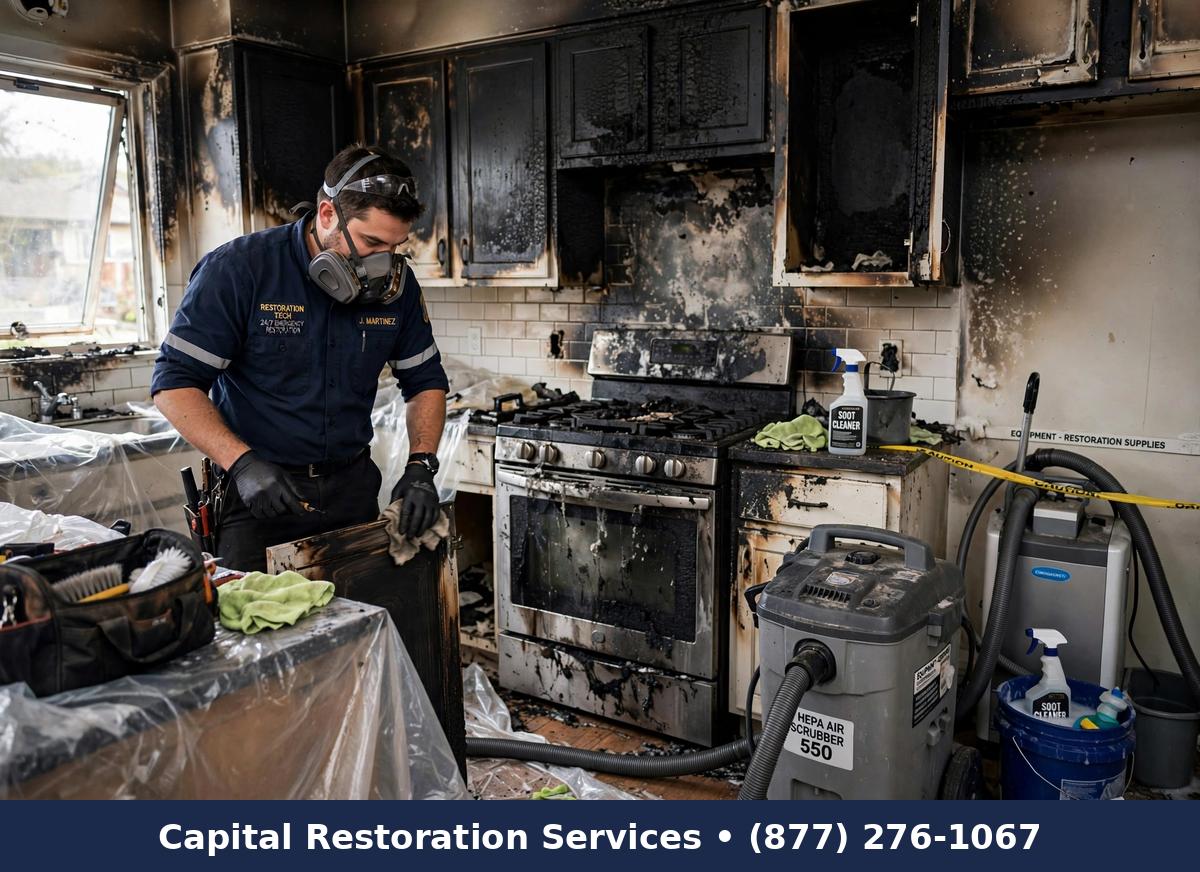
Most house fires start in the kitchen, and cooking fires behave differently from every other kind. A grease fire throws oily, sticky residue across cabinets, walls, and ceilings. A protein fire — burning food — leaves protein soot that is nearly invisible yet brutally pungent. Both keep releasing odor every time the kitchen warms up, which is why a kitchen can smell fine in the morning and terrible by dinner.
The residue also fights back against the wrong cleaning. Scrub a grease fire's oily film with plain water and a rag, and you smear it deeper into the surface. Use the wrong chemical on a cabinet finish, and you strip the finish along with the soot. Matching the cleaning method to the residue — and to the surface under it — is the whole craft.
The clean, repair, or replace verdict
Every kitchen fire ends with the same set of decisions, and getting them right saves real money. Solid wood cabinets with surface soot often clean up beautifully — doors come off so hinges and hidden edges get reached. Particleboard cabinets with smoke driven deep into the core rarely do. Heat-warped or blistered laminate has to go.
Appliances get the same honest verdict. A refrigerator that only caught light smoke may clean up fine. One that took direct heat or heavy soot inside its components is a replacement — running compromised wiring is not worth the risk. Countertops, flooring, and drywall are judged the same way: what heat and smoke actually did to each material, not what it looks like at a glance.
Food safety comes first
Before any cleaning starts, the pantry and refrigerator get sorted. Open food, anything in cardboard, and anything in plastic wrap that sat in heat or smoke gets discarded — toxic gases pass straight through permeable packaging. Sealed cans and jars usually survive with a good wash. This step feels wasteful, but eating smoke-contaminated food is not a risk worth taking, and we help you document the discarded items for your claim.
How the restoration actually runs
- Inspection and documentation. Thermal imaging and specialty lighting map the protein soot you cannot see, and everything is photographed for the insurance file.
- Containment. The kitchen is sealed off so soot does not travel into the rest of the house while we work.
- Debris and unsalvageable removal. Charred materials, ruined food, and anything beyond saving leave first.
- Residue-specific cleaning. Alkaline degreasers and enzymatic solutions digest grease and protein films on cabinets, appliances, and walls without harming the finishes.
- Air scrubbing. Industrial HEPA scrubbers with activated carbon run through the whole job, capturing airborne soot and chemical vapors as they are disturbed.
- Deodorization. Hydroxyl generators and thermal foggers break odor molecules apart in wall cavities and framing — not a cover-up, an actual breakdown of the source.
- Repair and rebuild. Drywall, flooring, cabinets, and paint go back in, and the kitchen is verified clean before you cook in it again.
What affects the cost
Kitchen fire jobs range widely because the variables stack up: how far the smoke traveled beyond the kitchen, whether the residue is greasy or protein-based, how many cabinets and appliances can be cleaned versus replaced, and whether firefighting water reached the flooring. A contained stovetop fire with surface cleanup is one job; a kitchen that needs new cabinets, counters, and appliances is another. After inspection we give you a written scope with real numbers. Call (877) 276-1067 to set that up.
Serving homes across the area
Capital Restoration Services restores fire-damaged kitchens in single-family homes, townhouses, condos, and rental units — from small grease fires that left the room standing but unusable, to full rebuilds. If your kitchen still smells like the fire every time you turn on the oven, that is residue talking, not your memory. Reach out at (877) 276-1067 and we will make it a kitchen again.
Features
- Thermal inspection mapping invisible protein soot and hidden heat damage
- Food and pantry evaluation with safe disposal of contaminated items
- Alkaline degreasing and enzymatic cleaning for grease and protein films
- Cabinet-by-cabinet verdict: clean, refinish, or replace
- Appliance inspection and smoke cleaning with electrical safety checks
- HEPA air scrubbing with activated carbon during the whole job
- Thermal fogging and hydroxyl treatment for odor at the molecular level
Benefits
- Cabinets, appliances, and finishes judged honestly — clean what can be saved, replace what can't
- The greasy, sticky residue unique to cooking fires removed with the right chemistry
- Odors eliminated at the source so they don't return when the kitchen heats up
- Food safety handled properly — no guessing about what's still edible
- One team for cleanup, repairs, and rebuild, with documentation for your insurer
- Your kitchen back to safe, usable condition without the trial-and-error
Frequently asked questions
Is the food in my kitchen still safe after a fire?
Discard anything open, in cardboard, or in plastic wrap that was exposed to heat or smoke — soot and toxic gases pass through permeable packaging. Sealed cans and jars can often be washed and kept, but anything questionable should go. We help you sort it room by room.
Can I still use my appliances after a kitchen fire?
Not until it's been inspected. Soot and heat can damage internal wiring and components even when the outside looks fine, and running a compromised appliance is a genuine hazard. We evaluate each one and tell you which are safe to clean and which need replacing.
Can smoke-damaged cabinets be saved?
Often, yes — if heat hasn't warped, blistered, or deeply penetrated them. Solid wood cabinets with surface soot usually respond well to professional cleaning; particleboard with smoke deep in the core usually doesn't. We test and show you the difference.
Why does the smoke smell come back every time I cook?
Protein fires — burning food — are the worst offenders. The residue is nearly invisible but extremely pungent, and it releases odor every time the kitchen gets warm or humid. Proper cleaning plus molecular-level deodorization is what finally ends it.
What does kitchen fire restoration cost?
It depends on the kitchen's size, how far the smoke traveled, and how much needs replacing versus cleaning. A surface-level cleanup is a much smaller job than a full cabinet and appliance rebuild. After our inspection you get a written scope — call (877) 276-1067 to schedule it.