Mold Containment Setup Services Near Me
Starting price: Call for pricing
Disturbing mold without containment is how one bad room becomes a whole-house problem. Capital Restoration Services builds sealed work zones — poly sheeting, negative air pressure, sealed vents, controlled entry — so spores stay where the work is happening. Call (877) 276-1067 before any mold gets disturbed.
Why mold work without containment backfires
Mold remediation is violent by nature — scrubbing, sanding, cutting out drywall. Every one of those actions launches spores into the air. Without a sealed work zone, those spores ride air currents into clean rooms, settle on furniture and in ductwork, and start the problem over somewhere new. The cleanup that was supposed to fix one room seeds three more.
Containment is the engineering answer. It turns the work area into a sealed box where spores can be captured instead of scattered. Nothing about it cleans mold directly — it creates the controlled conditions that let the actual removal happen safely.
What a proper setup looks like
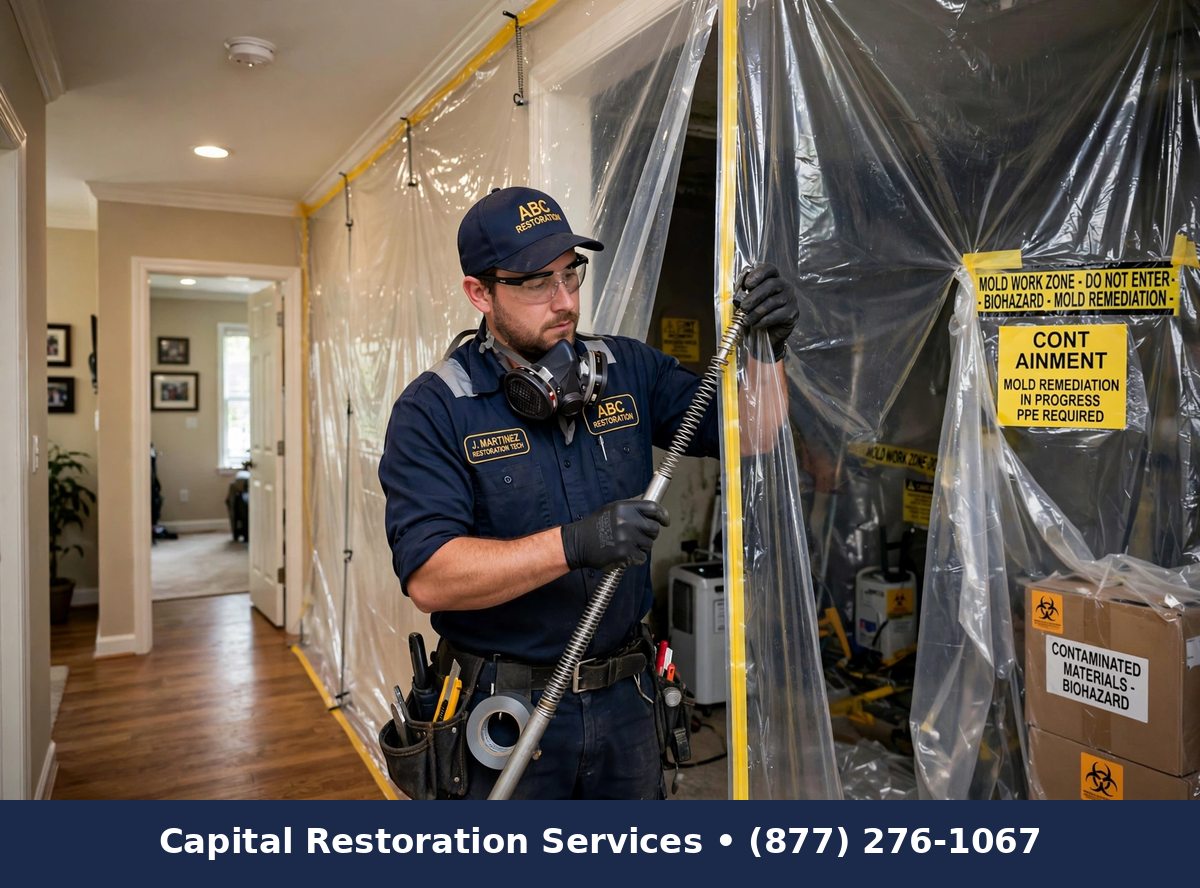
Polyethylene sheeting goes up floor to ceiling around the affected area, sealed at every seam and edge — not draped, sealed. Entry happens through a slit or zipper opening with covering flaps. Inside the zone, every supply and return vent gets sealed off so the HVAC system can't ferry spores to the rest of the building.
Then comes the part most DIY attempts skip: negative air pressure. A HEPA-filtered fan exhausts air from the work zone to the outdoors, so the contained area sits at lower pressure than the surrounding rooms. Air flows in through any small gap instead of contaminated air flowing out. That pressure difference is what makes the seal real rather than decorative.
Sizing the containment to the job
Not every job needs the same fortress. A small, contained patch gets a single layer of sheeting with a sealed entry — straightforward and effective. Larger or more complex contamination calls for double layers of fire-retardant sheeting and a dedicated airlock chamber, a small ante-room where workers enter and exit without ever breaking the main seal.
EPA remediation guidance scales containment to the extent of contamination, and professional judgment fills in the rest — location in the building, HVAC layout, and whether occupants stay in the home during the work all shape the design.
What happens at the boundary
The edges of a containment zone get as much attention as the middle. Protected floor coverings run from the work area to the exit route so foot traffic doesn't track dust out. Waste gets bagged inside the zone before anything leaves it. Contaminated protective gear comes off in the airlock, not in your hallway.
Before remediation starts, the setup gets checked: seams sealed, pressure verified, entries working. A containment that looks right but leaks air is worse than none at all, because it creates false confidence while spores escape.
What affects the cost
Size and complexity drive it — how much sheeting and framing the zone needs, whether negative air equipment is required, whether an airlock gets built, and how long the setup stays in place. A single-room containment is a different job from sealing off half a basement for a multi-day remediation. Call (877) 276-1067 and we'll design the setup your job actually needs, nothing more.
Serving homes and contractors across the area
Capital Restoration Services builds containment for our own remediation projects and as a standalone service — for homeowners tackling a small job themselves who want it done without contaminating the house, and for contractors who need a proper setup before their crews start. The principle never changes: seal it, pressurize it, then work inside it. If mold is about to be disturbed anywhere in your property, call (877) 276-1067 first.
Features
- Floor-to-ceiling polyethylene sheeting sealed at every seam
- Slit or zipper entries with covering flaps
- HEPA-filtered negative air machines sized to the space
- Sealed supply and return vents inside the work zone
- Airlock/decontamination chambers for larger jobs
- Protected pathways from the work zone to the exit
- Containment integrity checks before remediation begins
Benefits
- Keeps mold spores inside the work zone instead of through your home
- Protects the rooms, furniture, and belongings outside the job
- Lets the rest of the household live normally during remediation
- Meets the containment expectations behind industry practice
- Gives the remediation crew a controlled space to work properly
- Makes post-job clearance testing meaningful instead of muddled
Frequently asked questions
What does a proper containment setup include?
Polyethylene sheeting sealed floor to ceiling around the work area, a slit or zipper entry with covering flaps, sealed HVAC vents inside the zone, and a HEPA-filtered fan pulling the area under negative pressure. Larger jobs add an airlock chamber for entry and exit.
Why does containment need negative air pressure?
Air should flow into the containment, not out of it. A HEPA-filtered fan exhausts air from the work zone, so any small gap pulls clean air inward instead of pushing contaminated air outward. It's the difference between contained and merely curtained.
Is there more than one level of containment?
For small, contained areas, a single layer of sheeting with a sealed entry is standard. Bigger or more complex jobs call for double layers and a dedicated airlock chamber so workers can enter and exit without breaking the seal. EPA guidance scales the setup to the size of the contamination.
Do you seal off the HVAC vents too?
Yes — and it's one of the most important parts. Sealing supply and return vents inside the work zone stops the HVAC system from carrying spores to clean rooms. On larger jobs we may recommend replacing the filters serving the area when the job is done.
What does containment setup cost?
It depends on the size and complexity of the area being contained — how much sheeting, framing, and equipment the setup needs, and how long it stays up. Call (877) 276-1067 and we'll scope it for your job.
Does containment clean the mold by itself?
No. Containment creates the controlled conditions for safe removal — it doesn't remove anything itself. Think of it as the sealed room the real work happens inside.