Mold-Damaged Insulation Removal and Replacement Near Me
Starting price: Call for pricing
Moldy insulation can't be scrubbed clean — the fibers trap spores, dust, and moisture deep inside. Capital Restoration Services removes contaminated insulation under containment, treats the exposed framing, fixes the moisture problem behind it, and installs fresh insulation. Call (877) 276-1067 for an inspection.
Why insulation is the one material you can't clean
Almost every moldy surface can be cleaned — except insulation. Fiberglass batts trap dust, dirt, and spores deep inside their fibers, far beyond the reach of any spray or scrub. Cellulose insulation is shredded paper treated with fire retardant; to mold, it's lunch. Once growth takes hold inside the material, surface cleaning leaves the colony intact underneath.
Worse, wet insulation stops insulating. Matted-down, moisture-laden batts lose much of their R-value, so you're paying to heat and cool the outdoors while mold thrives overhead. Removal isn't just a mold decision — it's an energy decision too.
How the removal actually works
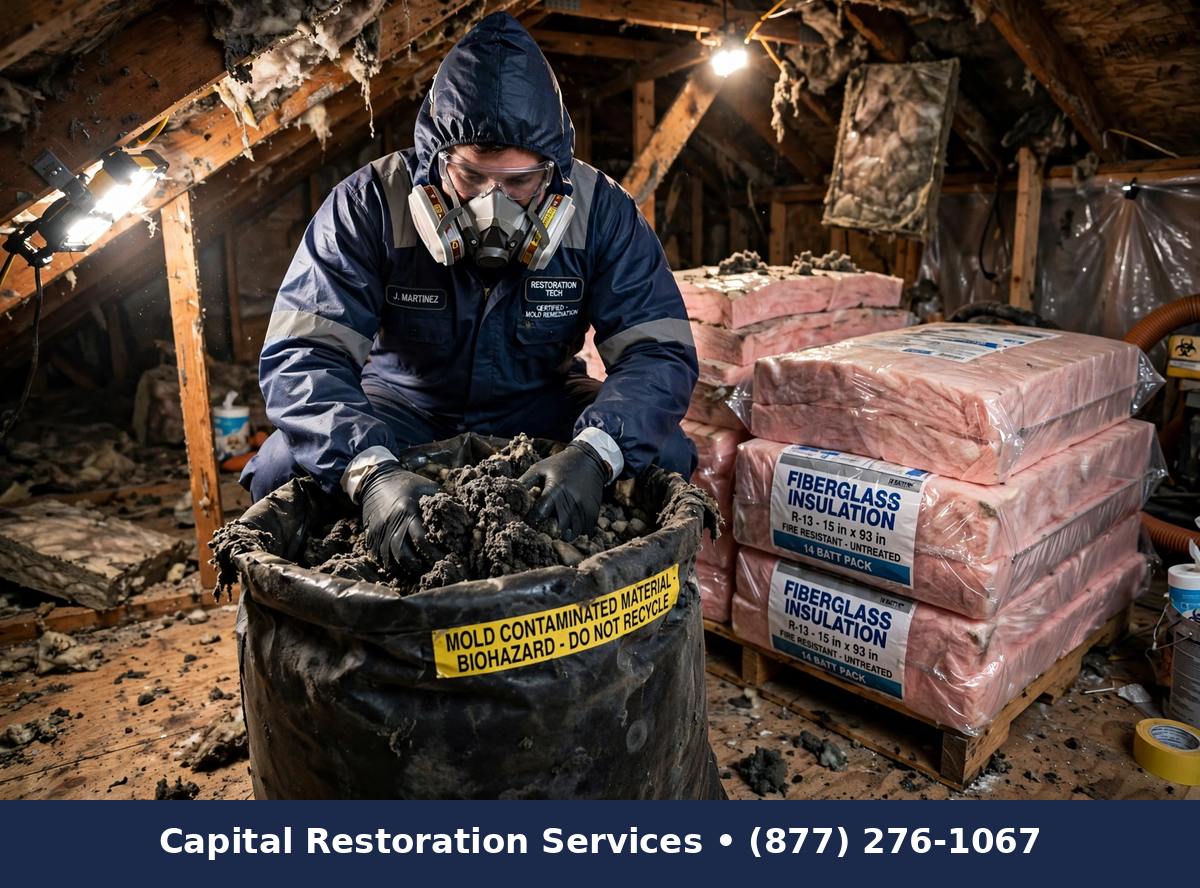
This is not a rip-and-toss job. The work area gets contained first — sheeting sealed around the zone, negative air running — because pulling moldy batts loose launches clouds of spores and fiberglass particles. Workers in respirators and protective gear roll or vacuum the material out, bagging it sealed before it leaves the zone.
With the insulation gone, the exposed framing, sheathing, and cavities get HEPA-vacuumed to capture settled spores and debris. Then the wood gets treated with an antimicrobial solution — not to "kill mold" as a magic step, but to clean the surface mold left behind and discourage regrowth once everything is dry.
Fixing the reason it happened
New insulation over an unresolved leak is just a timer for the next infestation. Before anything goes back in, we find and address the moisture source: the roof leak, the bath fan venting into the attic instead of outside, the plumbing failure inside the wall, the missing vapor barrier in the crawlspace.
Only after the space is verified dry — with moisture meter readings, not assumptions — does new insulation go in, installed to proper depth and coverage. That sequence is what separates a lasting fix from a repeat visit in two years.
Attics, walls, and crawlspaces — each has its own pattern
Attics are the most common case: poor ventilation plus a roof leak or misrouted bath fan creates a warm, humid box where mold spreads across batts and roof sheathing alike. Wall cavities usually trace back to plumbing — a slow supply-line drip or a shower pan failure soaking the insulation from inside. Crawlspaces combine ground moisture with poor airflow, and the insulation there often sags, falls, and stays wet.
The removal method adapts to each. Attic batts roll out; blown-in cellulose gets vacuumed out with high-powered equipment; crawlspace material often needs cutting away in sections. The containment and treatment discipline stays the same throughout.
What affects the cost
The area involved is the biggest factor — one attic bay versus whole-house wall cavities are entirely different jobs. Access matters: a walk-up attic is faster than a tight crawlspace. The insulation type affects removal labor, and the moisture repairs alongside (roof work, plumbing, ventilation fixes) add their own scope. Call (877) 276-1067 for an inspection and a written plan.
Serving homes across the area
Capital Restoration Services removes and replaces mold-damaged insulation in attics, walls, and crawlspaces across the area — for homeowners who found the problem themselves and for buyers whose inspectors flagged it. If your attic smells musty, your insulation has gone flat and dark, or a past leak was never properly dried, call (877) 276-1067. What's above your ceiling matters more than you think.
Features
- Contained removal with HEPA-filtered negative air
- Bagged, sealed disposal of contaminated insulation
- HEPA vacuuming of exposed framing and cavities
- Antimicrobial treatment of wood and sheathing
- Moisture source identification and repair coordination
- Verification that the space is dry before reinstall
- New insulation installed to proper depth and coverage
Benefits
- Removes the spore reservoir hiding inside your walls or attic
- Restores the insulation value that wet, matted material lost
- Stops musty odors that keep coming back from contaminated batts
- Gives the framing and sheathing a chance to be treated properly
- New, clean insulation installed only after the space is verified dry
- One crew for removal, treatment, and replacement — no handoffs
Frequently asked questions
Can't moldy insulation just be cleaned?
Almost never. Fiberglass traps dust and spores deep in its fibers where no cleaner can reach, and cellulose is literally made of ground-up paper — mold food. Once colonized, removal and replacement is the only reliable fix.
How do I know if my insulation has mold?
Look for discoloration or dark streaks on batts, a persistent musty smell, insulation that feels damp or has matted down flat, and any history of roof leaks or plumbing failures above the area. We confirm with an inspection before recommending removal.
Where does insulation mold happen most?
Attics most often — roof leaks, poor ventilation, and bath fans venting into the attic instead of outside are the classic causes. Wall cavities after plumbing leaks run second. Crawlspaces with ground moisture are third.
Should I deal with this quickly, or can it wait?
Yes, and it should. Moldy material gets worse with time, not better, and every month of delay is another month of spores filtering into your living space. It also keeps feeding on the surrounding wood.
What does insulation removal and replacement cost?
It depends on the area involved — a section of attic is very different from whole-house wall cavities — plus access, the insulation type, and what moisture repairs are needed alongside. Call (877) 276-1067 and we'll inspect and give you a written scope.
Do you fix the cause too, or just swap the insulation?
Yes. New insulation goes in only after the moisture source is fixed, the framing is treated, and the space is verified dry. Installing fresh batts over an unresolved leak just builds the same problem again.