Mold Remediation After Water Damage Near Me
Starting price: Call for pricing
Most mold after water damage isn't bad luck — it's incomplete drying. When a leak or burst pipe isn't dried to standard within the first day or two, mold colonizes the damp materials left behind. Capital Restoration Services finds that moisture, removes the growth, and dries the structure properly. Call (877) 276-1067 for an inspection.
The 48-hour window that decides everything
Mold doesn't need much — moisture, something organic to feed on, and time. After a water event, that time is short: growth can begin within 24 to 48 hours. Drywall, wood framing, carpet backing, and insulation are all food. A warm house with still air is an incubator.
This is why the first two days after a leak matter more than the next two months. Water extracted and structure dried to standard inside that window usually means no mold at all. Water left sitting — or "dried" by opening windows and hoping — means remediation later. Almost every mold-after-water-damage job we see is a drying job that didn't finish the work.
Why mold shows up after things were "dried"
The phrase we hear most is "but we dried it." Usually, what happened was surface drying: the puddle went away, the carpet felt dry, the fans ran for a day. Meanwhile water sat inside the wall cavity, wicked up the drywall, and pooled under the flooring — exactly where mold likes it.
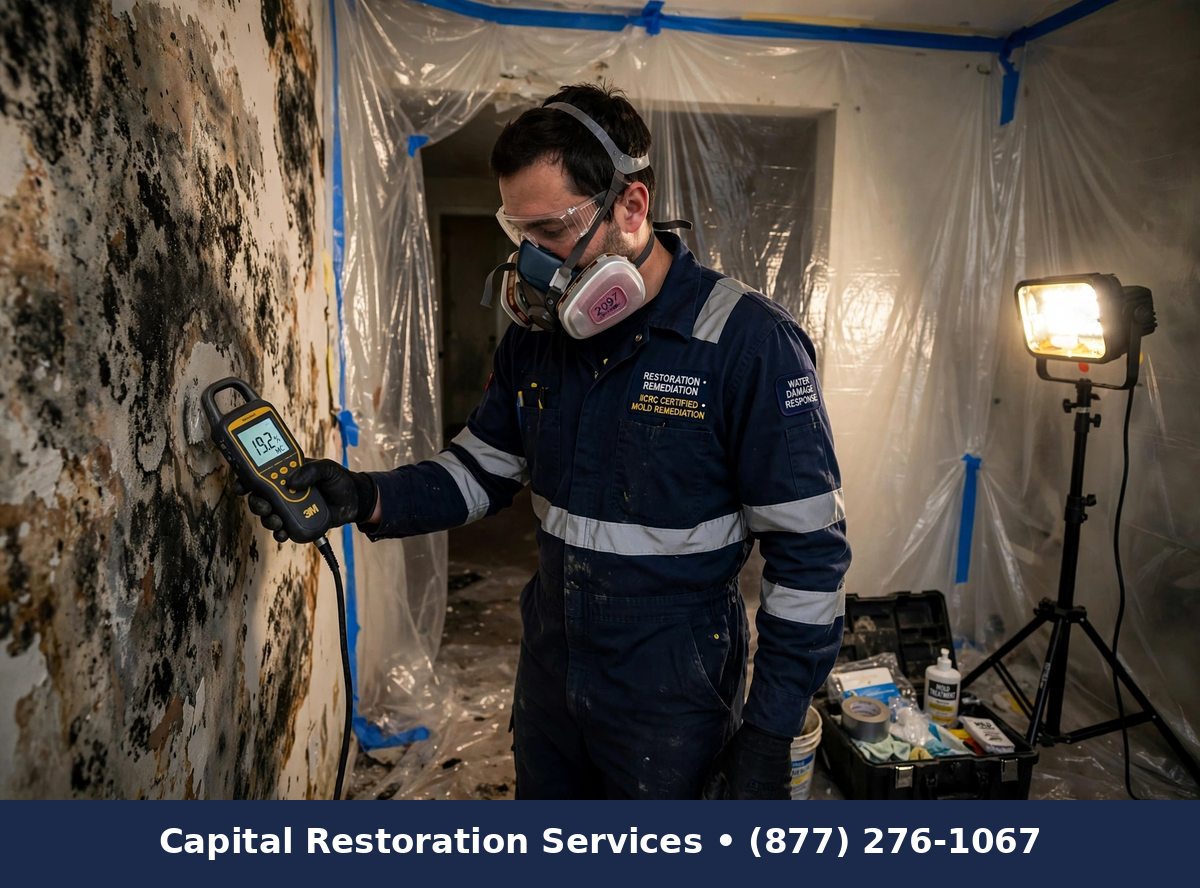
Professional drying is measured, not assumed. Moisture meters establish what's wet, a dry standard defines the target, and equipment stays until readings confirm the target is hit. Anything less is decoration. When we take on these jobs, the first thing we do is map what's actually wet right now — and it's rarely just the visible stain.
How the remediation runs
- Map the moisture. Pin meters, pinless scans, and thermal imaging define the true extent — including the hidden water the first cleanup missed.
- Contain the work zone. Poly sheeting, sealed vents, negative air with HEPA filtration. Disturbing mold without containment spreads it.
- Remove what's colonized. Moldy drywall, insulation, carpet, and flooring come out, bagged and sealed inside the zone.
- Treat what stays. Exposed framing gets HEPA-vacuumed and treated with antimicrobial solutions.
- Dry to standard. Dehumidifiers and air movers run with daily readings until every material hits its dry target.
- Verify. Post-remediation checks confirm the growth is gone and the moisture is gone — the two conditions that mean it won't return.
Clean water, gray water, and why the source matters
Not all water damage is equal. Clean water from a burst supply line is the simplest scenario: extract, dry, remediate any growth, done. Gray water from a dishwasher or washing machine carries contamination that demands more caution in handling and disposal.
And if the water involved sewage or flooding, that's a different category of work entirely — with its own health risks and protocols. We have dedicated services for those situations. Tell us what happened and we'll tell you honestly which job you're looking at.
What affects the cost
Three things dominate: how much area the mold reaches (including hidden growth), how much material must be removed versus treated, and how long proper drying takes. Early discovery keeps all three small. A leak caught in days is a contained job; one discovered in months, with growth through wall cavities, is not. Call (877) 276-1067 — an inspection now is cheaper than remediation later.
Serving homes across the area
Capital Restoration Services remediates mold after water damage in single-family homes, townhouses, condos, and rentals — from burst pipes and appliance failures to roof leaks and the aftermath of someone else's incomplete drying. If you had a water event and things never quite dried out, or you're seeing growth weeks later, call (877) 276-1067. The moisture is still there until readings say otherwise.
Features
- Moisture mapping to find water the first cleanup missed
- Contained remediation zones with HEPA negative air
- Removal of mold-colonized drywall, insulation, and flooring
- HEPA vacuuming and antimicrobial treatment of framing
- Industrial drying tracked against dry-standard readings
- Air scrubbing throughout the remediation process
- Verification testing confirming the structure is clean and dry
Benefits
- Removes mold that took hold after a leak, burst pipe, or appliance failure
- Finds the moisture that incomplete drying left behind
- Dries the structure to standard so the mold can't come back
- Treats framing and cavities, not just visible surfaces
- Documents the chain from water event to remediation for insurance
- Leaves you with a dry, verified-clean structure ready for repair
Frequently asked questions
How fast can mold grow after water damage?
Within 24 to 48 hours of water exposure, under the right conditions. Warm temperatures, organic materials like drywall and wood, and stagnant air all speed it up. That's why fast, thorough drying is the real mold prevention.
Why did mold grow if the area was already dried?
The usual suspects: drying that stopped too soon, equipment pulled before readings hit the dry standard, water hidden in wall cavities or under flooring that nobody mapped, and leaks that kept dripping after the visible cleanup.
Does it matter what kind of water caused the damage?
It depends on the water category. Clean water from a supply line is the simplest case. Gray water from appliances needs more caution. Anything involving sewage or floodwater is a different, more intensive job — we have dedicated services for those.
Can't I just clean the mold I can see?
Surface cleaning handles what's visible, but mold after water damage usually extends into cavities, behind baseboards, and under flooring. Proper remediation includes containment, HEPA filtration, and addressing the hidden growth — not just wiping the spots you can see.
What does mold remediation after water damage cost?
It depends on the extent of the growth, how much material needs removal, and the drying time required. A contained area with prompt discovery is a modest job; widespread growth from a long-undiscovered leak is not. Call (877) 276-1067 for an honest assessment.
Can you fix mold from a previous company's incomplete drying?
Yes. Many of our remediation jobs start exactly this way — a leak someone else 'handled' that left moisture in the walls. We map what's wet now, remediate the growth, and dry it to standard.