Mold-Safe Demolition Services Near Me
Starting price: Call for pricing
Tearing out moldy drywall, flooring, and insulation is the riskiest part of any remediation — done wrong, it blasts spores through the whole building. Capital Restoration Services performs controlled, mold-safe demolition under sealed containment with negative air pressure, HEPA filtration, and careful bag-out procedures. When a water loss or mold discovery means materials have to come out, call (877) 276-1067 and we'll take them out without spreading the problem.
What Mold-Safe Demolition Means
Demolition sounds like swinging a sledgehammer. Mold-safe demolition is the opposite of that. It's the careful, controlled removal of water-damaged and mold-contaminated building materials — drywall, insulation, flooring, cabinets, trim — done in a way that keeps spores, dust, and debris from contaminating the rest of the building.
This service covers the tear-out phase of a mold or water damage project: containment setup, removal of unsalvageable materials, debris handling, and cleanup of the work zone. It does not include the moisture investigation that comes before it or the rebuilding that comes after, though we coordinate closely with both. Think of it as the bridge between "we found the damage" and "we can begin putting things back."
When Tear-Out Has to Happen
Not every mold job needs demolition, but some materials can't be saved once mold takes hold:
- Drywall or plaster with mold growing through the paper facing or into the core
- Fiberglass or cellulose insulation that got wet and stayed wet
- Carpet and carpet pad that absorbed contaminated water
- Particleboard cabinets, MDF trim, and laminate flooring that swelled or delaminated
- Ceiling tiles and acoustic panels with visible colonies
- Wood that is rotted, crumbling, or structurally weakened by long-term moisture
The rule of thumb from the IICRC S520 standard is simple: porous materials with mold growth get removed, not cleaned. Solid wood framing is the big exception — it's usually cleaned and kept. When you're unsure which category your materials fall into, that's exactly what our inspection is for.
How Controlled Demolition Works, Step by Step
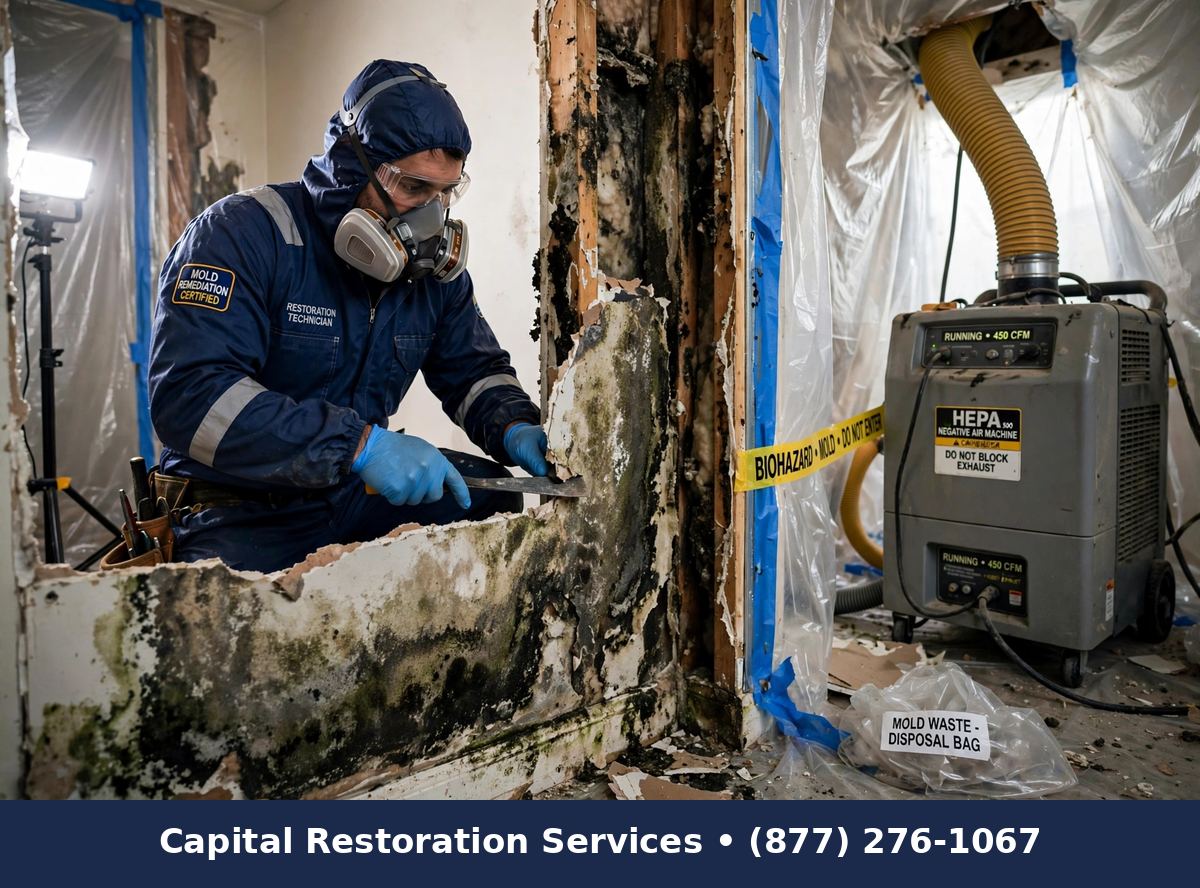
We never cut until containment is up. Polyethylene sheeting seals off the work area from floor to ceiling, seams taped, with a zippered entry leading to a small decontamination chamber. A HEPA-filtered negative air machine runs the whole time, pulling air inward so nothing drifts out into your home.
Inside the zone, we work wet and controlled. Surfaces get lightly misted to keep dust down, and drywall comes out in manageable sections rather than being smashed. Each piece is double-bagged in heavy poly bags, sealed, wiped down, and carried out through the decon chamber — never dragged loose through your living room. Insulation, flooring, and trim follow the same path.
As materials come out, we photograph and log everything: what was removed, from where, and why it couldn't be saved. Framing and subfloor that survive get HEPA-vacuumed the same day so the cavity is clean for drying. When the last bag leaves, the zone gets a final HEPA vacuuming and wipe-down, and we walk you through the open cavities before anything gets rebuilt.
What Affects the Cost of Mold-Safe Demolition
The biggest factor is volume — how many square feet of material is coming out and how many rooms the containment has to cover. A single bathroom tear-out is a different job than a finished basement with wet carpet, pad, drywall, and built-in shelving.
Access and layout matter too. Tight crawlspaces, finished ceilings, and tile that has to come off in pieces all add labor. Hazardous materials change the picture as well: if testing finds asbestos in old flooring or lead in old paint, licensed abatement procedures apply and the scope grows. Emergency scheduling, evening or weekend work, and multi-story debris carries also factor in. For an exact number based on your space, call (877) 276-1067 and we'll scope it in writing.
Who Calls Us for This in the Area
Capital Restoration Services performs mold-safe demolition for homeowners facing a water loss, landlords turning over a damaged unit, and property managers handling multi-unit buildings. We also do the tear-out phase for general contractors and other restoration companies that need a careful demolition crew before their rebuild begins. Homes, apartments, offices, and retail spaces across the area all get the same containment discipline. If something moldy or water-ruined has to come out of your building, we'll take it out cleanly and document every bit of it.
Features
- Full or partial containment with 6-mil polyethylene and taped seams before any demolition begins
- Negative air machines with HEPA filtration keeping the work zone under constant inward airflow
- Wet methods and controlled cutting to keep dust and spore release as low as possible
- Double-bagging of contaminated debris in sealed bags, removed through a clean path
- Decontamination chamber at the containment entry for tools, bags, and protective gear
- Selective tear-out that saves every sound stud, joist, and subfloor board possible
- Daily HEPA vacuuming of the work zone and a detailed photo log of everything removed
Benefits
- Stops mold from spreading to clean rooms during the messiest phase of the job
- Protects your family, pets, and belongings from airborne dust and spores
- Keeps demolition surgical — sound structure stays, only ruined material leaves
- Creates the clean, dry cavity that proper rebuilding depends on
- Reduces the total rebuild cost by preserving everything worth saving
- Gives your insurer clear documentation of exactly what was removed and why
- Leaves the site broom-clean and ready for the drying and rebuild crews
Frequently asked questions
Why can't I just tear out the moldy drywall myself?
Because ripping out moldy drywall without containment launches a cloud of spores into the rest of your home, where they settle on clean surfaces and form new colonies. Professionals work under negative pressure with HEPA filtration so the mess stays in one sealed zone.
Will you save my wood framing, or does it all get demolished?
Solid wood framing is almost always saved — it's cleaned, treated, and dried rather than torn out. We only remove wood that's rotted or structurally compromised. Saving sound framing is one of the main reasons to hire a careful crew.
How do you keep dust out of the rest of my house?
Sealed polyethylene containment, a HEPA negative air machine running constantly, sealed HVAC vents in the zone, and a decontamination chamber at the entry. Debris leaves in sealed bags through a clean path, not carried loose through your home.
Do I need to move out during the demolition?
Most of the time, no. Proper containment lets the rest of the house stay livable while we work. For very large tear-outs or when the only bathroom or kitchen is in the zone, we'll talk through your options at the inspection.
How much does mold-safe demolition cost?
It scales with how much material is coming out, how many rooms need containment, and how tricky the access is. Hazardous-material findings can change the scope too. Call (877) 276-1067 for a written scope and an exact quote after we see the space.