Mold Stain Removal and Surface Restoration Near Me
Starting price: Call for pricing
Even after mold is dead and gone, it can leave dark stains on wood framing, concrete, and other surfaces that make a home look damaged. Capital Restoration Services removes residual mold staining with HEPA prep, targeted cleaning agents, and careful brightening techniques — then restores the surface so it looks sound again. For framing, concrete, or subfloor left discolored by a past mold problem, call (877) 276-1067.
Stains vs. Active Mold: Knowing the Difference
Here's something most homeowners don't realize: a dark stain on a stud doesn't always mean live mold. When mold grows on wood, it digests the surface and leaves behind pigmented staining — and that discoloration can remain long after the mold itself is dead and the wood is dry. The stain is cosmetic. The colony was the problem.
This service is about what comes after remediation is complete and verified: removing those leftover stains and restoring the surface underneath. It covers wood framing, subfloor, sheathing, concrete, and masonry left discolored by past mold growth. It does not cover active mold removal — that's a separate remediation job that has to happen first, with containment and proper procedures.
When Stain Removal Is the Right Call
Stain removal makes sense when the mold is gone but the evidence isn't:
- Dark streaks or blotches on basement or crawlspace joists after a past leak
- Discolored subfloor in a bathroom that had a toilet seal failure
- Stained concrete walls in a basement that flooded and was dried
- Sheathing in an attic with old staining from a fixed roof leak
- Framing that looks alarming in a home inspection photo but tests dry and clean
- Any surface where an inspector or buyer flagged "possible mold" that's actually old staining
The key question we answer first: is this active growth or a ghost of growth past? Moisture readings and a close visual inspection tell us. If it's active, we remediate. If it's staining on sound, dry material, we restore it.
How Surface Restoration Works
We begin by proving the surface is actually clean and dry. Moisture meter readings confirm the wood or concrete is at safe levels, and a HEPA vacuuming pass removes any loose dust or residue sitting on the surface. Skipping this step is how stains get sealed in with contaminants still on them.
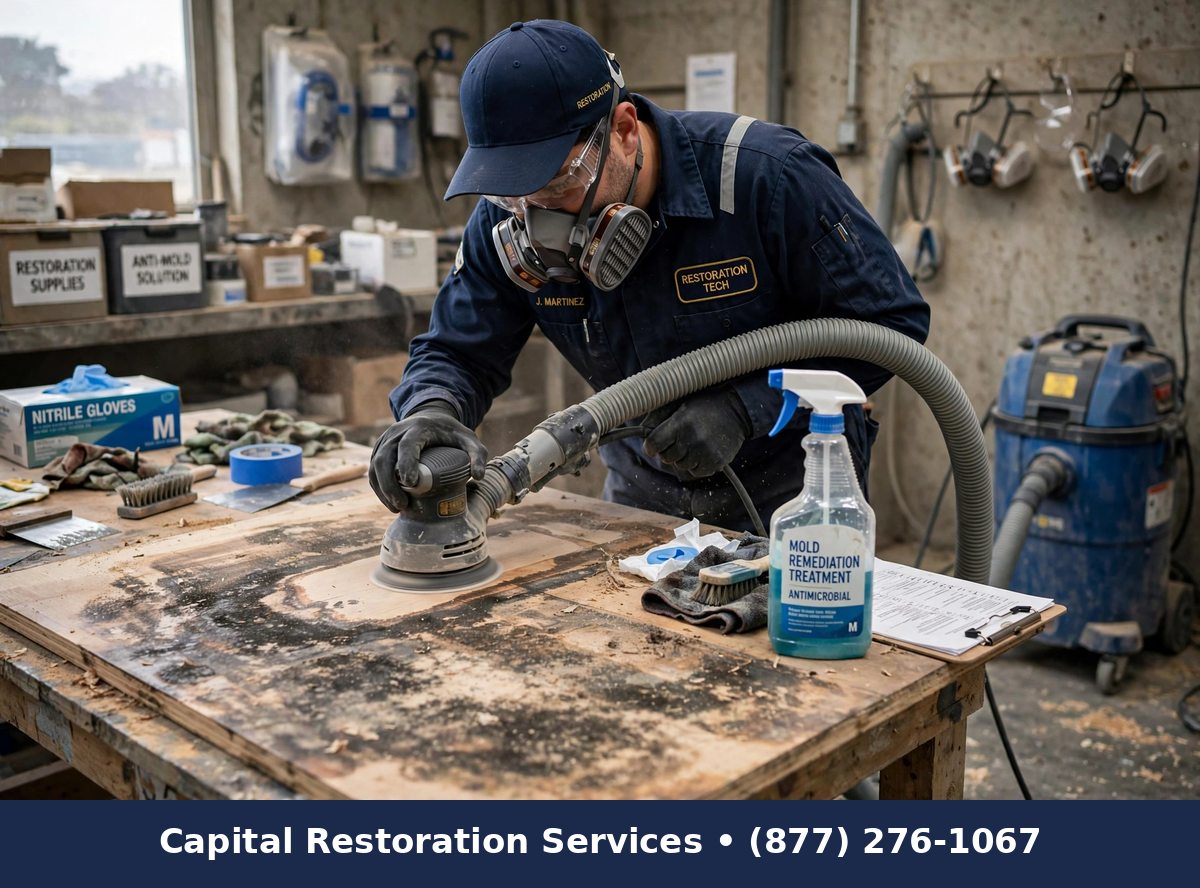
For wood, we use hydrogen-peroxide-based brightening treatments worked into the grain with brushes. Peroxide lifts the pigmented staining through oxidation rather than just bleaching the top layer, and it breaks down into water and oxygen — no harsh residue left behind. Where staining sits deeper in the grain, careful hand-sanding takes the surface down to clean wood. We're conservative here: the goal is removing discoloration, not reshaping the lumber.
Concrete and masonry get a different approach — scrubbing with appropriate cleaners, rinsing, and drying, since porous concrete holds staining differently than wood. Every treated surface gets a final antimicrobial wipe-down, then we verify dryness once more before any paint, stain, or sealant goes on. You'll get before, during, and after photos of every surface we restore.
What Affects the Cost of Stain Removal
Surface area is the main driver — a few stained joists in one corner of a crawlspace is a small job, while every stud in a finished basement is a large one. The depth of the staining matters too: light surface discoloration lifts quickly, but deep, long-established staining in rough-sawn lumber takes more passes and more hand work.
Access plays a role as well. Open basement framing is easy to reach; a tight crawlspace or an attic with low clearance slows everything down. If surfaces need sanding versus just chemical treatment, labor goes up. And if we discover during inspection that some "staining" is actually active growth, that section moves into remediation scope. For a firm number on your surfaces, call (877) 276-1067 after we take a look.
Where This Service Fits in the Area
Capital Restoration Services restores mold-stained surfaces in homes being prepared for sale, rental units between tenants, and houses where a past water problem was fixed but the framing still looks rough. Real estate agents and home inspectors in the area often flag old staining that spooks buyers — we give those surfaces a clean bill of appearance backed by real moisture data. Basements, crawlspaces, attics, and garages are the usual settings. If your structure is sound but still wears the marks of an old mold problem, we'll make it look the way it should.
Features
- HEPA vacuuming and dry wiping to remove all loose residue before any stain work begins
- Hydrogen-peroxide-based brightening treatments that lift discoloration from wood grain
- Careful hand-sanding of framing where staining sits below the surface layer
- Antimicrobial wipe-down of every treated surface after stain removal
- Concrete and masonry stain treatment with appropriate scrubbing and rinsing methods
- Moisture verification proving the surface is dry before any finish is applied
- Clear photo documentation showing the surface before, during, and after treatment
Benefits
- Erases the ugly reminder of a mold problem so rooms look clean and cared for
- Confirms the surface is truly remediated, not just painted over
- Preserves original framing and structure instead of replacing sound wood
- Leaves surfaces ready for paint, stain, or sealant without bleed-through
- Protects resale value by removing visible evidence of past damage
- Gives buyers, tenants, and inspectors confidence in the finished space
- Honest assessment — we'll tell you when a stain means replacement, not cleaning
Frequently asked questions
If the mold is dead, why bother removing the stain?
Because stains keep causing problems: they alarm buyers and inspectors, they can bleed through new paint, and they make it impossible to tell new growth from old at a glance. Clean, unstained surfaces are also simply easier to monitor going forward.
Can't I just paint over mold stains with regular paint?
Regular paint often lets stains bleed right back through within months, and painting over a surface that hasn't been verified dry can trap moisture. Stains need proper cleaning first, and any coating afterward should be a stain-blocking or fungistatic product, not standard wall paint.
Will the peroxide treatment damage my wood framing?
When done correctly, no. We use appropriate concentrations and dwell times for the wood species and condition, and we test in an inconspicuous spot first. The treatment brightens the surface without weakening the lumber.
How do you know it's just a stain and not live mold?
Moisture readings, visual inspection under good light, and sometimes tape-lift sampling tell the story. Live growth needs moisture; staining on dry wood with no active moisture source is residual discoloration. If we're not sure, we treat it as active until proven otherwise.
What does mold stain removal cost?
It depends on how much surface area is stained, how deep the discoloration goes, and how accessible the space is. Sanding-intensive jobs cost more than treatment-only ones. Call (877) 276-1067 and we'll assess your surfaces and give you a straight answer.