Odor Removal After Water Damage Near Me
Starting price: Call for pricing
That musty, sour smell lingering after a leak or flood isn't just unpleasant — it's a sign that moisture or microbial growth is still hiding somewhere. Capital Restoration Services tracks down the true odor source with moisture mapping and infrared imaging, removes or treats what's causing it, and deodorizes at the molecular level. If your home still smells damp weeks after the water dried, call (877) 276-1067.
Why Water Damage Smells — and Why It Lingers
A musty odor after water damage isn't the water itself. It's the byproduct of microbial activity: mold, mildew, and bacteria breaking down organic material in damp drywall, wood, carpet pad, and insulation. Those microbes release volatile compounds — the classic "damp basement" smell — and as long as any moisture remains, the smell keeps being produced.
That's why air fresheners and scented candles never fix it. They add fragrance on top of an active odor factory. The smell fades for an hour and comes right back, often worse on humid days when moisture reactivates the compounds trapped in porous materials. Real odor removal means finding the moisture, dealing with the microbial growth, and then neutralizing what's left.
Where Lingering Odors Hide
Odors after water damage love the places you can't see:
- Inside wall cavities behind baseboards, where wet drywall bottoms out
- Under laminate, vinyl, or engineered flooring, in the underlayment and subfloor
- In carpet padding, which holds both water and odor long after the carpet feels dry
- In wall and ceiling insulation that got wet and never fully dried
- In HVAC drip pans, returns, and ductwork that picked up damp air
- In crawlspaces and basements where humidity stays high year-round
A useful rule: if the smell gets stronger when it rains or on muggy days, moisture is still present somewhere. That pattern is one of the most reliable clues we use during diagnosis.
How We Eliminate the Odor for Good
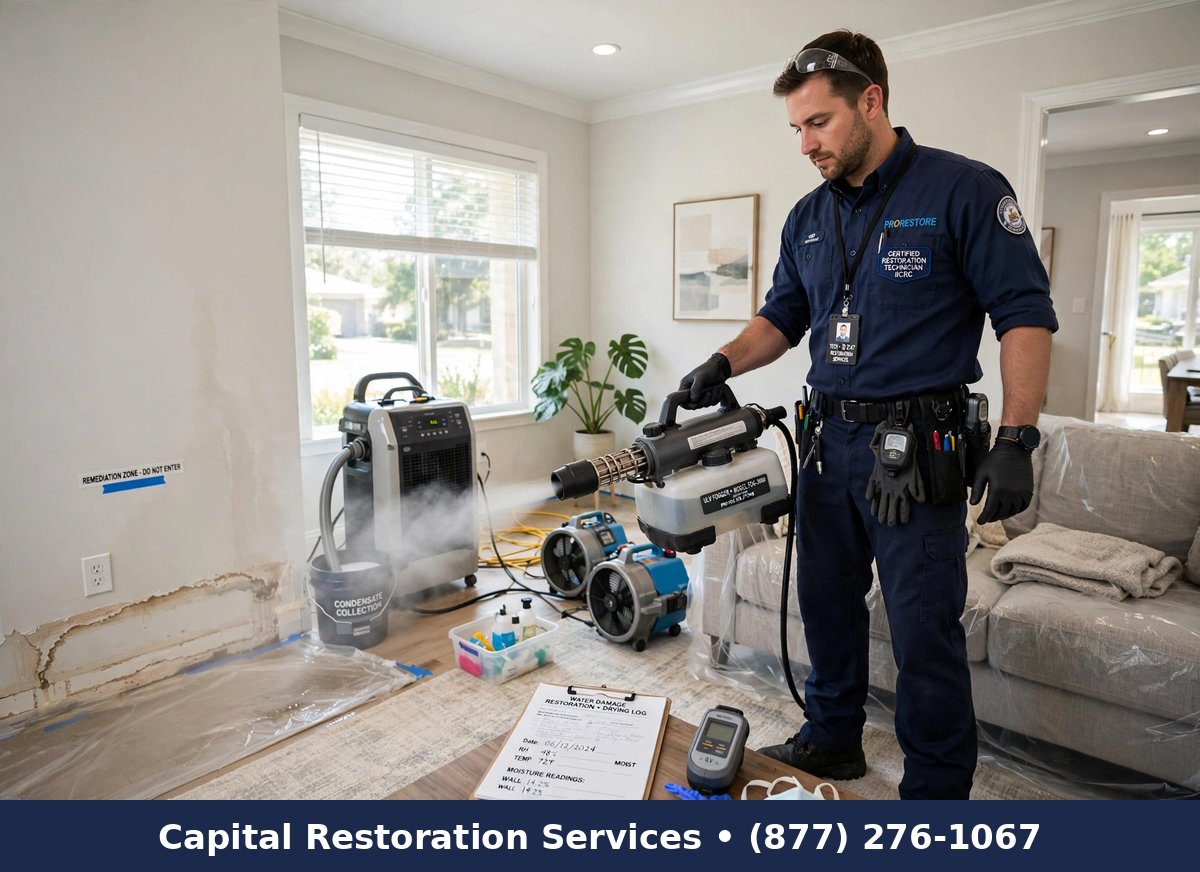
Diagnosis comes first, always. We map moisture across the affected area with meters and an infrared camera, checking inside walls, under flooring edges, and around plumbing. The goal is a complete picture of every damp pocket — because deodorizing while moisture remains is just expensive air freshener.
Next, we remove what can't be saved. Odor-saturated carpet pad, soaked insulation, and swollen particleboard trim come out; no amount of fogging fixes material that's holding contamination deep inside. Salvageable surfaces get cleaned and treated with antimicrobials to stop the microbial activity producing the smell.
Then comes deodorization at the molecular level. Depending on what we find, we use hydroxyl units — safe to run while you're home — or thermal fogging, which sends a fine deodorizing fog into the same pores and crevices the odor came from. HEPA air scrubbers run throughout to pull particles out of the air. We finish with a walkthrough: if we can still smell it, we're not done.
What Affects the Cost of Odor Removal
The honest answer is that cost follows the source. A single damp carpet pad in one room is a small job; odor coming from wet insulation across a whole basement ceiling is a much bigger one. How long the water sat matters too — materials soaked for days hold odor far deeper than a quick leak that's dried promptly.
The deodorization method factors in as well. Hydroxyl treatment over several days costs differently than a thermal fogging session, and we choose based on what your situation actually needs, not what's easiest. If hidden demolition is required to reach the source, that's part of the scope. Call (877) 276-1067 and we'll diagnose first, then give you a written plan with a real number attached.
Serving Homes Across the Area
Capital Restoration Services handles post-water-damage odor in houses, apartments, condos, and small commercial buildings throughout the area. We see it after burst pipes, appliance leaks, roof drips, sump pump failures, and floods — and often weeks after another company "finished" the drying but left the smell behind. Landlords, property managers, and homeowners all get the same thorough source-hunt. If your place still smells damp, we'll find out why and make it stop.
Features
- Full moisture mapping to find the hidden damp pockets actually producing the odor
- Infrared imaging that reveals wet insulation, subfloor, and wall cavities behind finishes
- Removal of odor-saturated porous materials like carpet pad and wet insulation that can't be saved
- HEPA air scrubbing during treatment to capture airborne odor particles and spores
- Antimicrobial treatment of affected surfaces to stop the microbial activity behind the smell
- Hydroxyl or thermal fogging deodorization matched to the odor type and severity
- Post-treatment walkthrough to confirm the smell is gone before we pack up
Benefits
- Treats the source of the odor instead of masking it with fragrances
- Finds hidden moisture that would keep feeding smells and mold for months
- Removes the musty compounds that aggravate allergies and headaches
- Makes the home feel genuinely fresh, not just perfumed
- Prevents the slow return of odors that happens with surface-only cleaning
- Protects your belongings from absorbing lingering damp smells
- Written findings so you know exactly what caused the odor and what fixed it
Frequently asked questions
Why does my house still smell musty weeks after the water damage was cleaned up?
Because moisture is usually still trapped somewhere — inside a wall, under flooring, or in insulation — or microbial growth began in the first 24 to 48 hours and was never addressed. Surfaces can feel dry while hidden pockets keep producing odor.
Will air fresheners or an air purifier fix the smell?
No. Fresheners mask the odor temporarily, and a standard purifier can't reach the microbial source inside materials. Lasting odor removal requires drying, cleaning, and antimicrobial treatment at the source, plus professional deodorization.
Is the musty smell harmful to breathe?
The odor itself comes from microbial volatile compounds, and the mold or bacteria producing them can aggravate allergies, asthma, and sinus issues. Removing the source improves both the smell and the indoor air.
Can you remove the odor without tearing out my walls or floors?
Often, yes — if the moisture is accessible and materials are salvageable. But if pad, insulation, or drywall is saturated and holding odor deep inside, selective removal is the only honest fix. We show you the readings before recommending any tear-out.
How much does odor removal after water damage cost?
It depends on where the odor is coming from, how much material must be removed versus treated, and which deodorization method fits. After our moisture mapping, call (877) 276-1067 for a written quote tied to your actual situation.