Storm Water Damage Restoration Near Me
Starting price: Call for pricing
Storms hit different — wind-driven rain through a torn roof, floodwater under doors, debris through windows, all in one chaotic event. Capital Restoration Services handles complete storm water damage restoration: emergency tarping and board-up, water extraction, structural drying, debris removal, and full interior restoration. When the storm has passed and the damage is real, call (877) 276-1067.
Storm Damage Is Multiple Disasters at Once
A burst pipe is one problem with one source. A storm is several problems arriving together: wind tears at the roof while rain drives sideways under flashing, floodwater rises through doorways, debris breaks windows, and power outages kill the sump pump. By the time the sky clears, the property has taken damage from multiple directions at once.
This service covers the complete water damage side of storm recovery: emergency stabilization, water extraction, structural drying, debris and damaged-material removal, mold prevention, and interior restoration. It coordinates with roof repair and structural work, because storm restoration is a team effort across trades — but the water damage portion is ours, from beginning to end.
The First Hours: Stabilize Before Anything Else
Storm restoration has a strict order of operations, and it begins outside:
- Emergency tarping. Damaged roofs get tarped immediately — properly secured, edges sealed, extending past the damage — so the next rain band doesn't undo everything.
- Board-up. Broken windows, doors, and openings get boarded to keep out weather, debris, and unauthorized entry.
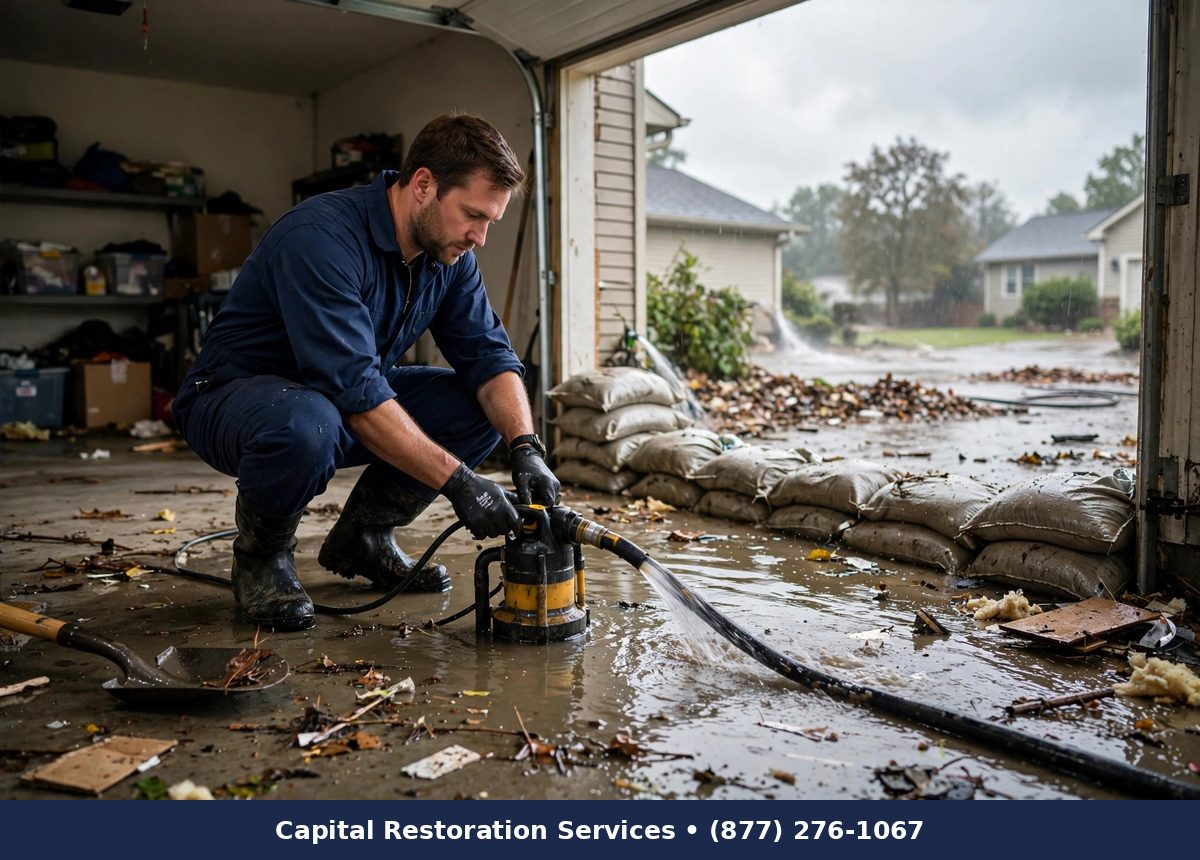
- Water extraction. Standing water comes out with pumps and extractors before it migrates deeper into the structure. Every hour of standing water means deeper saturation.
- Safety check. Electrical hazards, structural concerns, and contaminated water get identified before restoration crews go deep.
This stabilization phase is also when documentation begins. Arrival photos, damage notes, and initial moisture readings create the record your insurance adjuster will need — storm claims live or die on documentation quality.
Drying, Cleaning, and Restoring the Interior
With the building secured, interior work begins. Infrared cameras and moisture meters map everywhere the water traveled — storm water is notorious for wicking into wall cavities, under flooring, and into insulation far from where it entered. Extraction equipment pulls water from carpets, floors, and cavities.
Then structural drying: air movers and commercial dehumidifiers run for days, with daily moisture readings logged until every material hits its verified dry target. Storm-soaked materials get antimicrobial treatment to prevent the mold growth that follows in the first 24 to 48 hours after water exposure. Materials that can't be saved — saturated drywall, ruined insulation, swollen particleboard — are removed and documented.
Finally, restoration: new insulation, drywall, flooring, trim, paint, and finishes. The goal isn't just dry — it's a home that looks and feels like the storm never happened, with the documentation to prove every step to your insurer.
What Affects the Cost of Storm Restoration
The scale of the event dominates everything. A single wind-damaged roof section with interior leaks is one scope; widespread flooding across multiple rooms with roof, window, and structural damage is a far larger one. How quickly stabilization happened matters too — properties tarped and extracted within hours suffer far less secondary damage than those left open for days.
Water source and contamination play a role: clean rainwater intrusion is simpler than floodwater that's contacted soil and contaminants, which requires fuller decontamination. The extent of material removal, the finishes being restored, and coordination with roofing and structural trades round out the picture. For a real number on your property, call (877) 276-1067 after our assessment.
Storm Recovery Across the Area
Capital Restoration Services provides storm water damage restoration for homes, apartment buildings, and commercial properties throughout the area. We respond to the aftermath of severe thunderstorms, wind events, hail, and flooding — handling the emergency stabilization and the complete interior restoration under one roof. When the storm passes and you're standing in the damage wondering where to begin, begin with a call to (877) 276-1067. We'll stabilize it, dry it, document it, and rebuild it.
Features
- Emergency roof tarping and board-up to stop further water and secure the property
- Industrial water extraction with pumps and truck-mounted equipment for standing water
- Structural drying with air movers and dehumidifiers, verified with moisture readings
- Debris and damaged-material removal, documented for insurance
- Infrared moisture mapping to find water that traveled into walls and cavities
- Antimicrobial treatment to prevent mold in storm-soaked materials
- Insurance-ready documentation: photos, readings, and drying logs from day one
Benefits
- Stabilizes the property fast so the damage stops getting worse
- One team for the exterior emergency and the interior restoration
- Removes storm water before it soaks deeper into the structure
- Dries framing and cavities thoroughly to prevent post-storm mold
- Handles the insurance documentation adjusters expect after major storms
- Restores interiors fully — not just dried, but rebuilt and finished
- Available for the chaotic aftermath when you need help most
Frequently asked questions
What should I do first after storm damage to my home?
Stay safe — avoid downed lines, unstable structures, and standing water that may be contaminated. Document everything with photos, then call for emergency tarping and board-up to prevent further damage. Then call (877) 276-1067 for the water damage restoration.
How quickly do you respond after a storm?
As fast as conditions allow. The first hours matter enormously — tarping stops new intrusion and early extraction limits how deep water migrates. We prioritize emergency stabilization calls in storm aftermaths.
Will my insurance cover storm water damage?
Wind and storm-driven damage is typically covered under homeowner's policies, while rising floodwater usually requires separate flood insurance. Our documentation — photos, moisture readings, drying logs — is built for exactly these claim distinctions.
How long before mold becomes a problem after storm flooding?
Mold can begin colonizing damp materials within 24 to 48 hours. That's why rapid extraction, drying, and antimicrobial treatment are part of our process — we're racing the mold clock from the moment we arrive.
How much does storm water damage restoration cost?
It depends on the scale of the event, how much of the property was affected, water contamination level, how much material must be removed, and the finishes being restored. Call (877) 276-1067 for an assessment and a written quote.