
Sump Pump Failure Cleanup Near Me
Starting price: Call for pricing
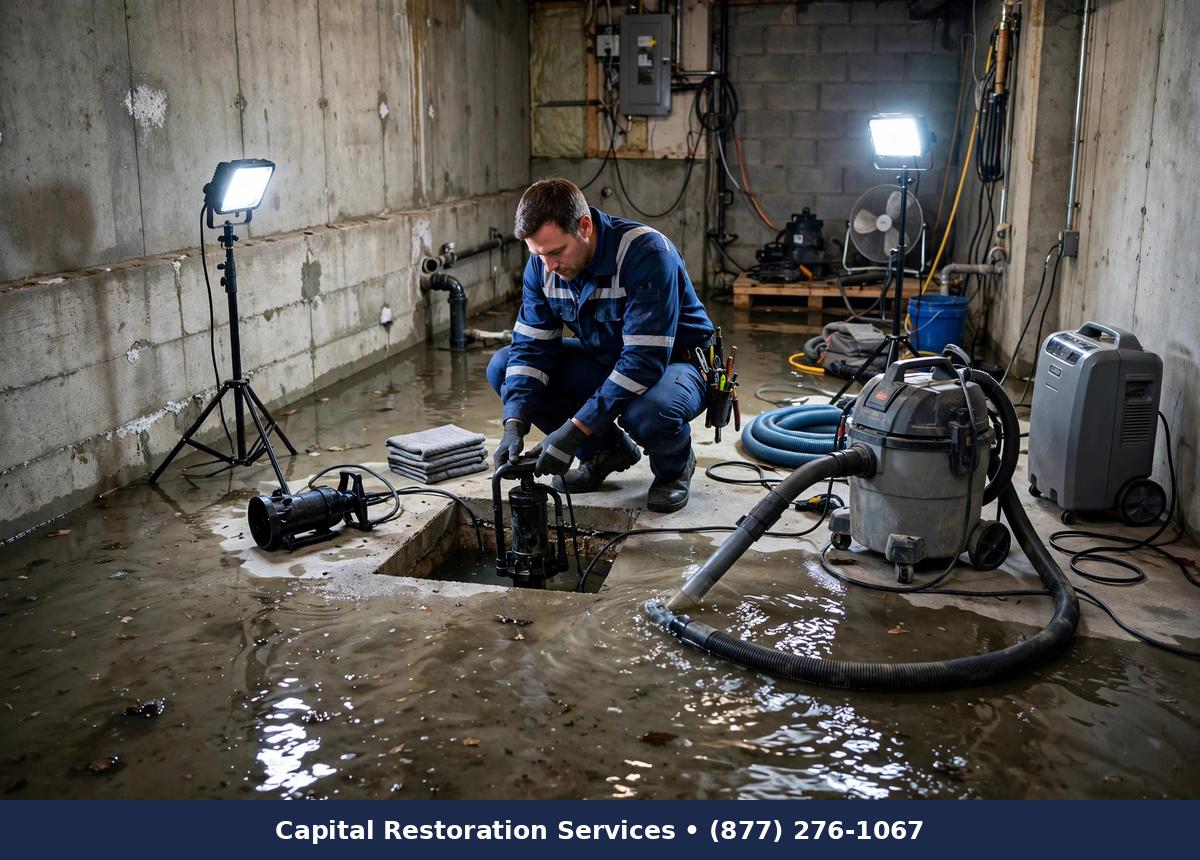
Sump pumps almost never fail on a sunny afternoon. They fail during the storm, when the power drops or the groundwater surges past what the pump can handle — and then your basement becomes the sump pit. Capital Restoration Services extracts the water, dries the basement to verified readings, sanitizes what the groundwater touched, and helps you figure out what went wrong with the pump. Basement flooding right now? Call (877) 276-1067.
Why sump pumps fail when you need them most
A sump pump is a simple machine with a cruel timing problem: it sits idle for months, then has to work perfectly during the worst weather of the year. The most common failure isn't a worn-out motor — it's the power going out in the middle of a storm. Standard pumps run on household electricity, so a blackout during heavy rain kills your defense exactly when groundwater is highest.
The next most common culprit is the float switch. That's the little mechanism that tells the pump when to turn on, and it gets stuck — on sediment, on the pit wall, on its own wear. A stuck float means a perfectly good pump that never starts. After that come the plumbing problems: a discharge line clogged with debris or frozen shut in winter, so the pump runs and runs but the water goes nowhere. Sometimes the pump is simply overwhelmed — a severe storm or rapid snowmelt sends in more water than the unit's capacity. And sometimes the pump is just old. Most residential pumps last roughly seven to ten years, and one that's been cycling hard every spring is living on borrowed time.
What to do the moment you find the water
First, don't wade in until you've cut power to the basement — water and electricity are a bad combination, and a flooded basement can hide live outlets. If you can safely reach the breaker, kill the basement circuits. Then take photos and short video of everything: the water level, the sump pit, the pump, and anything damaged. You'll want this for insurance.
If you have a backup pump or a portable utility pump and can run it safely, get water moving — every hour it sits, damage spreads. Move dry items to higher ground and get wet belongings out of the water where you can. Don't drag soaked carpet or boxes through dry parts of the house; you'll just spread the moisture. Then call (877) 276-1067. A small puddle on bare concrete you can mop up yourself. Water under finished flooring, inside wall cavities, or covering more than a corner of the basement is a professional extraction job.
How our sump pump failure cleanup works
We start with the water itself: truck-mounted and portable extractors pull standing water fast, because drying can't begin until the standing water is gone. Then we figure out why the pump failed — power issue, stuck float, blocked discharge, overwhelmed unit, or a dead motor. Knowing the cause shapes everything that follows, including what we tell you about preventing the next one.
Finished basements get opened up where needed. Wet carpet padding comes out (it rarely dries clean), and drywall that's wicked up water gets cut to a clean line above the moisture. Then the drying setup goes in: dehumidifiers and air movers sized to the space, with daily meter readings until walls, floors, and cavities test dry. Groundwater isn't clean water — by the time it's been standing in a basement, it carries soil contaminants and whatever was on your floor — so affected surfaces get sanitized before anything is closed back up. We finish with a prevention walkthrough: what failed, what would stop it next time, and what it would take.
What affects the cost
The spread comes down to how much of the basement flooded and how finished it was. Water on bare concrete is mostly an extraction and drying job. Water that reached drywall, carpet, and wall cavities means demolition, drying, sanitizing, and rebuild — a much bigger scope. How long the water stood matters too: groundwater that sat for days is a contamination problem on top of a drying problem. Whether you carry a water backup endorsement on your insurance changes your out-of-pocket picture significantly — standard homeowner policies usually exclude this kind of loss. And emergency timing versus a scheduled visit plays its role, as it does with any urgent trade work. Call (877) 276-1067 with the details and we'll give you a straight read on your situation.
How to keep it from happening again
The cleanup fixes this flood. The prevention plan stops the next one. The single most effective upgrade is a battery backup pump — a secondary pump on its own float switch that takes over when the primary loses power or fails mechanically. A high-water alarm in the pit is cheap insurance that wakes you up before the floor gets wet. Test the primary pump every few months by pouring water in the pit and watching it cycle on and off. Keep the discharge line clear and pointed away from the foundation, and check the check valve so discharged water can't flow back into the pit. If your pump is approaching that seven-to-ten-year mark, replace it before the next big storm, not after. None of this is complicated — it just has to actually get done.
How Capital Restoration Services serves homes across the area
Basement floods are some of the most common calls we get, and we've seen every version: the storm-night blackout, the stuck float discovered at 2 a.m., the discharge line frozen solid in February. We extract, dry, sanitize, and document — and then we tell you honestly what your pump needs so you're not making the same call next year. One crew, one visit chain, no runaround. Call (877) 276-1067 and let's get your basement back.
Features
- Emergency water extraction from flooded basements and crawlspaces
- Pump diagnosis: power, float switch, discharge line, or capacity failure
- Structural drying of basement walls, floors, and wall cavities
- Sanitizing of surfaces touched by groundwater or sewer backup
- Moisture mapping with meters to catch water hidden behind finished walls
- Guidance on backup pumps, alarms, and check valves to prevent a repeat
Benefits
- Water gets out fast, before it ruins more of the basement
- You learn exactly why the pump failed — not just that it did
- Finished basements dry properly instead of growing hidden mold
- Sanitizing handles the contaminants groundwater carries in
- Documentation that helps if you carry a water backup endorsement
- A prevention plan so the next storm doesn't mean the next flood
Frequently asked questions
Why did my sump pump fail during the storm?
Usually it's one of four things: the power went out, the float switch stuck, the discharge line was blocked or frozen, or the storm overwhelmed the pump's capacity. We diagnose the cause during cleanup so you know exactly what to fix.
Is the water from a sump pump failure dangerous?
Treat it as contaminated. Groundwater picks up soil bacteria and whatever was on your basement floor, and standing water gets worse the longer it sits. We sanitize affected surfaces as part of the cleanup — don't let kids or pets play in it.
Does homeowner's insurance cover sump pump failure?
Standard policies usually exclude it — this is one of the most common coverage gaps we see. Many insurers offer a water backup or sump overflow endorsement that does cover it. Check your policy now, before the next storm, and keep our cleanup documentation if you file.
How long does cleanup take?
Extraction happens the same day we arrive. Drying typically takes several days with equipment running and daily readings. If drywall and flooring need rebuilding, that adds time — but we don't close anything up until meters confirm it's dry.
Should I get a battery backup pump?
If your basement has ever flooded during a power outage, yes. A backup pump on its own float switch keeps working when the primary loses power or fails. It's the single best defense against the storm-night failure, and we can tell you what your setup needs.
What does sump pump failure cleanup cost?
It depends on how much water, how finished the basement is, how long the water stood, and whether walls and flooring need rebuilding. Bare concrete is a smaller job than a finished basement with wet drywall. Call (877) 276-1067 and describe the scene for a real answer.