Tile and Grout Mold Removal Near Me
Starting price: Call for pricing
Grout is porous, bathrooms are steamy, and mold knows it. When black staining keeps coming back on your tile grout no matter how hard you scrub, the problem is usually deeper than the surface — moisture trapped in the grout itself or failing sealant behind it. Capital Restoration Services removes the mold properly, fixes what's feeding it, and seals the grout so it stays clean. Tired of the black lines? Call (877) 276-1067.
Why mold loves your grout
Grout looks solid, but under a microscope it's a sponge — thousands of tiny pores that drink in water every time you shower. Mold doesn't eat the grout itself. It eats what lands on it: soap scum, body oils, shampoo residue, and the fine layer of dust that settles in a damp bathroom. The grout just provides the damp, textured apartment building. That's why the mold always comes back in the same spots — the corners where water sits longest, the lower walls where the shower spray hits, the floor grout around the drain.
Tile faces are a different story. Glazed ceramic and porcelain are non-porous, so mold can't root into them — it just sits on top. That's why your tiles can look fine while the grout lines between them turn black. The battle was never about the tile. It's always been about the grout.
Cleaning, regrouting, or both?
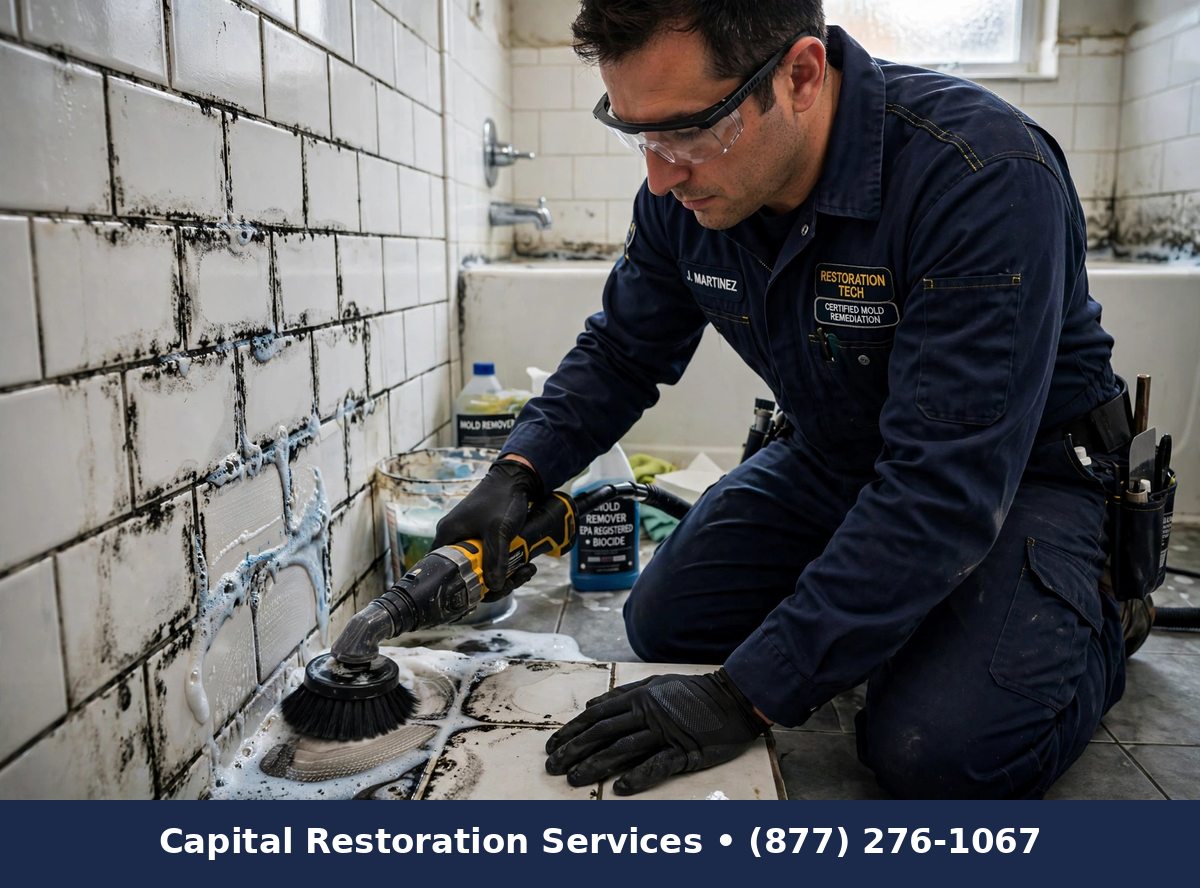
This is the honest fork in the road, and it depends on what we find. If the grout is structurally sound — firm, intact, just stained — professional deep cleaning can bring it back. We use mechanical agitation with the right chemistry for your tile type (natural stone gets gentler treatment than ceramic), followed by extraction and a neutralizing rinse. Surface mold that hasn't compromised the grout responds well to this.
But cleaning has a limit. Grout that's crumbling, cracked, or stained all the way through isn't a cleaning problem anymore — it's a failed material. Scrubbing it just removes more of it. In that case, we cut out the old grout and regrout, which restores the actual moisture barrier the grout is supposed to be. Many homeowners are surprised to learn their "mold problem" was really a grout-failure problem wearing a mold costume. Regrouting costs more than cleaning, but it's the only fix that lasts when the grout itself has given up.
Caulk gets the same verdict. The caulk lines where the tub meets the tile and where walls meet the floor are the most common failure points in any bathroom, and moldy, peeling caulk is a leak waiting to happen. We replace it as part of the job.
The moisture problem behind the mold
Here's the part most cleaning companies skip: mold on grout is a symptom, and symptoms return unless the cause is fixed. We check what's feeding the moisture. Is the exhaust fan actually moving air, or just making noise? Is there a slow leak behind the shower valve or under the tub? Is water pooling on the shower floor because the slope is wrong? Is the grout sealer long gone — it wears off and needs reapplying every year or two in a heavily used shower?
If we find an active leak or a ventilation problem, we'll tell you plainly and fix it or point you to who can. Cleaning mold off grout while water keeps feeding it from behind is a subscription service, not a solution.
What professional grout mold removal looks like
We start by identifying your tile and grout — ceramic, porcelain, and natural stone each get different chemistry, because what cleans ceramic can etch marble. Then the deep clean: agitation to loosen what's in the pores, hot-water extraction to pull it out, and a neutralizing rinse so no chemical residue is left behind to attract new soil. Damaged grout sections get cut out and replaced, caulk lines get redone, and everything cures properly before the next step.
The final step is the one that makes it last: a soak-in sealer. This soaks into the grout and fills the pores from the inside, so water beads instead of soaking in. Sealed grout still needs normal cleaning, but it stops being a sponge — and that's what breaks the mold cycle.
Keeping it clean after we're gone
The habits that keep grout clean are small but they work. Run the exhaust fan during every shower and for twenty minutes after — humidity is the whole game. A quick squeegee of the walls after showering cuts drying time dramatically. Leave the shower door or curtain open so air circulates. And don't let soap scum build up, because scum is mold food; a regular wipe-down with a bathroom cleaner beats a quarterly deep scrub. With sealed grout and these habits, the black lines stay gone.
What affects the cost
The size of the tiled area is the baseline, but condition decides the real scope. Sound grout that just needs deep cleaning is the smaller job; crumbling grout that needs regrouting is bigger, and the ratio of the two across your bathroom sets the price. Natural stone tile takes more careful (and slower) chemistry than ceramic. If we find a leak or ventilation issue behind the mold, fixing that adds to the total — but skipping it guarantees the mold comes back. Call (877) 276-1067 and tell us what your grout looks like; we'll tell you whether it needs cleaning, regrouting, or both.
How Capital Restoration Services handles tile mold across the area
We clean, regrout, recaulk, and seal tile across homes and businesses in the area — bathrooms, kitchens, laundry rooms, anywhere tile meets moisture. And we always check the moisture story behind the mold, because a clean grout line over an active leak is just a countdown. Call (877) 276-1067 and let's get your tile looking like tile again.
Features
- Deep grout cleaning that reaches mold below the surface
- Assessment of whether grout can be saved or needs regrouting
- Removal and replacement of failed, crumbling, or deeply stained grout
- Caulk replacement at tub, shower, and floor transitions
- Soak-in grout sealer applied after cleaning or regrouting
- Moisture-source check: ventilation, leaks, and drainage behind the tile
Benefits
- Grout lines that actually stay clean instead of re-staining in weeks
- The moisture feeding the mold gets fixed, not just the mold itself
- A sealed surface that resists future staining and mildew
- No harsh DIY chemical experiments on your tile
- Showers and tubs that look and smell fresh again
- Small grout fixes now prevent water damage repairs later
Frequently asked questions
Why does mold keep coming back on my shower grout?
Because the conditions haven't changed. Grout is porous, so it holds moisture, and soap scum feeds the mold. If cleaning alone hasn't worked, the grout may be failing structurally or the sealer is gone — in which case regrouting and resealing break the cycle instead of repeating it.
Is bleach a good way to clean mold off grout?
It's a mixed bag. Bleach can whiten the surface stain but doesn't reach mold rooted in porous grout, and it can weaken grout over time. It also does nothing about the moisture feeding the growth. Professional cleaning with extraction and sealing addresses the actual problem.
Can you clean mold off natural stone tile?
Yes, but with different chemistry than ceramic or porcelain. Acids and harsh cleaners that are fine on ceramic will etch marble, travertine, and other natural stone. We identify your stone first and use methods that clean the grout without damaging the tile.
How do I know if my grout needs regrouting instead of just cleaning?
Try pressing on it — grout that crumbles, flakes, or feels soft is failing and won't hold a cleaning. Deep staining that doesn't lift after professional cleaning is another sign. We'll assess it honestly and show you what's worth cleaning versus what needs replacing.
How long does grout sealer last?
In a heavily used shower, roughly a year or two before it needs reapplying. You can test it: if water soaks into the grout instead of beading up, the sealer is gone. We apply sealer after every cleaning or regrouting job so you start from a protected surface.
What does tile and grout mold removal cost?
It depends on the tiled area, whether the grout needs cleaning or full regrouting, the tile type, and whether there's a moisture issue behind it to fix. A description or photo sent our way gets you a realistic range — call (877) 276-1067.