Tile and Grout Water Damage Repair Near Me
Starting price: Call for pricing
Your tile was never the waterproofing. Behind every tiled shower or floor is an assembly — backer board, waterproof membrane, sloped pan — that does the real work of keeping water out of your walls. When that assembly fails, water gets behind the tile and rots the structure while the surface still looks fine. Capital Restoration Services finds where the water is going, opens only what must be opened, and rebuilds the assembly correctly. Suspect a leak behind your tile? Call (877) 276-1067.
The most misunderstood leak in your house
Ask most homeowners what keeps shower water out of their walls and they'll say "the tile and grout." That's the great misunderstanding behind half the bathroom water damage we see. Tile and grout are finish materials. Water passes through grout from day one — that's normal and expected. The real waterproofing is the hidden assembly behind the tile: cement backer board instead of drywall, a waterproof membrane over it, a sloped shower pan that drains what gets through, and sealed corners at every joint.
When that assembly is built right, water that gets past the grout hits the membrane and drains away harmlessly. When it's built wrong — drywall behind shower tile, no membrane, a pan that doesn't slope — the water goes straight into the structure. And here's the cruel part: the tile keeps looking fine for months or years while the wall behind it rots. By the time you see the damage, it's old damage.
The signs that water is behind your tile
Because the surface lies to you, you have to read the secondary clues:
- Tiles that sound hollow when tapped, or feel loose underfoot
- Grout that keeps cracking in the same place no matter how often it's repaired
- A musty smell in the bathroom that cleaning never fixes
- Staining, bubbling paint, or soft spots on the wall or ceiling adjacent to the shower
- Water appearing on the bathroom floor with no obvious source
- Caulk that won't stay stuck, or stays damp days after the shower is used
- Flooring near the shower or tub going soft
Any one of these deserves investigation before it becomes a rebuild. A shower can release a surprising amount of water into a wall cavity every single day without a drop ever appearing on the bathroom floor.
How we diagnose it before we open anything
Tearing out tile to "see what's going on" is the expensive way to diagnose. We start non-invasive: pin meters read moisture through grout joints and at the base of walls, infrared cameras show the temperature signature of wet areas behind the surface, and we map the pattern. Water from a failed pan looks different on a meter than water from a bad corner joint — the pattern tells us where to look.
For showers, we can test the pan directly: plug the drain, fill the base with an inch or two of water, mark the level, and check it later. A dropping level means the pan or its drain connection is leaking — and that's a rebuild conversation, not a regrout conversation. We also check the simple suspects first: the shower valve escutcheon, the drain weep holes, the curb corners. The goal is to know the real cause before a single tile comes off, because the cause decides whether you need a simple joint repair or a full rebuild — and you deserve to know which before you spend anything.
What the repair actually involves
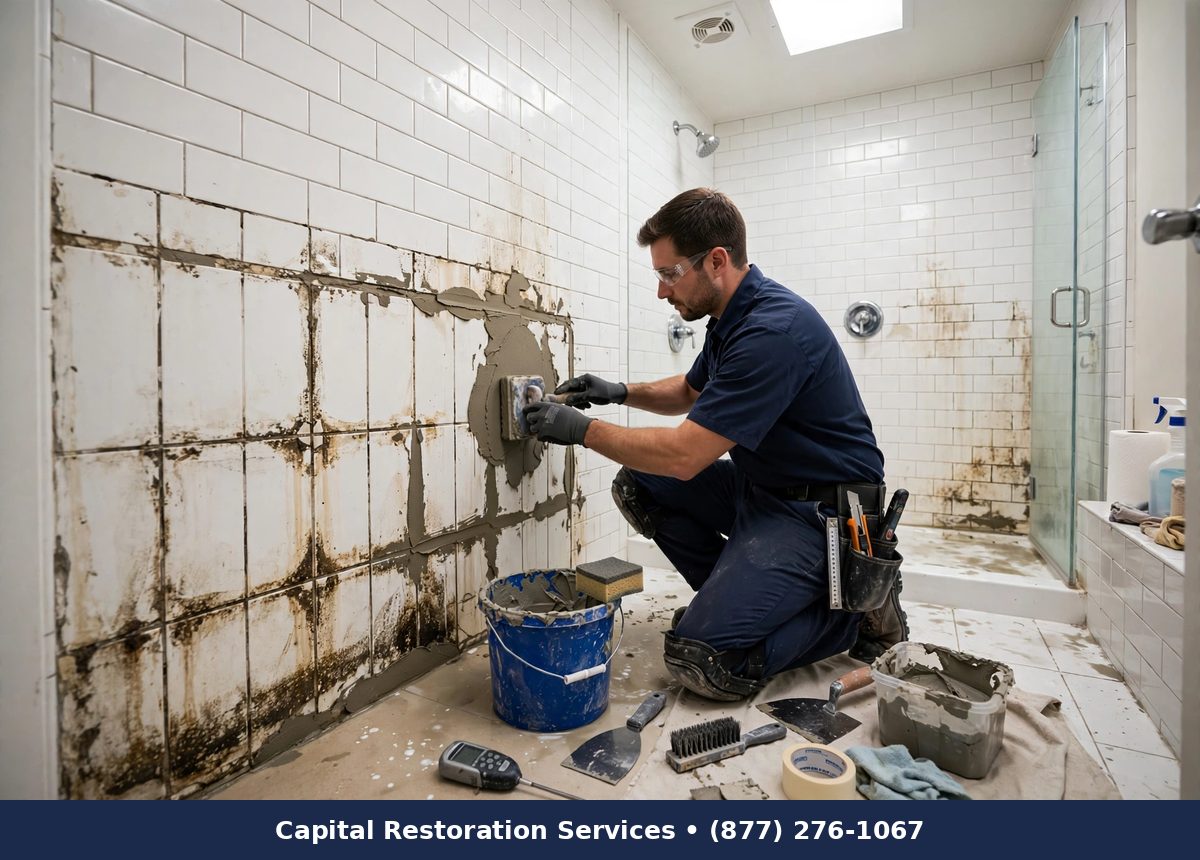
When the waterproofing has failed, there's no shortcut — the compromised section has to come apart. We remove only the tile that's affected, take out the rotted backer board or substrate, and dry the framing. Then the assembly goes back the way it should have been built: cement backer board, a continuous waterproof membrane with sealed seams and corners, a properly sloped pan tied into the drain, and then tile reset on top. Corners and transitions get flexible silicone instead of rigid grout, because houses move and rigid joints crack — and cracked joints are how the next leak starts.
Where the damage is limited to failed grout or caulk over a sound assembly, we do the smaller repair: cut out the failed material, regrout, reseal, and verify with moisture readings that nothing is getting through. The diagnosis decides the scope, not the other way around.
What affects the cost
The honest answer is that this repair has the widest range of any tile work we do, because the question is never the tile — it's what's behind it. A failed caulk joint over a sound membrane is a small job. A failed shower pan with rotted framing and a damaged ceiling below is a major one. How much tile has to come out, whether the subfloor or wall framing needs repair, and whether the shower needs a full waterproofing rebuild all stack up. The tile itself matters too — matching existing tile versus retiling the whole shower changes the finish cost. What we promise is the diagnosis first: you'll know exactly what failed and what it takes to fix it before we start. Call (877) 276-1067 and let's find out what you're dealing with.
How Capital Restoration Services handles tile water damage across the area
We've opened up enough showers to know that the tile is usually the last thing to blame. We diagnose with meters and cameras before we demo, repair selectively where we can, and rebuild the waterproofing assembly properly where we must. If your bathroom is giving you the secondary clues — the hollow tile, the recurring crack, the mystery stain — call (877) 276-1067. Let's find out what's really going on back there.
Features
- Moisture mapping behind tile with pin meters and infrared cameras
- Shower pan leak testing to find failures at the drain and seams
- Selective tile removal — only compromised sections come out
- Backer board and substrate replacement where water has rotted it
- Waterproof membrane installation behind all new tile work
- Proper silicone joints at corners and transitions that move
Benefits
- You find out whether it's a grout touch-up or a real leak before spending
- Hidden rot gets exposed and fixed, not tiled over
- The rebuilt assembly actually waterproofs — not just looks waterproof
- Selective repair saves the tile that's still sound
- No more mystery stains on the ceiling below the bathroom
- Documentation of the real cause for insurance and resale
Frequently asked questions
Can I just regrout or recaulk to stop a shower leak?
Sometimes — if the waterproofing behind the tile is sound and only the surface joints failed. But grout and caulk are not the waterproofing; if the membrane or pan has failed, new grout is a temporary patch over a real leak. We diagnose first so you don't pay for the wrong fix.
How do I know if water is getting behind my tile?
Look for hollow-sounding or loose tiles, grout that keeps cracking in the same spot, musty smells, stains on adjacent walls or the ceiling below, and caulk that won't stay put. Moisture meters can confirm it through the grout joints without removing any tile.
What is a shower pan, and how do I know if mine failed?
The pan is the waterproof layer under your shower floor that catches water getting past the tile and drains it. Signs of failure include musty smells, soft flooring around the shower, and stains below. A simple flood test — plug the drain, fill the base, mark the level, and check it later — can confirm a leak.
Do you have to tear out the whole shower?
Not always. We remove only the compromised sections — often a wall or the pan area — and preserve sound tile wherever possible. A full rebuild is only needed when the waterproofing failure is widespread. The diagnostic mapping tells us the boundary before we start.
Why does the same grout line keep cracking?
Usually movement. Houses shift, and rigid grout in a corner or transition joint cracks under that movement — which is why those joints should be flexible silicone, not grout. But recurring cracks can also signal water swelling the substrate behind the tile, which is worth checking.
What does tile water damage repair cost?
It tracks the hidden damage, not the tile: a failed joint over sound waterproofing is a small repair, while a failed pan with rotted framing is a major rebuild. Diagnosis with moisture mapping comes first so you know which one you're facing. Call (877) 276-1067.