Water Damage Prevention Assessment Near Me
Starting price: Call for pricing
Most water damage we get called for was preventable. A prevention assessment is a trained walkthrough of your home's weak points — aging supply lines, tired appliance hoses, a water heater past its prime, drainage that sends water toward the foundation — before any of them fail. Capital Restoration Services checks the usual suspects, meters the suspicious spots, and hands you a prioritized action list. An hour now beats a flood later. Call (877) 276-1067.
The failures we see over and over
After thousands of water damage calls, the patterns are almost boring in their predictability. The burst washing machine hose — rubber, eight years old, bulging at the fitting. The water heater that rusted through at the base while nobody looked behind it. The supply line under the sink with the slow green crust on the shutoff valve that everyone ignored. The downspout dumping roof water two feet from the foundation. Different houses, same short list.
That's what makes prevention assessments so effective. We're not hunting for exotic problems. We're checking the dozen failure points that cause the overwhelming majority of residential water damage, and most of them are visible to a trained eye in minutes. The tragedy of most water losses isn't that they were unpredictable — it's that nobody looked.
What we check inside
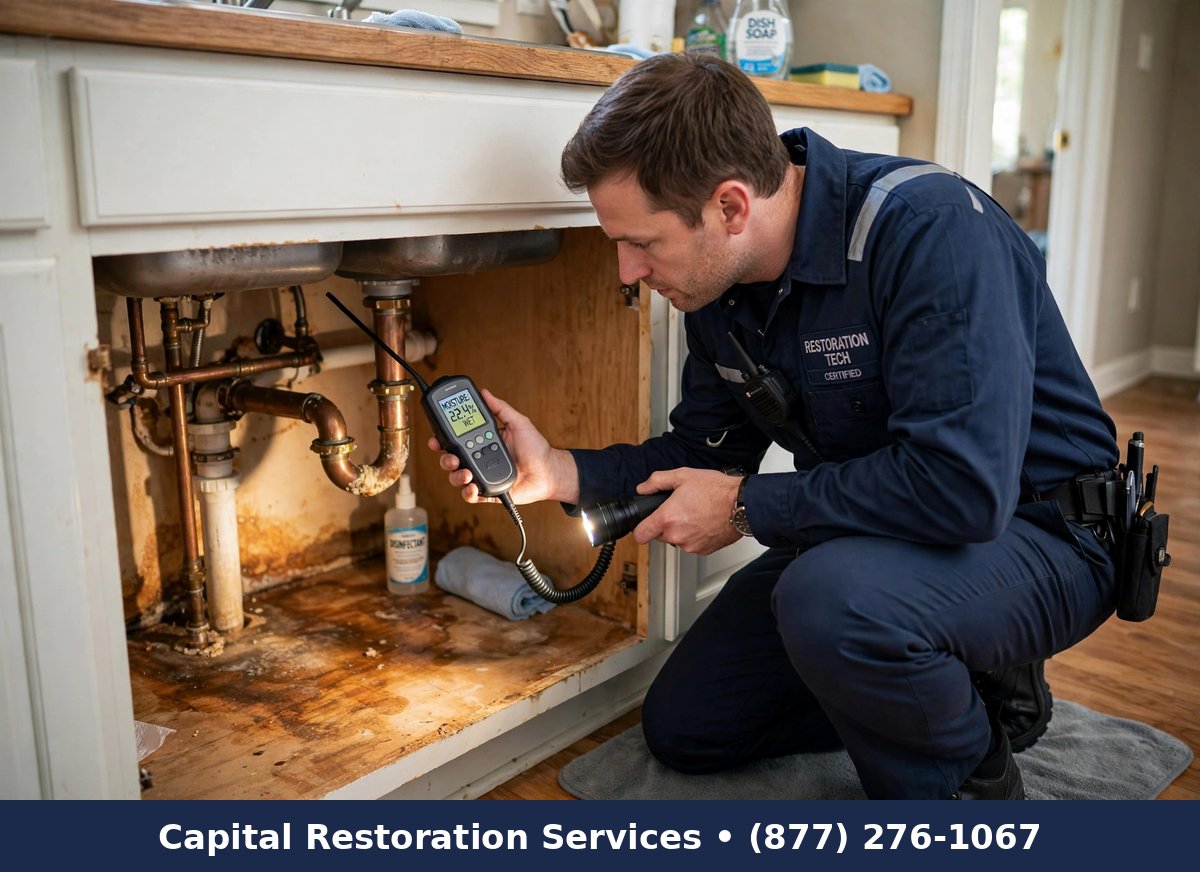
We start where the water lives. Under every sink: the cabinet floor, the supply lines, the shutoff valves — we're looking for moisture, swelling, mineral crust, and valves that won't turn. Around every appliance with a water connection: the washing machine hoses (rubber hoses get brittle with age; braided steel lasts far longer), the dishwasher connection, the refrigerator water line, the water softener if you have one. Toilets get rocked gently — a rocking toilet means a failing wax seal and a floor that's getting wet with every flush.
The water heater gets its own examination: rust at the base, moisture on the concrete around it, the condition of the drip pan and its drain, and whether the shutoff valve actually works. Then the main shutoff for the whole house — you'd be amazed how many homeowners have never touched theirs, and how many won't turn when the moment comes. We make sure yours does, and we make sure you know where it is.
High-risk hidden spots get metered: behind the washing machine, under the dishwasher, around the tub and shower valves, the ceiling below upstairs bathrooms. A meter reading takes seconds and can reveal a slow leak that's been running for months without a visible sign.
What we check outside
Water damage doesn't always start with plumbing. Outside, we look at the roof details that fail first: flashing around chimneys, vents, and skylights, plus shingles that are lifted, cracked, or missing. Gutters get checked for clogs and for downspouts that actually carry water away from the house — a downspout that dumps at the foundation is just a slow-motion flood. The grading around the house should slope away from the walls, not toward them. Foundation cracks get noted and dated so you can watch whether they're growing. Hose bibs, irrigation valves, and exterior penetrations round out the list. Wind-driven rain finds every gap in siding and window seals, so those get a look too.
The modern defenses worth knowing about
Beyond fixing what's worn out, there are defenses most homeowners haven't considered. Smart leak detectors — small battery-powered sensors you place under sinks, behind washers, near the water heater — send an alert to your phone the moment they get wet. They're inexpensive and they catch leaks at 2 a.m. when nobody's watching. The bigger step up is an automatic shutoff valve on the main water line: when a sensor detects water, the valve closes the whole house supply by itself. For anyone who travels, owns a second home, or just wants the strongest protection, it's the single most effective prevention device available. We can tell you which spots in your home would benefit most and what the options look like — no pressure, just information.
What you get when we're done
You get a written report, not a sales pitch. Every finding is listed and prioritized: fix now (the bulging washer hose, the heater showing rust), fix soon (the aging supply lines, the downspout dumping at the foundation), and watch items (the hairline foundation crack to recheck after the next rain, the shutoff valve that's getting stiff). Each item comes with a plain explanation of what happens if it's ignored — not to scare you, but so you can make informed decisions. The report also documents your home's current condition, which is useful for insurance purposes and for tracking changes over time. Schedule it annually, the way you'd service a furnace, and the list gets shorter every year.
What affects the cost
It's straightforward: the size of the home and how many water-using fixtures and appliances it has. A condo with one bathroom is a shorter visit than a large house with a laundry room, wet bar, irrigation system, and a finished basement. Older homes take longer because there's more to check and more wear to evaluate. Commercial properties are quoted by scope. Compared to any restoration, it's a fraction — the whole point is that an hour of looking beats a week of drying. Call (877) 276-1067 and tell us about your place.
How Capital Restoration Services helps homeowners stay dry
We'd rather meet you for a prevention assessment than a 2 a.m. flood call. Our technicians know exactly where water damage starts because they repair the aftermath daily. Call (877) 276-1067 and let's keep your house uneventful.
Features
- Full walkthrough of plumbing, appliances, and water-using fixtures
- Supply line and hose inspection: bulges, corrosion, and brittle rubber
- Water heater check: age signs, rust, drip pan, and shutoff condition
- Moisture meter spot-checks of high-risk areas like under sinks and behind washers
- Exterior drainage check: gutters, downspouts, grading, and foundation
- Prioritized written action list, from urgent fixes to watch items
Benefits
- You find the next leak before it finds your flooring
- Small fixes now replace emergency restorations later
- A clear priority list means no guessing what matters most
- Know where your main shutoff is before you actually need it
- Documentation of your home's condition for insurance purposes
- Sleep better during the next big storm
Frequently asked questions
How often should I get a water damage prevention assessment?
Once a year is the right rhythm for most homes — think of it like servicing your furnace. Older homes, homes with prior water damage, or homes with aging appliances benefit from the annual check even more. After any major storm, it's worth a quick look at the exterior drainage items yourself.
What's the most common preventable water damage you see?
Failed appliance hoses, especially washing machine supply hoses, and water heaters rusting through at the base. Both give warning signs — bulging or brittle hoses, rust and dampness around the heater — that a prevention check catches easily. Supply line failures under sinks are a close third.
Are smart leak detectors worth it?
For the price, they're one of the best values in home protection. A sensor under the sink or behind the washer alerts your phone the moment water appears — catching a leak at 2 a.m. instead of 7 a.m. can be the difference between a mop-up and a restoration. We recommend them for every high-risk spot.
What is an automatic water shutoff valve?
It's a motorized valve on your main water line connected to leak sensors around the house. When a sensor gets wet, the valve shuts off the whole home's water automatically — even if you're on vacation. It's the strongest single defense against major water damage, and we can advise whether it fits your home.
I just bought a house. Should I get this inspection?
It's one of the smartest moves a new homeowner can make. A general home inspection covers a lot, but a focused water-damage walkthrough goes deeper on the plumbing, appliances, and drainage that cause most losses. You'll start homeownership knowing exactly what needs attention and in what order.
What does a prevention assessment cost?
It depends on the home's size and the number of fixtures and appliances to check — a condo is quicker than a large house with irrigation and multiple bathrooms. It's a small fraction of any restoration bill, which is the entire point. Call (877) 276-1067 for your home's specifics.